
Review of Afghanistan developments
Afghanistan’s informal economy has emerged as a crucial support for the survival of millions residing in urban areas; it serves as a foundation that, while facilitating daily sustenance, concurrently drives the urban framework towards persistent marginalization. Throughout decades of conflict and instability in Afghanistan, coupled with the lack of effective governance, a formal labor market, and a clear land ownership system, this underground economy has not only supplanted formal institutions but also shapes the patterns of population distribution and the development of urban environments.
Urban marginalization in Afghanistan cannot be attributed solely to poverty or population increase; it is instead the outcome of a structural connection between informal settlements and illicit economic activities. In urban areas like Kabul, Herat, and Mazar-e-Sharif, these margins have evolved into concentrated hubs of the informal economy, where residences, workshops, and marketplaces converge. This article seeks to demonstrate that Afghanistan informal economy perpetuates urban marginalization not as a fleeting issue, but as an enduring mechanism.
What role did Afghanistan’s informal economy play in the growth of urban slums?
Since the early 1970s, particularly following the political turmoil of the subsequent decades, a mix of ongoing insecurity, the disintegration of administrative and economic frameworks, and extensive population displacements established circumstances that significantly undermined the formal labor market in Afghanistan. In this context, millions of urban families and rural migrants, frequently devoid of the necessary capital, land, or skills demanded by the formal market, resorted to engaging in activities that were not governed by labor regulations, tax systems, or insurance networks in order to meet their daily survival needs.
This economic structure, characterized by daily wage employment, retail activities, small home workshops, and informal exchange networks, gradually emerged as the prevailing model of the urban economy. This phenomenon can be observed even during times when institutions underwent partial reorganization, as the last twenty years have been marked by cycles of violence and insecurity. The government has struggled to establish formal employment opportunities and to systematize the economic framework, hindering the swift transition of the workforce into the formal sector and their subsequent integration.
At the urban level, the relationship between economic activity and residential location has significantly influenced the development of slums. Households participating in the informal labor market frequently lack the financial means to pay for rent or purchase a home in the formal sectors of the city. Conversely, the land ownership structure in Afghanistan is notably unclear and relies on informal relationships, particularly in major cities where land surrounding the urban area is often unlawfully appropriated or traded. Consequently, informal jobs blend with informal housing within a single environment; workshops, residences, and marketplaces coexist in one area, leading to the dissolution of the distinctions between work and living spaces.
This spatial overlap results in the informal economy becoming entrenched in the periphery, further contributing to the reproduction and expansion of these regions. As the concentration of informal activities rises in a given area, the influx of migrants to that location also increases, as new immigrants perceive a greater number of job opportunities available. Consequently, marginal areas evolve from mere residential zones for the impoverished into hubs of informal production and consumption, thereby establishing a self-reinforcing cycle.
On the other hand, in these regions, a gradual emergence of an informal economic system is taking place, which relies on personal trust, ethnic or familial networks, and oral agreements. While this system appears to function adequately on the surface, it hinders the establishment of modern economic and administrative institutions, perpetuating poverty. The absence of secure ownership and clear legal frameworks results in minimal investment in housing and infrastructure. Residents are uncertain whether their land may be destroyed at any moment, leading to a reluctance to engage in sustainable building practices, which in turn produces negative macro-level outcomes. Furthermore, the persistent prevalence of informal activities diminishes the motivation to reform the formal structure; additionally, the expansion of the informal sector undermines the country’s tax base and diminishes the resources required for the enhancement of urban services. This scenario adversely affects the nation’s development, as the government lacks the financial means to deliver services, and citizens are hesitant to formalize their activities due to a climate of distrust and instability. Consequently, the informal economy and marginalization emerge as two interrelated foundations within the urban framework.
Consequences of Afghanistan’s Informal Economy
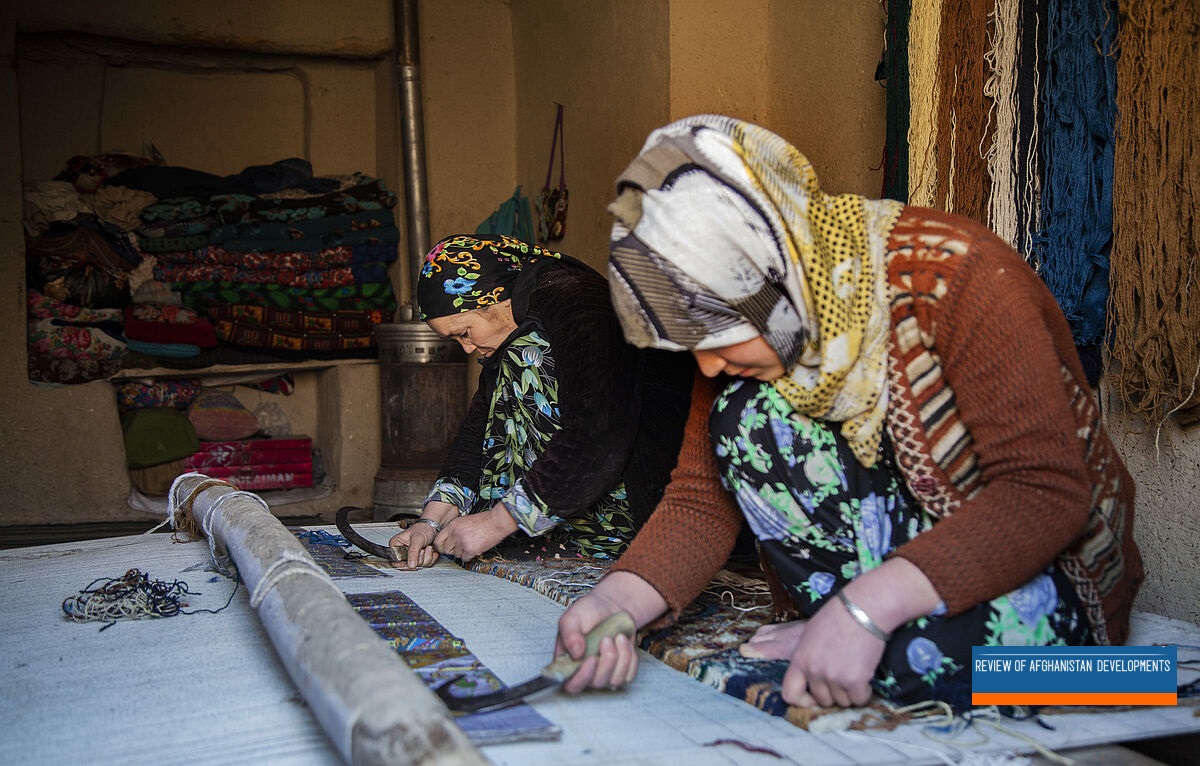
The connection between Afghanistan’s informal economy and urban marginalization carries significant social and cultural consequences. Job security is nearly absent in these regions, and economic variations can swiftly impact individuals’ living conditions. Families frequently turn to child labor to offset decreasing incomes, resulting in a deterioration of human capital in future generations. Additionally, in numerous informal settlements, women constitute a vital segment of the informal economy’s labor force; they manage small-scale sewing, baking, or handicraft enterprises within their residences. However, these endeavors often lack sustainable economic benefits and social backing, which means that rather than being allocated specific roles based on their skills, they are compelled to undertake multiple social responsibilities merely for survival, consequently leading to a drain on their energy and human capital. Conversely, the absence of educational facilities and public services denies the children of these families the chance for social mobility, perpetuating poverty, chaos, and social issues across generations. This dynamic illustrates that over time, we will observe a society that, devoid of knowledge and formal education, is merely striving to exist, which will have profoundly adverse implications for societal advancement from a developmental standpoint.
On the other hand, the growth of Afghanistan’s informal economy has significantly altered the physical landscape of cities. Temporary markets, street vendors, unlicensed workshops within residences, and the proliferation of unregulated settlements have obscured the distinction between formal and informal areas in numerous Afghan cities. These environments present difficulties for urban management. The government is unable to fully eliminate these groups, nor can it successfully incorporate them into the formal framework.

This intermediate condition slowly undermines the spatial organization of the city from the inside, as the infrastructure is not built to accommodate this population size and urban services fail to meet the demands. Consequently, a significant financial and environmental strain is placed on the city, which includes heightened pollution, insufficient health services, and the proliferation of social issues.
Therefore, the connection between Afghanistan’s informal economy and urban marginalization is not fleeting or incidental; rather, it is structural and persistent. In the absence of significant reforms, this situation will persist even amidst relative economic growth. The primary cause lies not in a deficiency of capital, but rather in the unequal access to opportunities and the absence of institutions that foster trust. While the informal economy in Afghanistan appears to have generated employment, it has, in truth, ensnared the nation’s human resources in a cycle characterized by unstable jobs, low wages, and deprivation.
Related Articles
The Economy of Afghanistan under Taliban governance
Stability of the Afghani Currency in 2025: Factors and Prospects
Conclusion
The examination of the relationship between Afghanistan’s informal economy and marginalization indicates that these two issues cannot be viewed in isolation; both stem from a significant divide between the state and society, as well as the failure of formal institutions to effectively manage the market and equitably allocate resources. In the absence of such a system, the informal economy has emerged as a means of survival for millions, yet it simultaneously acts as a barrier to achieving sustainable development. Within this cycle, poverty is not merely perpetuated but is also systematically organized and reproduced through kinship networks, informal connections, and unauthorized urban settlements.
Experience has demonstrated that policies aimed exclusively at eradicating or restricting the informal economy are destined to fail, as these activities will swiftly resurface in new forms unless there is a reform of institutional foundations and a restoration of trust between the populace and the state. The solution to this predicament lies in the government’s ability to gradually connect the informal and formal sectors, rather than adopting a coercive stance. This can be achieved by lowering registration and licensing fees, offering microcredit, and enhancing security of tenure in informal settlements. Simultaneously, investing in technical and vocational training, improving urban infrastructure, and involving residents in local decision-making processes can help to disrupt the cycle of poverty and marginalization.
Nevertheless, none of these policies can be successful without political stability and adherence to the rule of law. As long as the government does not enforce the law impartially and adequately safeguard the vulnerable, Afghanistan’s informal economy will continue to be the primary source of livelihood for a significant portion of the population. Consequently, transitioning from this scenario cannot be achieved solely through economic policies; it necessitates the rebuilding of public trust, the fortification of effective institutions, and a redefinition of citizenship that acknowledges the existence and rights of all groups. Only within such a framework can we aspire to establish a coherent and formal economic structure and convert marginalization into sustainable urban development.