
Review of Afghanistan developments
India–Taliban Relations have undergone a quiet but consequential recalibration since the Taliban’s return to power in Afghanistan in August 2021. Long viewed in New Delhi as a hostile and Pakistan-aligned actor, the Taliban were expected to trigger a strategic retreat by India or, at minimum, a prolonged diplomatic freeze. Neither scenario materialized. Instead, the post-2021 period has been marked by cautious engagement, limited political dialogue, and a steady expansion of economic and humanitarian interactions. This emerging pattern challenges entrenched assumptions about both Taliban behavior and India’s regional strategy. It also raises a central analytical question: is India–Taliban relations evolving into a stable, interest-based framework, or are they merely a temporary convergence shaped by Afghanistan’s isolation and shifting Pakistan–Taliban dynamics? Understanding this relationship is critical, not only for assessing India’s Afghanistan policy but also for interpreting broader changes in South Asia’s post-withdrawal geopolitical order.
Historical Constraints and Strategic Distrust
India’s historical relationship with the Taliban has been shaped by deep-rooted mistrust. During the Taliban’s first period of rule in the late 1990s, New Delhi perceived the group primarily through a security lens, associating it with Pakistan’s regional strategy and transnational militant networks hostile to Indian interests. These perceptions were reinforced after 2001, when India invested heavily—politically, economically, and symbolically—in the Afghan republic. For two decades, India’s Afghanistan policy rested on the assumption that a Taliban return would fundamentally undermine its regional position.
Following the collapse of the republic in 2021, India initially adopted a strategy of strategic patience. This approach—often described as a phased engagement model—began with observation, followed by humanitarian outreach, and eventually limited diplomatic contact. While this framework captures India’s tactical steps, it understates a critical variable: the Taliban’s own recalibration of foreign policy priorities.
The Taliban’s Pragmatic Foreign Policy Shift
One of the most notable developments since 2021 has been the Taliban’s effort to separate ideological governance at home from pragmatic engagement abroad. Facing international non-recognition, sanctions, and economic collapse, the Taliban leadership has emphasized neutrality, regional balance, and economic connectivity in its external relations. Unlike their previous rule, the Taliban have avoided overt alignment with any single regional power, instead signaling openness to diversified partnerships.
This pragmatic turn has reshaped regional calculations. Neighboring states and regional actors have increasingly engaged the Taliban not out of ideological affinity, but out of necessity and risk management. For India, however, skepticism persisted. New Delhi remained unconvinced that the Taliban could act independently of Pakistan’s strategic influence—an assumption that continued to delay deeper engagement.
Pakistan–Taliban Tensions and India’s Reassessment
The gradual deterioration of relations between the Taliban and Pakistan has played a decisive role in reshaping India–Taliban relations. Disputes over border management, militant sanctuaries, and mutual accusations of interference have exposed structural mistrust between Kabul and Islamabad. This rift has undermined the long-standing assumption that the Taliban would function as a strategic proxy for Pakistan.
For Indian policymakers, these tensions altered the strategic landscape. While distrust of the Taliban did not disappear, the perception of a monolithic Pakistan–Taliban axis began to weaken. At the same time, India’s strategic imperative to maintain a foothold in Afghanistan remained intact. Complete disengagement risked marginalizing India in a region where China, Russia, and regional powers were actively adjusting to the new reality.
Diplomatic Engagement Without Recognition
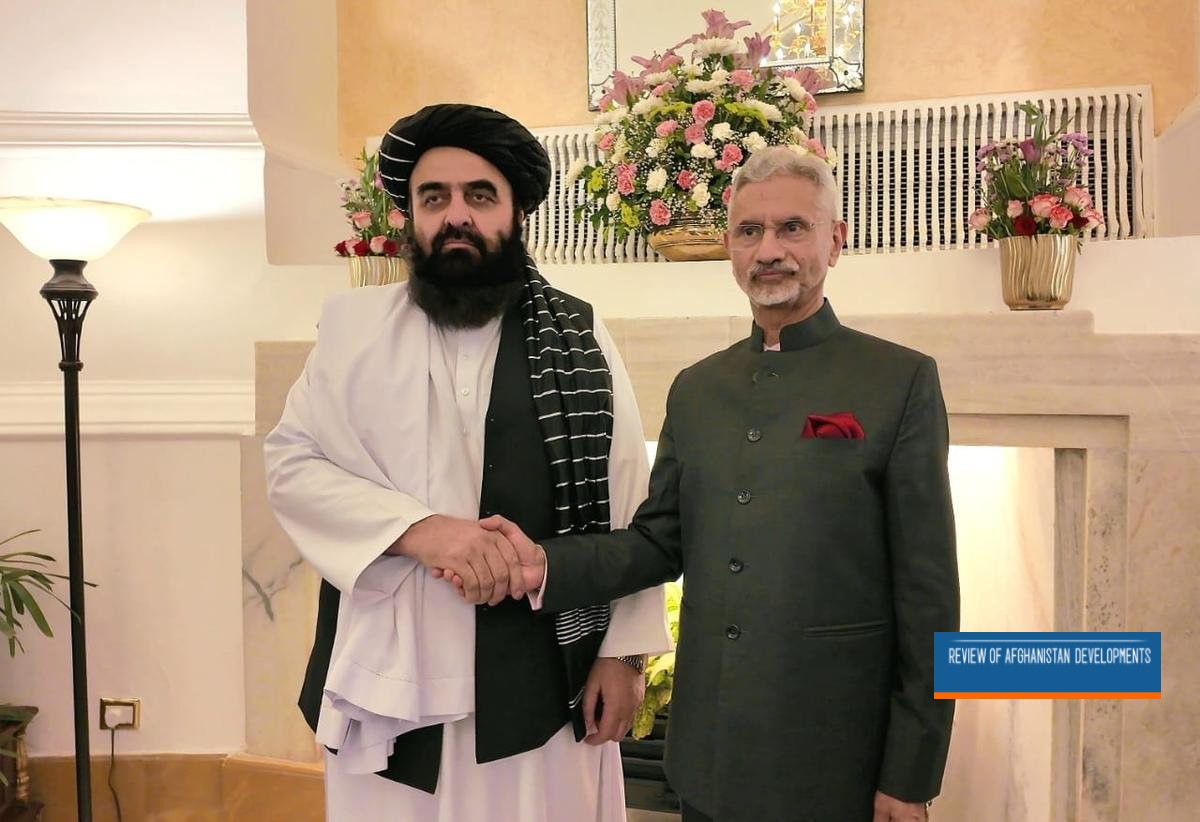
India’s engagement with the Taliban has been deliberately limited and carefully framed. New Delhi has avoided formal recognition while maintaining diplomatic channels focused on functional cooperation. The visit of Taliban Foreign Minister Amir Khan Muttaqi to India represented a symbolic inflection point, signaling a mutual willingness to institutionalize dialogue without crossing political red lines.
Political engagement has progressed slowly, reflecting the sensitivity of India–Pakistan relations and the Taliban’s own international legitimacy deficit. Both sides appear comfortable with this incrementalism. For India, gradualism minimizes reputational costs; for the Taliban, it provides a pathway to partial normalization without external pressure for immediate concessions.
Economic Relations as Strategic Instruments
Economic engagement has emerged as the most substantive pillar of India–Taliban relations. Trade in essential goods—such as wheat, rice, pharmaceuticals, and medical supplies—has expanded steadily since 2021. These exchanges serve multiple strategic functions. For Afghanistan, India offers a reliable source of goods and a potential gateway to broader regional markets. For India, economic engagement provides leverage, visibility, and influence without the risks associated with overt political alignment.
This approach reflects continuity in India’s Afghanistan policy. Even under the republican system, India emphasized development assistance and economic connectivity as tools of influence. The Taliban’s willingness to prioritize economic cooperation suggests an acknowledgment of India’s long-term value beyond ideological differences.
Strategic Implications for Regional Order
The evolution of India–Taliban relations must be understood within the broader reconfiguration of South Asia’s regional order after the U.S. withdrawal. India is adapting to a more fragmented and competitive environment, one in which influence is exercised through calibrated engagement rather than ideological alignment. The Taliban, meanwhile, are navigating a landscape defined by isolation, internal legitimacy challenges, and strained relations with traditional partners.
Pakistan remains the pivotal variable. As long as Taliban–Pakistan relations remain tense, India is likely to find space for limited but meaningful engagement. Conversely, any significant rapprochement between Kabul and Islamabad could constrain India’s maneuverability.
Related Articles
The role of the India in the Afghanistan-Pakistan conflict
The geopolitical aspects of Muttaqi’s visit to India
Conclusion
India–Taliban relations after 2021 do not represent reconciliation in a normative sense. Rather, they reflect a pragmatic convergence shaped by necessity, risk calculation, and shifting regional alignments. The Taliban view India as a credible economic partner and a counterbalance to overdependence on Pakistan. India views engagement as a means to manage security concerns, preserve regional relevance, and adapt to Afghanistan’s transformed political reality.
The durability of this relationship will depend less on diplomatic symbolism and more on structural factors—particularly Taliban autonomy in foreign policy and the trajectory of Pakistan’s influence. In a post-2021 regional order defined by uncertainty, India–Taliban relations illustrate how pragmatism, not ideology, increasingly shapes strategic behavior in South Asia.