
Review of Afghanistan developments
Tehran Summit marked a decisive shift in how Afghanistan is discussed within regional diplomacy. For decades, Afghanistan has been framed almost exclusively through narratives of insecurity, political deadlock, narcotics, and economic collapse. The Tehran Summit challenged this entrenched perspective by asking a more fundamental question: can Afghanistan still be understood outside a regional framework shaped by shared interests and connectivity?
Rather than reproducing the familiar language of crisis management, the summit introduced a different analytical lens—one centered on opportunity, geo-economics, and regional integration. Afghanistan was no longer portrayed as a passive recipient of security arrangements, but as a potential strategic connector linking Central Asia, South Asia, and West Asia. This reframing is significant, as it moves beyond failed external models that separated security from development.
At the core of this shift stood Iran’s recalibrated approach toward Afghanistan, articulated with unusual clarity by Foreign Minister Abbas Araqchi, whose remarks positioned regional cooperation and economic interdependence as prerequisites for sustainable stability.
Iran’s New Afghanistan Strategy: From Reactive Security to Geo-Economic Vision
At the Tehran summit, Iran’s position regarding Afghanistan evidently transitioned from a reactive approach to a proactive one. Steering clear of the typical clichés associated with Afghanistan, the Iranian foreign minister highlighted a strategic truth: the stability of Afghanistan is intrinsically linked to the collective interests and security of the region.
This strategy shifts Afghanistan from being perceived as a “fringe of threat” to being viewed as a “center of opportunity.” Within this context, Iran positions itself not merely as an external observer but as a genuine partner of the Afghan populace; a partner that is committed to the nation’s full integration into regional economic and political frameworks. This perspective reflects the advancement of regional diplomacy and signifies a departure from the expensive lessons learned in the past.
A significant theme highlighted during the Tehran summit, as well as in Araqchi’s remarks, was the focus on Afghanistan’s geo-economics significance. The nation is situated at the center of regional intersections, where Central Asia, South Asia, and West Asia converge. Disregarding this geographical fact equates to denying the entire region its strategic potential.
The establishment of transit corridors, energy lines, and trade routes has the potential to change Afghanistan from a source of crisis to an essential link for connectivity. In discussing this matter, Araghchi emphasized that sustainable security cannot be achieved without economic development and regional connectivity. From this perspective, geo-economy is not merely a theoretical idea, but rather a practical instrument for fostering peace. The shift in focus from security to economic growth and transit is a significant point that can be gleaned from the Tehran Summit. Indeed, this topic has not been articulated as clearly in any previous meetings that have taken place.
Regional Consensus at the Tehran Summit: Neighbors Take the Lead
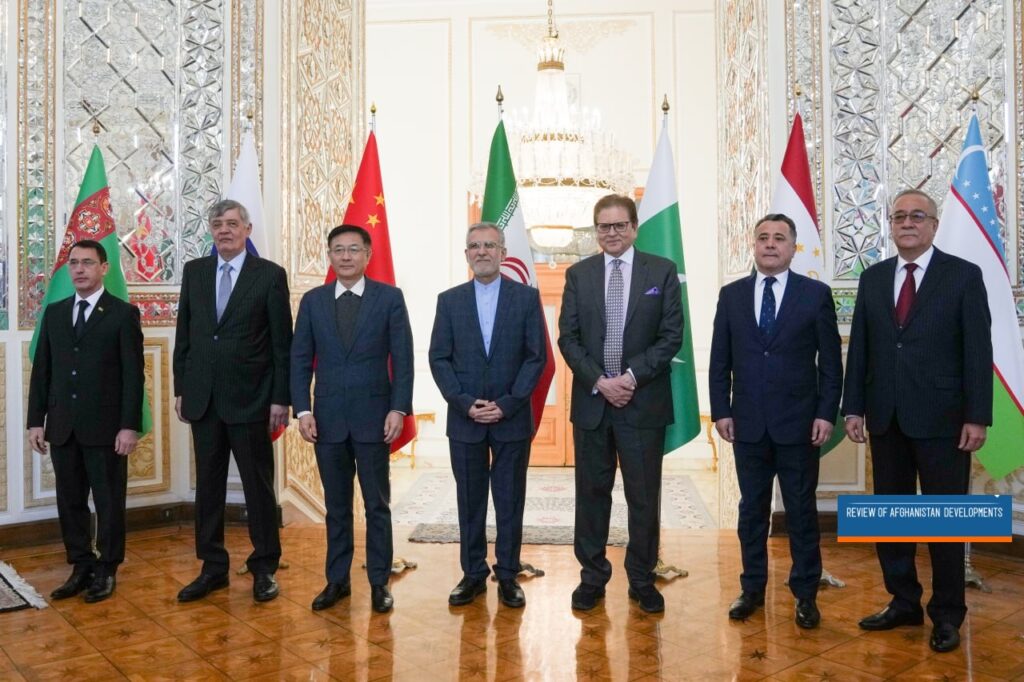
The attendance of special representatives from Afghanistan’s neighboring nations, including Russia, at the Tehran Summit conveys a distinct message that the region has reached the consensus that the resolution for Afghanistan should originate from within the region itself. This assembly illustrates the regional stakeholders’ weariness with externally imposed frameworks and unsuccessful foreign interventions, as well as their commitment to establish a regional strategy.
The meeting highlighted the importance of convergence, coordination, and the creation of consistent dialogue mechanisms. This is exactly where previous experiences fell short; where the influence of neighboring parties diminished and decision-making was relegated to external entities. The Tehran Summit sought to rectify this mistake.
Challenging Western Prescriptions for Afghanistan
A considerable part of the Iranian Foreign Minister’s statements during the Tehran Summit was dedicated to condemning earlier strategies. The overemphasis on security-oriented solutions, systemic corruption, disregard for Afghanistan’s social structure, and the rapid exit of foreign troops from Afghanistan were all highlighted as indicators of a strategic failure.
This critique was not merely a recounting of history, but rather a caution for what lies ahead. The essence of this segment of Araqchi’s address suggests that no trans-regional approach can effectively address the crises in Afghanistan. A sustainable resolution can only be achieved through regional collaboration, acknowledgment of regional dynamics, and the proactive involvement of neighboring countries.

Taliban’s Absence from the Tehran Summit: Strategic Silence or Missed Opportunity?
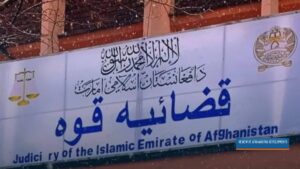
One of the contentious aspects of the Tehran Summit was the lack of a representative from the Taliban government. Initially, this absence might appear to create a void; however, Iran’s diplomatic reaction indicated that the situation was handled with a spirit of mutual understanding. Spokesperson Esmail Baghaei and Mohammad Reza Bahrami, the Director General of South Asia at the Iranian Foreign Ministry, expressed in their speeches that they honor Kabul’s decision and do not view it as a hindrance to ongoing bilateral cooperation.
On the other hand, the favorable response from Zakir Jalali, a Taliban government official within the Foreign Ministry, to Araqchi’s comments demonstrated that the essence of the messages had successfully arrived in Kabul. It is noteworthy that the Tehran Summit, despite the absence of a Taliban government representative, managed to impact the environment of dialogue and mutual understanding, highlighting the political significance of the Summit.
Tehran Summit’s Final Declaration and the Road Ahead
The concluding declaration of the Tehran summit may be regarded as a guide for ongoing regional collaboration. The declaration highlighted the importance of regional integration, the enhancement of Afghanistan’s stability, and the willingness to offer support when necessary. One of the principal themes of the document was the continuation of economic and trade relations aimed at bettering the lives of the Afghan populace.
Concerns regarding security, including terrorism and drug trafficking, were also highlighted; however, the emphasis was placed on the international community’s obligation to remove sanctions and release Afghan assets. The unequivocal rejection of foreign military involvement, along with the advocacy for diplomatic discussions between Afghanistan and Pakistan, illustrated that the Tehran Summit adopted a balanced perspective on both security and development.
The Prospects of Regional Collaboration: Opportunities That Must Not Be Missed
The discussions held at the Tehran summit reveal that the region faces a critical strategic decision: it can either revert to a continuous cycle of mistrust and outside interference, or it can forge a new future for Afghanistan and its neighboring areas through genuine collaboration.
Creating consistent dialogue structures, enhancing economic relationships, and acknowledging Afghanistan’s geo-economics significance could convert the nation into a proactive and integrated participant in the region. Although this approach is intricate, it is more feasible than any earlier attempts.
Post-Tehran Reactions: Regional and Afghan Responses
Following the Tehran Summit, a range of responses and feedback emerged from Afghan political factions and foreign experts alike. Certain social media activists connected to the Taliban defended and explained the absence of a representative from the Taliban government at the Tehran meeting. Their statements suggested that the Afghan government exhibited its independent and strategic stance by choosing not to participate in the Tehran meeting. However, the exact meaning of this independent and strategic stance remains unclear.
Amu TV, which functions beyond the borders of Afghanistan, cited its sources as stating that the absence of a representative from the Taliban government at the Summit was due to their desire to prevent Pakistan from having the chance to accuse the Taliban government of endorsing terrorism during the Summit.
Some opponents of the Taliban, such as Rahmatullah Nabil, viewed the lack of a Taliban government representative at the Tehran summit as a sign of disrespect towards Iran and an effort to hinder discussions regarding Afghan matters. At the same time, the Supreme Council of National Resistance for the Salvation of Afghanistan, which is one of the opposition groups against the Taliban regime, released a statement expressing support for the Tehran Summit that included Afghanistan’s neighboring countries and Russia. They characterized it as a positive move towards keeping the Afghan issue prominent on the political and diplomatic agenda of the region, while also stressing that such gatherings should genuinely benefit the people.
The Express Tribune newspaper has reported that the attendees of the Tehran Summit took a different stance compared to Pakistan’s position on Afghanistan. Representatives from regional nations highlighted their willingness to engage and collaborate with the Taliban government, which stands in contrast to the demands put forth by Pakistan. In the meantime, Asif Durrani, who previously served as Pakistan’s special representative for Afghanistan, remarked that the Tehran meeting presented a significant opportunity for the Taliban, which they squandered by choosing not to participate in this chance for regional collaboration.
Related Articles
Iran and Taliban: from Trust-Building to Deepening Engagements
Extension of Chabahar Port’s Sanctions Exemption
Conclusion
The Tehran summit ought to be regarded as more than merely a diplomatic occasion. It represents a slow yet significant transformation in the region’s perspective on Afghanistan, one that perceives security, development, and prosperity as interconnected elements of a unified whole.
Abbas Araqchi’s statements provided a fairly clear understanding of Iran’s foreign policy regarding Afghanistan: a policy grounded in constructive engagement, acknowledgment of on-the-ground realities, and confidence in the region’s capacity to address its own challenges. Should this approach persist with a unified commitment, it is anticipated that Afghanistan will transcend its current state of limbo and reclaim its rightful position within regional dynamics.
From this viewpoint, the Tehran summit signifies not the conclusion of a dialogue, but the commencement of a new phase in regional collaboration concerning Afghanistan; a phase whose success will hinge on sustained rationality, alignment, and the avoidance of past errors.