
Review of Afghanistan developments
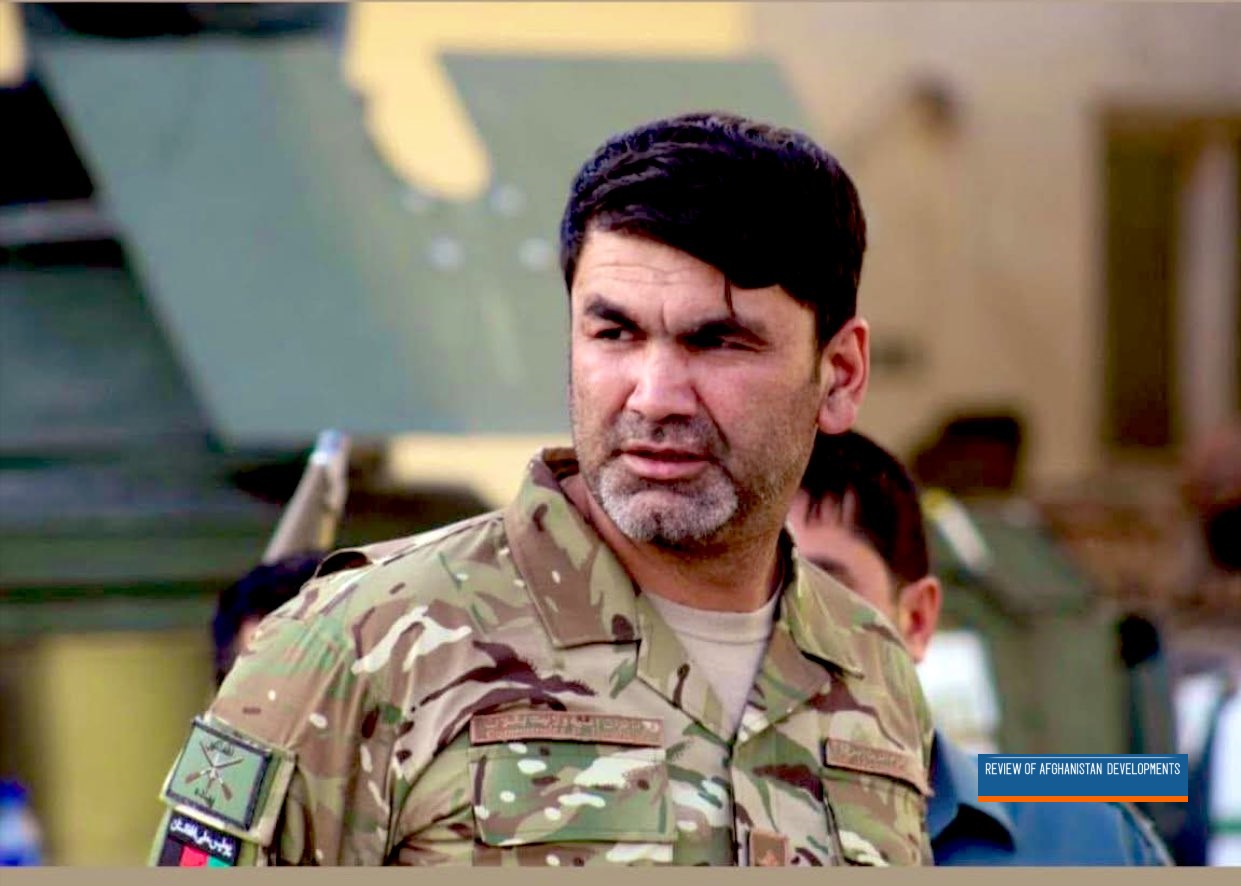
The assassination of former Afghan military official and registered refugee Ikramuddin Saree, alongside Mohammad Amin Almas, in central Tehran is not merely a criminal act or an isolated killing. Rather, it represents a targeted assassination in Iran with far-reaching legal, security, and geopolitical implications. As reports surrounding the Ikramuddin Saree assassination continue to grow, the incident raises urgent questions about the targeting of former Afghan military personnel abroad, the protection of refugees under international law, and the use of violence as a tool of regional intelligence signaling. This analysis examines the possible scenarios behind the killing and its broader impact on Iran–Afghanistan relations and regional security dynamics.
Ikramuddin Saree, who had taken refuge in Iran following the collapse of the former Afghan government, held no active military or security position at the time of his death and was recognized as a refugee under international law. From this perspective, his killing constitutes not only a blatant violation of the right to life, but also a serious breach of the international legal framework governing refugee protection. The assassination of an Afghan refugee who had disengaged from armed activity undermines one of the core principles of international humanitarian and human rights law.
Reactions to the assassination were widespread among Afghan political factions, former military figures, and civil society activists. While many condemned the killing, a dominant concern emerged regarding the growing pattern of assassinations targeting former Afghan military officials overseas. These concerns are further amplified when the Tehran incident is examined alongside similar cases, including the killing of an Afghan jihadi commander in Mashhad. The recurrence of such incidents reinforces the perception that a deliberate strategy of eliminating former Afghan security personnel beyond Afghanistan’s borders may be unfolding.
Meanwhile, the official silence of the Taliban government is itself politically meaningful. Kabul’s ambiguous stance, combined with accusations from some opposition groups, has contributed to a highly politicized analytical environment. However, to date, no credible or verifiable evidence has been presented to substantiate claims of the Taliban’s direct involvement in the assassination of Ikramuddin Saree. Moreover, the timing of the killing coincides with a period of relative improvement in Iran–Taliban relations, during which Kabul—particularly amid escalating tensions with Pakistan—has sought greater regional cooperation with Iran. Under such conditions, actions that would deliberately provoke Tehran appear inconsistent with the cost–benefit logic of Taliban policymaking.
The Murder of Ikramuddin Saree and the Violation of International Refugee Law
From the standpoint of international law, the assassination of Ikramuddin Saree stands as a clear violation of established human rights and refugee protection principles. International instruments such as the 1951 Geneva Convention affirm that refugees are entitled to protection in host countries. Targeting a refugee—especially one not engaged in any military activity—constitutes an international crime. A former soldier who has disengaged from armed forces is not a lawful target, and his killing lacks any legal, moral, or political justification. Responsibility therefore extends beyond the direct perpetrators to include any networks, facilitators, or sponsors involved in planning or enabling the operation.
Security Implications of an Assassination in Tehran
The security significance of the Ikramuddin Saree assassination becomes even more pronounced when considering its location in Iran’s capital. Conducting a targeted killing in Tehran sends a message that goes beyond eliminating an individual and can be interpreted as an attempt to challenge internal security perceptions in Iran. Available indicators suggest that this was not a spontaneous or isolated act, but rather the outcome of a coordinated intelligence operation involving surveillance, logistical preparation, weapon supply, and the deployment of a trained operative. Such an operation would be extremely difficult to execute without access to organized intelligence resources.
Possible Scenarios and Hidden Regional Communications
At an analytical level, the assassination of Ikramuddin Saree can be examined through several scenarios.
Scenario One: Proxy Actors and Intelligence Sponsorship
The first scenario involves cooperation between state and non-state actors seeking to project insecurity inside Iran and disrupt regional stability. Historical precedents demonstrate that militant individuals or groups often act as executors, while regional or trans-regional intelligence agencies serve as sponsors or coordinators. This layered structure allows sponsors to maintain plausible deniability while achieving strategic objectives.
Scenario Two: Taliban Direct Involvement
The second scenario suggests the direct involvement of the Taliban government. Although raised by some sources, this hypothesis remains analytically weak. The assassination occurred during a phase of improving relations between Iran and the Taliban, and Afghanistan currently depends on Iran for economic access, transit routes, and regional balancing, particularly amid tensions with Pakistan. From a rational political perspective, Kabul has little incentive to provoke Tehran through such a high-risk operation.
Scenario Three: Regional Security Signaling
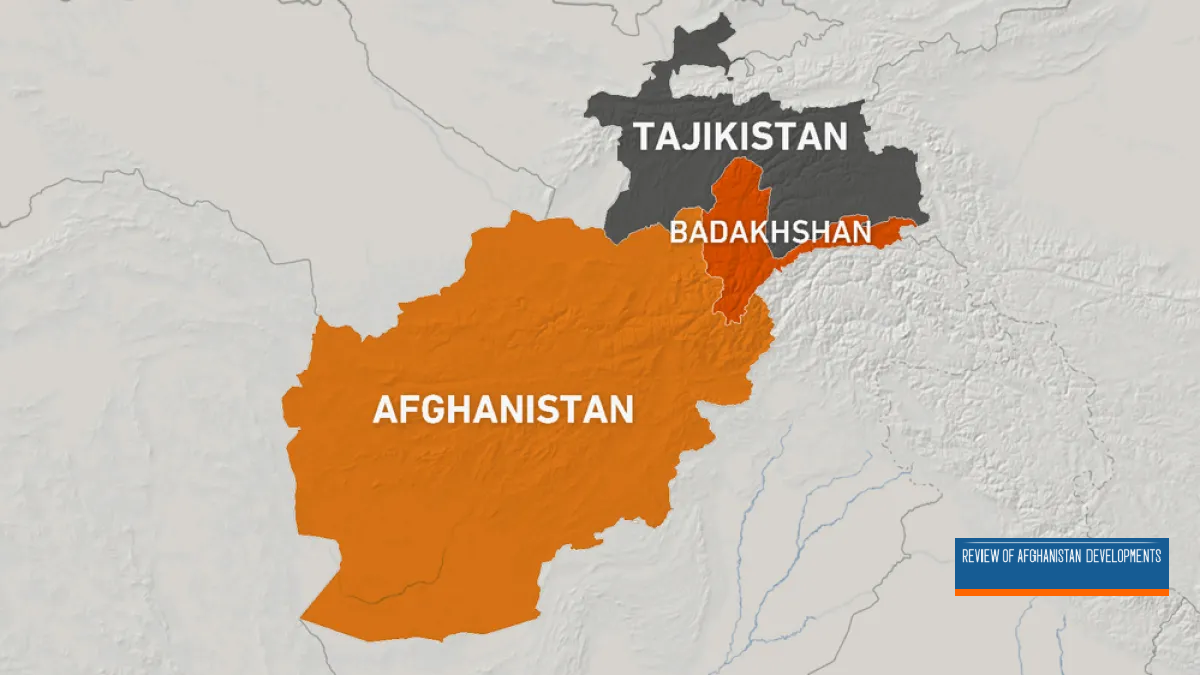
The third scenario elevates the killing from an isolated assassination to a regional security message. In this framework, the Tehran incident is examined alongside three attacks in Tajikistan, reportedly carried out by unidentified individuals operating from Afghan territory, which resulted in the deaths of citizens from Tajikistan and China. Collectively, these events have raised security concerns for Iran, Tajikistan, China, and Russia.
Within this context, counter-security operations in Iran and Tajikistan appear as components of a broader security-alert pattern designed to transmit strategic warnings rather than merely cause localized instability. While some Taliban-opposition groups may initially appear among the suspects, the scale, coordination, and regional consequences of these operations largely absolve many of them. Deep political, cultural, and social ties between these groups and countries such as Iran and Tajikistan make their involvement highly unlikely.
Who Benefits From Instability?
The most plausible beneficiary appears to be a regional intelligence actor with advanced operational capabilities, seeking to disrupt regional engagement with the Taliban. This neighboring state—marginalized in current Afghan dynamics due to political and security disputes with Kabul—may be attempting to undermine emerging regional processes by engineering insecurity around Afghanistan. In this light, the killing in Tehran should be viewed as part of a broader strategy of indirect pressure, rather than a standalone act of violence.
Related Articles
Murder of Chinese citizens; security enigma for Afghanistan
Tajikistan’s Shift in foreign policy Towards the Taliban
Conclusion
Ultimately, without a comprehensive and transparent investigation, it remains impossible to reach definitive conclusions regarding the perpetrators of the Ikramuddin Saree assassination in Tehran. However, based on existing evidence and regional dynamics, three primary scenarios emerge, with the involvement of a regional intelligence agency carrying the greatest analytical weight. The killing of Ikramuddin Saree should therefore not be understood as an isolated crime, but as part of a complex security framework aimed at shaping regional behavior, undermining perceptions of safety, and transmitting calculated messages to key regional actors. What is at stake is not only the protection of Afghan refugees abroad, but the future architecture of security signaling and geopolitical competition in the post-2021 Afghan region.