
Review of Afghanistan Developments
As tensions between Afghanistan and Pakistan escalate, indications are emerging of a shift in Islamabad’s strategy for managing the crisis with the Taliban administration. The dispatch of a three-member delegation of Pakistani scholars to Kabul can be described as part of Pakistan’s jihadi diplomacy, reflecting Islamabad’s reliance on religious and jihadi networks to manage its relations with the Taliban government.
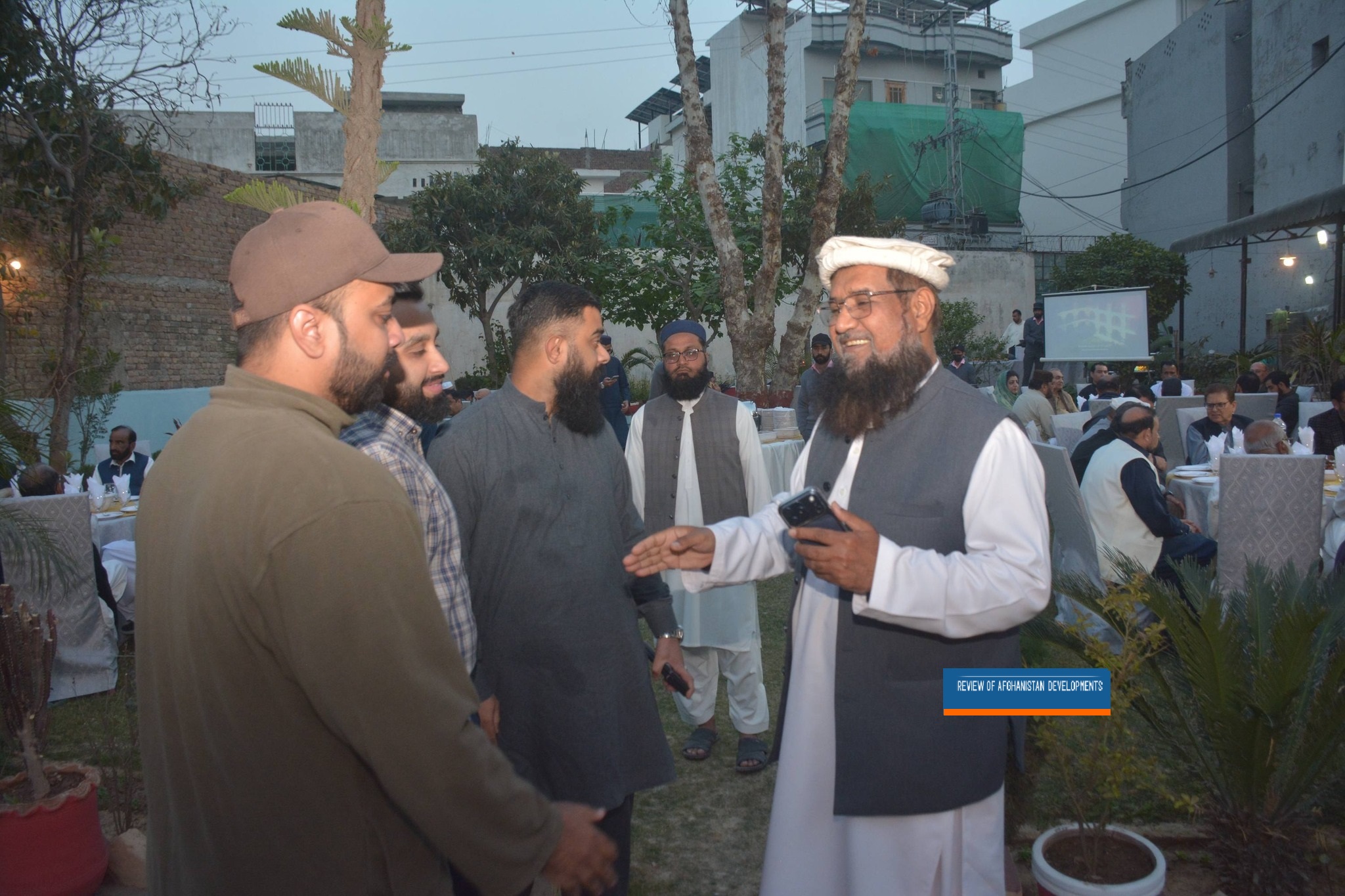
According to reports, the delegation includes Maulana Fazlur Rehman Khalil, Maulana Abdullah Shah Mazhar, and Maulana Sajid Usman. All three figures have backgrounds in jihadi activities and longstanding connections with Pakistan’s security and military institutions. Reports suggest that the delegation met officials of the Taliban government in Kabul in an attempt to find ways to reduce tensions between the two countries.
This development comes amid increasing tensions between Kabul and Islamabad in recent months, marked by border clashes, airstrikes, and mutual accusations regarding the presence of armed groups fueling conflict between the two neighboring states. Pakistan has repeatedly accused the Afghan Taliban of allowing the Tehreek-e-Taliban Pakistan (TTP) to operate inside Afghan territory, a claim the Taliban authorities have denied.
Within this context, sending a delegation of scholars with links to Pakistan’s military establishment can be interpreted as an attempt to explore an alternative channel of engagement—one that relies on jihadi diplomacy rather than traditional official diplomacy. This analysis examines the motivations and implications of this strategy.
Failure of the Pressure Strategy and Pakistan’s Turn to Jihadi Diplomacy
In recent months, relations between Afghanistan and Pakistan have entered one of their most tense phases. Border clashes, the closure of major crossings, and Pakistani airstrikes in Afghan territory indicate that Islamabad initially attempted to apply pressure to compel the Taliban to restrain armed groups.
Pakistan has repeatedly stated in official statements that negotiations cannot begin until the Taliban government takes action against the Tehreek-e-Taliban Pakistan (TTP). Pakistani officials have emphasized that dialogue with Kabul depends on concrete measures by the Taliban against this group.
However, recent security developments—particularly Afghanistan’s retaliatory operations against Pakistan using suicide drones—suggest that this pressure strategy has not achieved Islamabad’s objectives. Neither border clashes nor aerial attacks nor political pressure have pushed the Taliban government to change its position toward Pakistan.
Consequently, Islamabad appears to have gradually concluded that alternative channels are necessary to manage the crisis. In this context, jihadi diplomacy has re-emerged as a traditional yet potentially effective instrument.
For decades, Pakistan has relied on religious networks, jihadi leaders, and influential clerics to build connections with armed groups or allied governments. The Taliban government represents a natural target for such a strategy due to its historical and ideological links with Pakistani jihadist movements.
The deployment of a three-member delegation of scholars to Kabul therefore fits within the broader framework of Pakistan’s jihadi diplomacy. Each member of the delegation has experience within jihadist networks and is considered a trusted figure by Pakistan’s security establishment.
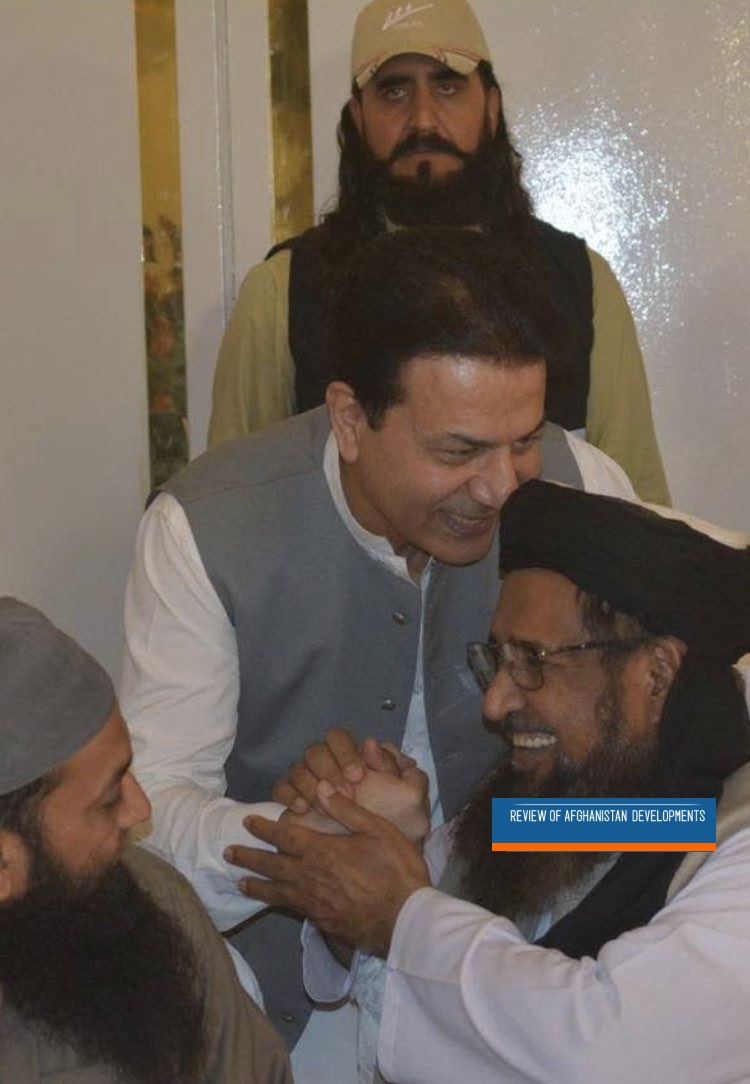
Composition of the Delegation and the Message of Pakistan’s Jihadi Diplomacy
The delegation sent from Pakistan to Kabul consists of three religious Ulema with jihadist backgrounds. Maulana Fazlur Rehman Khalil previously headed the Kashmiri militant organization Harakat al-Mujahideen. Maulana Abdullah Shah Mazhar formerly led Tehreek-e-Ghalaba al-Islam and is known as a jihadist figure supported by the Pakistani military. Maulana Sajid Usman is a former mujahideen fighter from the Afghan war against the Soviet Union and a close associate of Khalil.
All three individuals have previously been connected to jihadist networks, and some participated in the Afghan jihad against the Soviet Union. This background provides them with historical and ideological credibility among Taliban leaders.
Importantly, a delegation of this nature could not enter Afghanistan without the approval of Pakistan’s military establishment. Historically, Pakistan’s Afghan policy has been shaped primarily by security institutions, particularly the military. Therefore, the presence of these figures in Kabul likely reflects a broader political-security strategy linked to Islamabad’s jihadi diplomacy.
Despite this, the Pakistani government has not officially confirmed sending such a delegation and has even denied it in early statements. Officials have insisted that no formal negotiating team has been dispatched to Kabul.
This ambiguity may serve several purposes: preserving Islamabad’s official position against negotiations, limiting domestic political consequences if the talks fail, and maintaining flexibility while the outcome of the initiative remains uncertain.
Taliban Perceptions of Pakistan’s Jihadi Diplomacy
While Pakistan appears to be attempting to reduce tensions through religious networks, the Taliban’s reaction has been cautious and skeptical. Some figures linked to the Taliban government, including Qari Saeed Khosti—an ally of Sirajuddin Haqqani—have publicly expressed doubts about the usefulness of such discussions.
In a statement, Khosti indicated that the Taliban government is not interested in futile and time-consuming negotiations. Such remarks reflect Kabul’s lack of confidence in Islamabad’s intentions behind its jihadi diplomacy.
This distrust has deep historical roots. Although the Afghan Taliban share links with Pakistani jihadist networks, Taliban leaders also believe that Pakistan’s demands are unrealistic.
For example, Sirajuddin Haqqani recently revealed that Pakistan had requested recognition of the Durand Line as an international border during earlier discussions in Qatar and Istanbul. Pakistan has also demanded that the Tehreek-e-Taliban Pakistan be officially designated a terrorist organization.
However, ideological disagreements, Pashtun political considerations, and security concerns make it difficult for the Taliban leadership to accept these conditions.
In such circumstances, Taliban officials may view Pakistan’s jihadi diplomacy primarily as a tool for influencing Afghan internal politics rather than a genuine attempt to resolve the crisis.
Conclusion
The dispatch of a delegation of Pakistani scholars to Kabul signals a possible shift in Islamabad’s approach toward the Taliban government. After the apparent failure of military pressure and formal diplomacy, Pakistan is now experimenting with religious networks and ideological channels through jihadi diplomacy.
However, this initiative is likely a preliminary attempt to test the possibility of dialogue rather than the start of a comprehensive peace process. If it fails, tensions between Kabul and Islamabad may again escalate.
The Afghanistan-Pakistan crisis today is deeply tied to security dynamics, ideological divisions, and regional rivalries. In such a complex environment, Pakistan’s jihadi diplomacy may help create limited communication channels in the short term, but it is unlikely to resolve the deeper structural tensions between the two countries.