
Review of Afghanistan developments
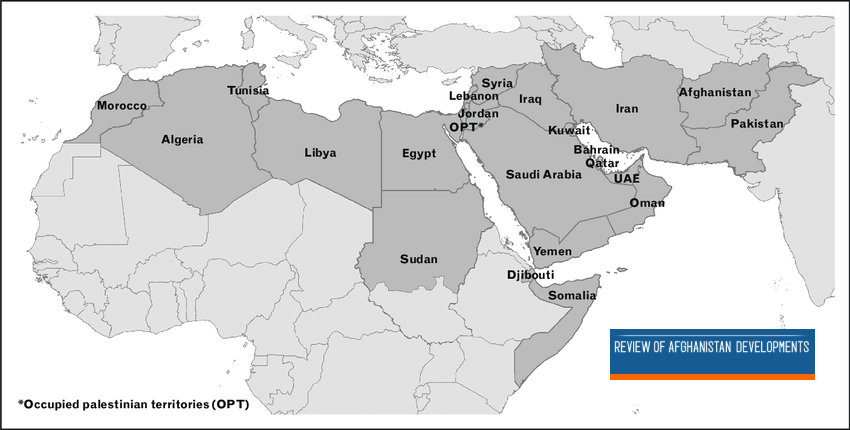
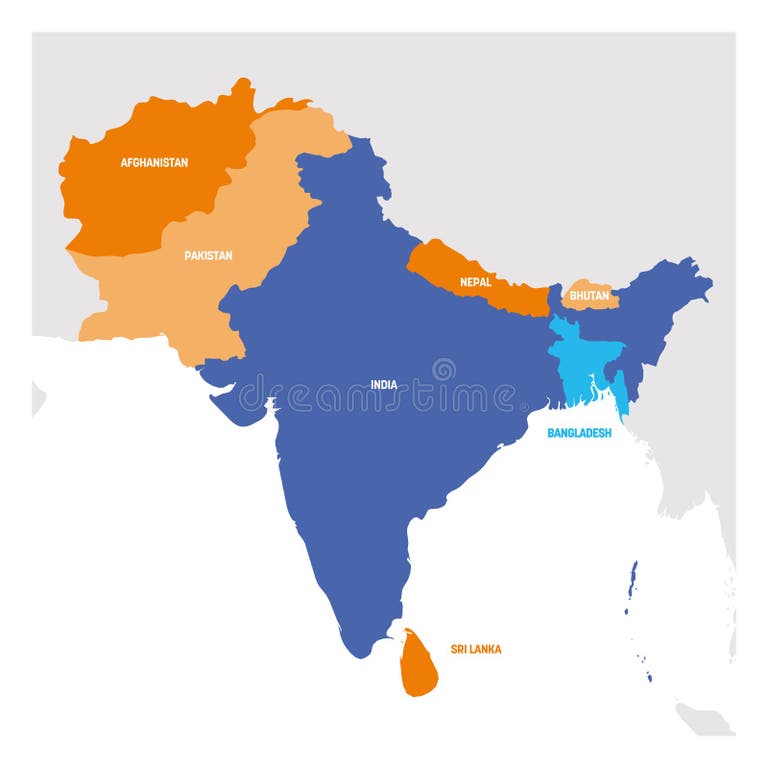
The World Bank has recently revised its regional classification. According to this new classification, starting from the fiscal year 2026, Pakistan and Afghanistan will be reclassified from the South Asia region to a new category, which will place them among the Middle East and North Africa (MENAAP) countries. While this classification is intended for the purpose of data tracking and analysis, and geographically and culturally, these two nations still belong to South Asia, this decision is poised to have a considerable impact, considering the World Bank’s influence on economic and political developments within the international system. The newly established office of the bank in Saudi Arabia will oversee the affairs of this region. An analysis of recent events indicates that this regional shift was, in fact, a consequence of Pakistan’s diplomatic initiatives aimed at distancing itself from the longstanding rivalry with India; an endeavor that ultimately resulted in Afghanistan’s inclusion in the MENAAP region.
Pakistan serves as the primary catalyst for Afghanistan’s shift to MENAAP
It appears that Pakistan’s transition from the World Bank’s South Asia region to the MENAAP region was initiated at the request of Islamabad. Following the World Bank’s announcement regarding this transition, Pakistani officials not only refrained from raising any objections, but the Minister of Economic Affairs of Pakistan referred to the move as a “national achievement.” Furthermore, several Pakistani users on X-Net clearly indicated that the alteration was made at the behest of Pakistan.
For Pakistan, sharing a region with India has consistently posed diplomatic and economic difficulties. India, due to its rivalry with Pakistan, has frequently urged multilateral banks to cease lending to Pakistan under the guise of combating terrorism. This pressure from India has fostered a political climate unfavorable to Pakistan’s initiatives within the World Bank. With Pakistan’s withdrawal from the South Asia region, Islamabad will be liberated from this pressure exerted by Delhi.
On the other hand, Islamabad has been striving to reshape its regional identity for many years. The strategy known as the “Hinge Economy,” which Pakistan is implementing to position itself as a connector between South Asia, the Persian Gulf, and Central Asia, will materialize with the transition to MENAAP. In this new region, Pakistan will find itself alongside the affluent Arab Gulf states, enabling it to take greater advantage of the economic cooperation opportunities with Saudi Arabia, the UAE, and Qatar.
It is crucial to highlight that Afghanistan’s transition to MENAAP occurred concurrently with that of Pakistan. According to the evidence, Afghanistan’s shift from South Asia to MENAAP was primarily driven by a proposal from Pakistan. The rationale behind this assertion can be outlined as follows.
The primary reason is Afghanistan’s geographical and economic reliance on Pakistan. Historically, transit corridors, trade routes, and access to open waters have traversed through Pakistan. Islamabad, desiring Afghanistan’s economic and security reliance on itself, could not permit the country to fall under the influence of its rival (India) in another region. In simpler terms, allowing Afghanistan to remain in the South Asian region, which would subsequently become dominated by India, was strategically intolerable for Pakistan.
The second reason pertains to alignment with Pakistan’s security priorities. Islamabad has consistently expressed concern over being excluded from the Afghan equation. By relocating Afghanistan to a context where Pakistan is also involved, Islamabad can guarantee that no significant decisions regarding Afghanistan are made without its awareness and collaboration.
In the updated classification by the World Bank, Afghanistan and Pakistan have been excluded from the South Asia region and reassigned to the Middle East and North Africa region, which will henceforth be referred to as MENAAP.
The Role of other countries in Afghanistan’s shift towards MENAAP
While the World Bank has embraced the transition of Afghanistan and Pakistan from South Asia to MENAAP, it is important to acknowledge that the decision-making within the World Bank is conducted by the 25-member Executive Board. However, the influence of other nations in this decision-making process is undeniable.
India
India has firmly opposed the transfer of Afghanistan to the Ministry of External Affairs (MENAAP). Indian media has characterized this shift as the “expulsion of Pakistan and Afghanistan,” reflecting a negative sentiment. While India did not contest Pakistan’s exit from South Asia and may even view it positively, the transfer of Afghanistan to the MENAAP was certainly not welcomed by the Indian side, as Pakistan’s ongoing influence over Afghanistan would disrupt Delhi’s strategic calculations concerning Afghanistan and Central Asia.
Saudi Arabia
Saudi Arabia has been instrumental in aiding the transition of Afghanistan and Pakistan to MENAAP. Three months following the implementation of this transition, the World Bank inaugurated its new regional office in Riyadh. The creation of this office will equip Riyadh with a means to shape the development dialogue. In essence, Saudi Arabia intends to leverage this change to enhance its geopolitical clout, and with Afghanistan now included in the purview of the World Bank office in Riyadh, the Saudis can bolster their influence in Afghanistan.
Qatar
Qatar’s involvement in the new MENAAP equation is significant and cannot be overlooked. In recent years, Doha has emerged as a crucial player in Afghanistan, facilitating the Taliban-US peace negotiations, coordinating humanitarian assistance, and serving as a political intermediary between Afghanistan and Western nations. As Afghanistan transitions to the MENAAP region, Doha is now positioned to engage directly with the World Bank within a unified regional framework, bypassing the complex administrative processes of South Asia. This regional transition allows Doha to uphold and enhance its role as a vital coordinator between the Taliban and the global community, although it will face competition from Riyadh in this capacity.
USA
Washington has yet to provide an official statement regarding this transition; however, its indirect involvement is indisputable. With approximately 16 percent of the shares in the World Bank, the United States essentially possesses veto power. The recent enhancement of relations between Islamabad and Washington, particularly following the difficult withdrawal from Afghanistan, is regarded as a primary reason for this shift. The United States requires Pakistan to effectively handle the situation in Afghanistan and to sustain a balance against China’s increasing influence. The relocation of Pakistan and Afghanistan to the MENAAP region promotes this strategic collaboration.
Riyadh-Islamabad alliance: emerging influence in World Bank decision-making
Will these modifications alter the power structure at the World Bank? The brief response is no, but they will undoubtedly affect the political significance and speed of initiatives in the MENAAP region. Key decisions will continue to be made in Washington and by the Executive Board, yet Saudi influence will certainly rise with the establishment of the Riyadh office. Riyadh is now positioned to directly impact regional priorities and serve as a conduit for regional transformation.
Pakistan’s influence is set to grow with the transition to MENAAP. Islamabad is situated in a region where the primary host of the World Bank office, Saudi Arabia, stands as one of Pakistan’s strategic partners. This collaboration enables Pakistan to expedite its projects and goals with the backing of Riyadh.
However, it is crucial to note that the Saudi-Pakistani alliance cannot solely determine the decisions made by the World Bank. Any significant decision, such as a modification in regional classification, can only occur with the implicit approval of the United States. The role of this alliance is to expedite processes and enhance coordination within the region.
Consequences of this alteration for Afghanistan
One significant consequence that may impact Afghanistan’s political future is the ongoing connection between the country and Pakistan. Afghanistan’s geographical position adjacent to Pakistan in the MENAAP region will sustain Kabul’s reliance on Islamabad within regional frameworks. Henceforth, every decision regarding Afghanistan will be made within a context that includes Pakistan.
The second consequence is that Saudi Arabia’s involvement in Afghanistan’s future will become increasingly significant. Due to Saudi Arabia’s strong connections with Pakistan and its sway in the decision-making processes of the World Bank office, Riyadh is set to emerge as a primary conduit for communication between Afghanistan and the World Bank.
The third outcome of Afghanistan’s shift to MENAAP is that India’s influence in the Afghan context will diminish compared to the past. The shift of Afghanistan to MENAAP will significantly lessen India’s involvement in Afghan matters, particularly in the realm of financial decision-making, thereby changing New Delhi’s status from a key participant to a remote spectator.
Related Articles
China’s Capacity to ease Tensions Between Pakistan – Taliban
Trilateral summit: China’s role as a mediator between AfPak
The fourth consequence is the risk of forgetting Afghanistan. In the new region, Afghanistan is the smallest and poorest member of MENAAP. The main concern is that Afghanistan’s needs will be marginalized in the shadow of larger priorities, such as the crises in the Middle East.
Finally, removing Afghanistan from South Asia and transferring it to the MENAAP region is a new geopolitical reality that Afghans are forced to accept. It is expected that Kabul’s political compass will also rotate and reconsider its relations with regional actors in line with these changes.