
Review of Afghanistan Developments
Although over a month has elapsed since the United States and Israel initiated their offensive against Iran, the response of the Afghan people to the conflict has emerged as a crucial indicator for comprehending the situation in Afghanistan. From the streets of Kabul to various social media platforms, and from the cautious positions of the Taliban to the fervent sentiments expressed by the populace, it is evident that this war is not merely a remote occurrence; it is an event that has profoundly influenced the thoughts, political landscape, and even the collective identity of the Afghan people. The deep-rooted cultural, religious, and economic connections with Iran have rendered Afghanistan more vulnerable to the repercussions of this crisis compared to many other nations. In this context, a thorough analysis of the Afghan response to the conflict between the US and Israel and Iran can offer valuable insights into the future of regional dynamics and the internal direction of Afghanistan.
The Taliban government’s reaction to the US-Israeli War Against Iran
Afghanistan has perpetually been directly affected by the geopolitical developments in the surrounding region. In the current context, the US-Israeli war with Iran has also influenced Afghanistan’s role in regional dynamics as a significant development. The geographical closeness to Iran and reliance on the country’s transit routes have effectively placed Afghanistan within the sphere of influence of the ramifications of this war.
Viewed through a geopolitical lens, a war involving the US and Israel against Iran has the potential to shift the prevailing balance of power in the region, thereby impacting Afghanistan’s relationships with adjacent countries and international powers. The Afghan government recognizes that enhancing the current Iranian government could lead to adverse outcomes for the “Islamic Emirate,” which is why it aims to preserve the existing status quo.
Since the Taliban regained authority in Afghanistan, especially in light of the commencement of the Gaza war, the governing body has established a relatively explicit viewpoint towards Israel. Evidence of this stance can likewise be detected in relation to the US-Israeli war against Iran.
Nevertheless, the Taliban administration, given its unique political and international context, is attempting to steer clear of direct involvement in extreme polarizations. On one side, the Taliban administration is eager to preserve its strategic ties with Iran, while on the other, it seeks to avoid actions that might heighten international pressure, particularly from the United States. Consequently, the Taliban administration’s position regarding the US-Israeli conflict with Iran can be interpreted as a blend of political-religious empathy and diplomatic prudence.
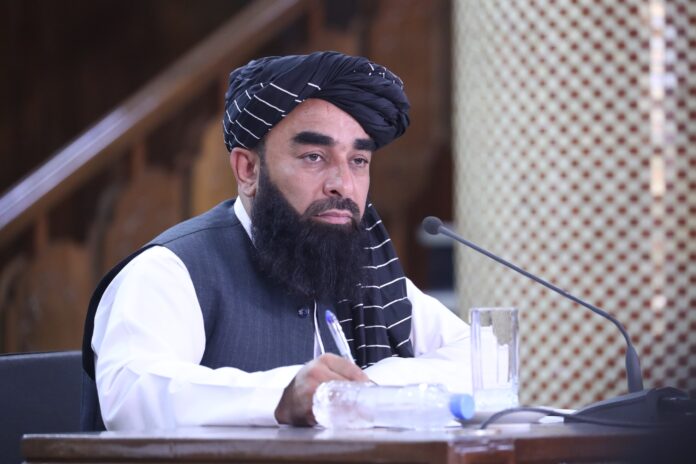
Prior to the onset of the war, Zabihullah Mujahid, a representative of the Taliban administration, declared in statements that Afghanistan was prepared to collaborate with the Iranian populace should a potential conflict arise with the United States. Following the commencement of the war, Amir Khan Mottaki, the foreign minister of the Taliban government, referred to the US and Israeli assaults on Iran as acts of aggression during a phone call with Iranian Foreign Minister Seyyed Abbas Araqchi. He also conveyed his condolences to the Iranian government and its citizens regarding the targeting of the Leader of the Islamic Revolution.
The Iranian Foreign Minister has expressed gratitude to the Taliban government on two occasions for its backing of the Islamic Republic. Alireza Bikdeli, the Iranian ambassador in Kabul, while endorsing the Taliban government’s position regarding the conflict, declared the commencement of a new phase in relations with Afghanistan’s caretaker government following the conclusion of the war. These statements suggest that the Taliban government enjoys support, sympathy, and collaboration with Tehran at a discreet level.
However, at an unofficial level, several officials from the Taliban government have expressed a definitive viewpoint. For instance, Maulvi Amanuddin Mansoor, the governor of Helmand, delivered a clear speech in which he endorsed Iran’s resistance against the US and Israel, while also vehemently condemning the opposition from certain movements towards Iran. He labeled ISIS and Hizb ut-Tahrir as Takfiri due to their stances regarding Iran and stressed that the inability to comprehend Iran’s position in this war stems from the influence of foreign ideologies.
Afghan people’s reaction to the Iran war
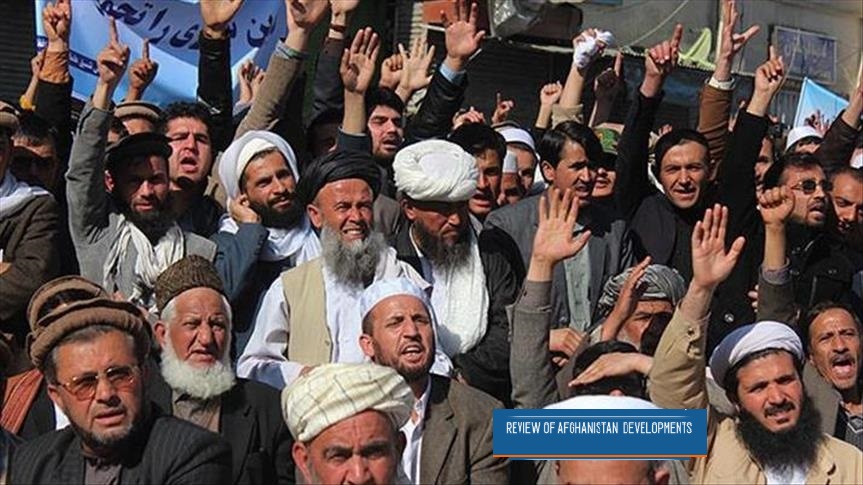
Social media serves as a platform for individuals to articulate their personal viewpoints, and by examining it, one can gain insight into the public’s perspectives on a particular issue. Analyzing the sentiments expressed by the Afghan populace regarding the Iran war reveals that Afghan users across different platforms have largely expressed support for Iran while denouncing the attacks by the US and Israel. Nevertheless, there are also some who hold opposing views, primarily consisting of Westerners who have fled Afghanistan and continue to subscribe to America’s misleading rhetoric.
A video featuring an Afghan child articulating compassion for the citizens of Iran in a youthful manner, along with his willingness to welcome the Iranian people into his home, serves as a modest representation of the empathy held by a significant portion of the Afghan populace towards Iran and its people.
Those Afghans who have adopted a sympathetic stance towards Iran have mainly discussed American and Israeli aggression in their writings, reflecting on it through the framework of international law, the presumptuous attitude of America, Trump’s militaristic tendencies, Israeli subversion, the comprehensive plans of America and Israel for the region, and the harmful repercussions of war.
In the meantime, a significant indication of the Afghan people’s solidarity was demonstrated through the cash contribution made by Herat businessmen to the Islamic Republic. On behalf of the residents of Herat Province, Afghanistan, these businessmen, who are members of the Chamber of Commerce, presented a cash donation of 250,000 euros to the officials of the Iranian Consulate General in Herat, expressing their sympathy for the people of Iran.
Responses from notable Afghan political figures
Notable Afghan political figures have expressed their views regarding the aggression exhibited by the US and Israel towards Iran. In a statement, former Afghan President Hamid Karzai deemed the military action against Iran as inconsistent with international obligations. Abdullah Abdullah similarly characterized the assaults as a blatant infringement on Iran’s national sovereignty, asserting that such actions are in violation of international law principles. Abdul Karim Khurram, who previously served as chief of staff to Hamid Karzai, referred to the conflict as a global catastrophe and identified the Arab nations of the Persian Gulf as the primary victims of this war.
Abdul Salam Zaeef, who previously served as the Taliban government’s ambassador to Pakistan, expressed criticism of Donald Trump’s stances, labeling him as untrustworthy in negotiations and highlighting the intricate nature of diplomatic efforts during this crisis. Former Afghan Foreign Minister Rangin Dadfar Spanta deemed the aggression exhibited by Israel and the United States towards Iran as contrary to all international norms and denounced it. He stated that the peace-loving individuals across the globe stand in solidarity with the people of Iran.
Afghan Shia communities respond to the US-Israeli War Against Iran
Afghan Shias hold a favorable perspective towards Iran, influenced by shared religious and cultural ties. In the wake of the US and Israeli assault on Iran, numerous Afghan Shias have openly expressed their support for Iran while denouncing the actions of the US and Israel. The martyrdom of Ayatollah Seyyed Ali Khamenei, the head of the Islamic Revolution in Iran, significantly affected the sentiments of Afghan Shias. The commemorative events conducted to honor the martyrdom of the deceased Iranian leader within the Afghan Shiite community in Kabul and other regions serve as a testament to this.
A response based on religious beliefs
One of the key elements in examining the US-Israeli conflict with Iran in Afghanistan is its religious and ideological aspect. The Afghan populace, particularly the Taliban government, has been involved in a conflict with the US and Western military forces for over twenty years. This historical context has reinforced a prevailing sentiment regarding the clash between the West and Islam within a segment of society.
Within this framework, certain factions and segments of the public in Afghanistan perceive the US-Israeli war against Iran as a clash between Western powers and the Islamic world. Among various Sunni religious scholars aligned with the Taliban government, a significant narrative has surfaced, highlighting that in the face of a war of infidelity against an Islamic nation, religious differences ought to be put aside, or in other terms, regarded as secondary. This perspective is also grounded in Islamic historical thought and is supported by well-established foundations and arguments within both Shia and Sunni jurisprudence.
Response Based on Mutual Cultural Understanding
Iran, recognized as a significant hub of Persian civilization and language, holds a unique position within the cultural landscape of Afghanistan. In this regard, the conflict between the US and Israel against Iran is perceived by Afghan cultural elites and activists not merely as a political and military struggle, but also as a peril to their cultural and linguistic identity.
From this viewpoint, the US-Israeli War Against Iran is also seen as a clash with the Persian-speaking cultural realm. This viewpoint is especially significant among Afghan authors, poets, and scholars, resulting in the development of a form of cultural unity with Iran.
The concurrent effects of the tension with Pakistan and the US-Israeli War Against Iran
The citizens of Afghanistan have endured the effects of US occupation and military invasions for almost twenty years, leading to their dissatisfaction with both the US and NATO. This discontent has fostered a sense of empathy towards the Iranians amidst the ongoing conflict. Concurrently, while the US-Israeli conflict with Iran unfolds, Afghanistan has been grappling with political strife and airstrikes conducted by the Pakistani military on its territory, resulting in considerable human losses and destruction. Consequently, this scenario has cultivated a feeling of solidarity and a shared fate between Afghanistan and Iran.
In this context, the US-Israeli war against Iran is viewed by Afghan society as a blatant instance of foreign aggression that should be opposed. This viewpoint has reinforced the sentiments of anti-aggression and bolstered support for defense within Afghan society.
Related Articles
Regional consensus against US return to Bagram
Afghanistan and Venezuela: Lessons from U.S.-Led Regime Change
Conclusion
Overall, the Afghan response to the US-Israeli war against Iran reveals a complex landscape of Afghanistan’s political, social, and identity dynamics. This response from the Afghan populace is influenced in part by geographical, cultural, and religious closeness, and in part by the scars left by the US occupation.
The position of the Taliban government regarding the US-Israeli conflict with Iran reflects a blend of diplomatic prudence and an underlying alignment with Iran. This alignment is subtle, yet it is evident that Kabul’s support and collaboration with Tehran are significant enough for the Iranian Foreign Minister to have expressed gratitude towards the Taliban government once more. Supporters of the Taliban are actively utilizing social media platforms to openly convey their sentiments of solidarity with Iran and their animosity towards America. Generally, Afghan Shias tend to hold more favorable views towards Iran, while a unifying narrative opposing the war has also surfaced among Sunni groups.
Ultimately, it can be concluded that the war between the US and Israel with Iran plays a crucial role in reshaping the perspectives and stances of both the Afghan government and its citizens regarding Iran.