

Review of Afghanistan developments
The murders of Chinese citizens in Tajikistan represent more than a mere security incident; they indicate the onset of a perilous geopolitical struggle in the region. Within a week, two fatal assaults on Chinese citizens have taken place in the border regions of Tajikistan adjacent to Afghanistan, coinciding with efforts by the Taliban and Tajikistan to alleviate tensions and initiate political dialogue.
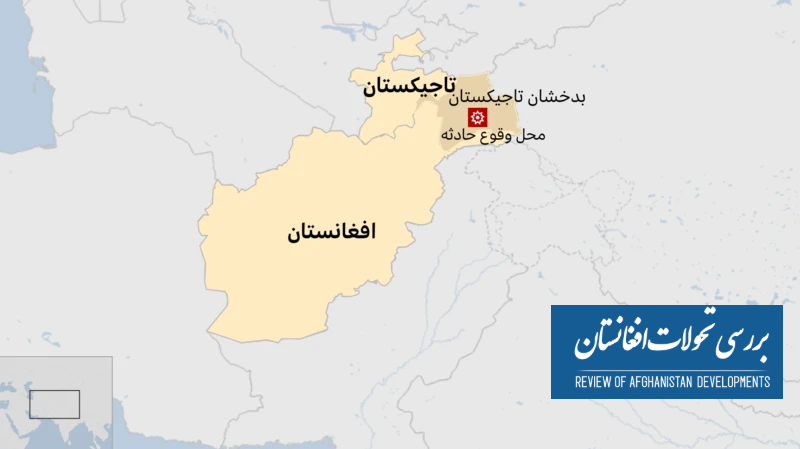
In the first incident, occurring on December 25 in the Shamsuddin Shahin area of Khatlan province, three Chinese nationals lost their lives and one sustained injuries. A few days later, a subsequent attack occurred in the Shadak region of Tajikistan, resulting in the assassination of two Chinese citizens. The recurrence of these security incidents within a brief timeframe indicates that the killings of Chinese nationals in Tajikistan may be part of a deliberate strategy aimed at undermining the Taliban government’s attempts to enhance security in northern Afghanistan and foster relations with Central Asia.
The significance of the timing and location of the murder of Chinese citizens in Tajikistan
The relationship between Kabul and Dushanbe experienced its most strained phase during the second term of the Taliban’s governance in Afghanistan. Throughout this time, Tajikistan provided a platform for anti-Taliban individuals, while the Taliban maintained a close proximity to the factions opposing Mr. Rahmon’s administration, both in rhetoric and action. Nevertheless, starting from early 2025, indications of diminished tensions emerged, characterized by non-political interactions, restricted security discussions, and more conciliatory communications.
The Khatlan incident transpired simultaneously. As the Taliban and Tajik governments were progressing towards engagement, the murder of Chinese citizen in Tajikistan directly undermined the budding trust, since any border incident could swiftly disrupt the delicate atmosphere of trust and depict Afghanistan as a source of instability for Tajikistan. Therefore, the timing of the attack holds equal significance to the attack itself, indicating that for certain actors, the closeness of Afghanistan and Tajikistan is unwelcome.
Who benefits from the murder of Chinese citizens in Tajikistan?
The killing of Chinese nationals in Tajikistan has multiple possible beneficiaries; entities and nations that are adversely affected by the relationship between the Taliban government and Tajikistan, along with the growth of China’s influence in Afghanistan that contradicts their interests, are currently being examined.
The involvement of Taliban adversaries in the security incidents of Tajikistan
Following the developments in 2021, Tajikistan distinctly positioned itself against the Taliban regime, becoming a refuge for those opposing the Taliban. Throughout the initial three years of the Taliban’s rule, Tajik President Emomali Rahmon consistently expressed an anti-Taliban viewpoint in the majority of his addresses, portraying himself as an advocate for the Tajik people. This shift from a previously neutral stance to Dushanbe’s inclination to interact with the Taliban government raised concerns among numerous Taliban adversaries.
In recent months, as negotiations and relations between Afghanistan and Tajikistan have advanced, concerns have escalated. This apprehension arises from the fact that Tajikistan, regarded as the last spiritual bastion of the Taliban opposition, is deteriorating and may align itself with the group of interactionist nations. Should this occur, it would represent a significant political setback for the Taliban opposition. Consequently, the Taliban opposition factions are unable to tolerate the strengthening of Taliban-Tajik relations and seek to preserve a distance between Dushanbe and Kabul. Nevertheless, the involvement of the ‘National Resistance Front of Afghanistan’ in this assault is selective, as Tajikistan provided refuge to this front during a challenging historical period. However, there are individuals opposed to the Taliban who, due to their financial resources and military superiority in this region, are capable of orchestrating such attacks.
Were terrorist organizations implicated the murder of Chinese citizens?
In contrast to the propaganda disseminated concerning the existence of terrorist organizations in northern Afghanistan, it is important to note that, aside from ISIS Khorasan, no terrorist group is currently present or operational in that region. Assertions regarding the presence of terrorist groups in northern Afghanistan serve political agendas. Organizations such as the Islamic Movement of Uzbekistan (IMU), Ansarullah Tajikistan, and the East Turkestan Islamic Party (ETIM), among others, are confined to provinces and areas that are distant from the borders of Uzbekistan, Tajikistan, and China, and they are prohibited from departing these designated zones.
Until a year ago, the sole group operating in northern Afghanistan was ISIS Khorasan (ISKP), which executed violent attacks in the Northern provinces. However, over the past year, following the discovery of multiple clandestine ISIS cells in the north, the group relocated its leaders and fighters to Pakistan to ensure its continued existence. Conversely, when ISIS Khorasan conducts an attack, it claims responsibility as a demonstration of its presence in Afghanistan. The lack of communication from ISIS Khorasan regarding this issue indicates that the group was not responsible for these attacks.
The potential involvement of both regional and extra-regional countries in assaults on Chinese citizens
China’s involvement in Afghanistan after 2021 has sparked worries among various nations. The northern regions of Afghanistan, particularly the provinces of Badakhshan, Takhar, and Kunduz, are becoming increasingly significant to China due to their resources, mining opportunities, and access routes to Central Asia. This growing Chinese interaction with the Taliban administration raises alarms for several countries. Notably, the United States, as a nation outside the region, has explicitly expressed its apprehensions regarding China’s prominent role in Afghanistan.
Among the nations in the region, Pakistan emerges as the primary loser. Pakistan is opposed to China interacting with the Taliban without coordination from Islamabad, and as Pakistan finds itself excluded from the Afghan economic landscape, China’s involvement with the Taliban becomes intolerable for Pakistan.
Pakistan’s concern is justifiable, particularly as Beijing has established an independent rail corridor connecting Central Asian nations with Afghanistan and is developing a new economic axis through northern Afghanistan. Overall, considering that Pakistan desires any security-economic framework in the region to be routed through Islamabad, instigating instability in the Afghanistan-Tajikistan border region serves as a signal to multiple countries that the dynamics will be altered without Pakistan.
Who possesses the capability to execute this attack?
Based on information from Tajik sources and preliminary evaluations, the initial assault that resulted in the deaths of Chinese citizens in Tajikistan was executed using a drone and direct gunfire, while the subsequent attack involved a shooting incident. In light of this data, this combination necessitates four key components: firstly, access to drones or quadcopters; secondly, an understanding of the geographical layout of the border; thirdly, a network for transportation and deployment; and fourthly, the capability to operate briefly and make a swift escape.
Accordingly, the aforementioned capability is categorized into two distinct groups; firstly, military-intelligence networks associated with state actors who have access to the requisite information, resources, and geopolitical objectives. Secondly, opposition factions of the Taliban that are equipped to execute such attacks by utilizing commercial quadcopters, maintaining geographical control over the area, and possessing adequate motivation. It is plausible that this incident constituted a hybrid attack, meaning it was executed in collaboration with one or more countries alongside the Taliban adversaries.
China’s response to the murder of Chinese citizens in Tajikistan and the resulting implications
Following the initial assault that resulted in the murder of three Chinese citizens, Beijing urged its citizens to vacate the Tajik-Afghan border regions. Although this evacuation has yet to be executed, a subsequent attack has occurred. China’s decision to withdraw its citizens in response to these events merits examination. This withdrawal serves as a clear indication of Beijing’s diminished confidence in the ability of neighboring nations to manage the threat and the likelihood of similar attacks happening again. Conversely, the act of pulling its citizens out of Tajikistan conveys a significant message that Beijing is refraining from engaging in the security rivalry concerning Afghanistan.
It appears that the Taliban administration was unprepared for this kind of assault at this moment, as the murder of Chinese citizens in Tajikistan will lead to severe repercussions for Afghanistan. Firstly, any potential collaboration with Tajikistan is likely to be put on hold for some time, and secondly, Kabul must brace itself for a new set of challenges.
In its announcement, the Foreign Ministry of the Taliban government associated the attack with “groups aiming to foster instability and mistrust” and declared “extensive collaboration” with Tajikistan for a collective evaluation.
Related Articles
Tajikistan’s Shift in foreign policy Towards the Taliban
Analysis of the Balkh Governor’s Visit to Tajikistan
Conclusion: The murder of Chinese citizens and the geopolitical dynamics of the area
The murder of Chinese citizens in Tajikistan due to assaults originating from Afghan territory involves the three nations of Tajikistan, Herat, and China. Meanwhile, the Taliban administration may face greater repercussions than Dushanbe and Beijing, as its attempts to stabilize relations with these nations will be obstructed. These occurrences are not merely security incidents; rather, they represent a strategic maneuver in the geopolitical dynamics of the region. Various parties gain from these killings, yet at present, doubts and speculations are focused on groups that might have operated autonomously or under the influence of a neighboring country.