
Review of Afghanistan developments
At first glance, Afghanistan appears to be a golden opportunity for China; it is a nation abundant in essential minerals and possesses a favorable geopolitical and geostrategic position. However, a more realistic assessment reveals that the situation diverges from this broad and optimistic perspective. For years, China has endeavored to enhance its influence in Afghanistan, yet it has not succeeded in achieving a definitive and sustainable outcome. The causes of this lack of success can be attributed to a mix of insecurity, political instability, rivalry among regional powers, and the intricate dynamics of the relationship with the Taliban.
China’s approach in Afghanistan differs significantly from the interventionist and military model employed by the United States. Instead, Beijing aims to enhance its economic and security presence in the country through an alternative route. However, the challenges present have rendered China’s position in Afghanistan one of the most intricate scenarios within Beijing’s foreign policy framework. This note analyzes China’s strategy in Afghanistan along with the challenges it faces.
Security; The cornerstone of China’s strategy in Afghanistan
Contrary to common perception, China’s primary focus in Afghanistan is not on mining and trade, but rather on security. Beijing is apprehensive that instability in Afghanistan may extend to China’s western borders or that extremist factions could exploit Afghan territory to undermine its interests.
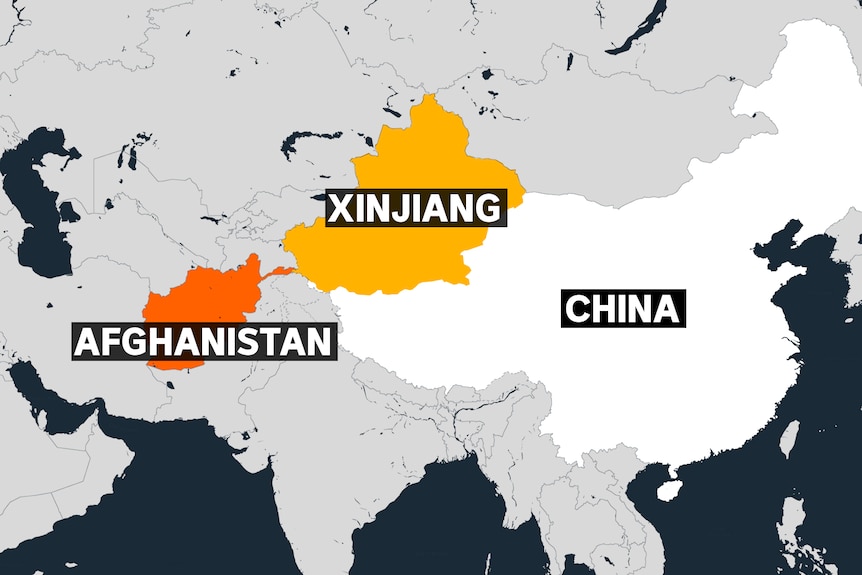
Xinjiang holds significant strategic value for China, and any instability in the region is perceived as a substantial threat to Beijing. Consequently, China’s approach in Afghanistan prioritizes security over development. To implement this security-focused strategy, it employs various methods, including engagement with the Taliban, intelligence collaboration with neighboring nations, fortifying borders, and leveraging investments.
Beijing has observed the American experience in Afghanistan and, as a result, Chinese leaders are determined not to make the same error. Rather, China’s approach in Afghanistan is founded on the belief that threats ought to be managed through engagement, political influence, and economic leverage.
Uyghur militants: a hindrance to establishing trust
Following the Taliban’s resurgence to power, numerous observers speculated that China would swiftly supplant the United States in Afghanistan. However, subsequent developments revealed that the situation is far more intricate than these premature forecasts suggested. The Taliban require financial resources, trade opportunities, and global recognition to effectively govern Afghanistan, while China’s approach in the region necessitates collaboration with the Taliban. Although the interests of both parties appear to be in harmony at first glance, practical challenges have hindered the formation of enduring trust between Kabul and Beijing.
In addition to various challenges, the anti-Chinese factions operating in Afghanistan, which include Uyghur militants, represent one of the outstanding issues between the Taliban and China. Throughout the republican period, northern Afghanistan served as a region where Uyghur fighters were active in different groups. Following the Taliban’s rise to power, the operational freedom of these Uyghur fighters was restricted, and they were relocated to enclosed zones distant from the Chinese border; however, their apprehension and subsequent extradition to China was never agreed upon.
The destiny of the Uyghur fighters appears to be a significant barrier to establishing profound and enduring trust between the Taliban and China. Coupled with other elements, this situation has resulted in a form of conditional and transient engagement between Kabul and Beijing, rather than fostering a strategic partnership.
Afghanistan’s mineral resources; another cornerstone of China’s strategic approach in Afghanistan
One of the primary motivations behind China’s interest in Afghanistan is the nation’s extensive natural resources. Estimates indicate that Afghanistan possesses significant reserves of copper, iron, gold, rare earth elements, and particularly lithium; for a nation like China, which aims to establish itself as a global economic leader, these reserves in a neighboring country are highly appealing.
For this reason, a key component of China’s strategy in Afghanistan has been its long-term focus on the country’s untapped mineral resources. The Aynak copper mine project stands out as one of the most significant examples. Chinese firms secured the rights to develop this mine, and it was anticipated that this initiative would mark the beginning of Beijing’s substantial economic involvement. However, issues related to security, inadequate infrastructure, the presence of US forces in Afghanistan, and shifts in the political landscape led to the project’s prolonged delay.
The destiny of China’s investment in Afghanistan‘s oil and gas industry mirrors that of the Aynak mine. Agreements were established to explore certain fields in northern Afghanistan; however, their execution has faced significant obstacles. These instances have demonstrated that a considerable distance exists between the signing of a contract and the actual process of extraction.
For Beijing, the resources of Afghanistan continue to be alluring, and the Taliban are eager for Chinese investment in the country; however, until the barriers are eliminated, these assets will remain largely inaccessible. Consequently, China’s approach in Afghanistan has not yet taken full advantage of the nation’s economic opportunities. Conversely, China has acknowledged that it can secure long-term benefits by entering the market early. Nevertheless, early entry also entails significant risks. This contrast has placed Beijing in a position of tension between economic ambition and security prudence.
The impact of regional rivalries on China’s strategy in Afghanistan
Afghanistan is a meeting point for the interests of various regional and global powers. This has made Beijing’s task more difficult. Pakistan is one of the most important players in the Afghan case. Islamabad’s historical relations with the Taliban have forced China to adjust some of its policy to Pakistan’s considerations. The increasing tensions between the Taliban and Pakistan are another major obstacle to the implementation of China’s strategy in Afghanistan. Perhaps this is why China has begun mediating between Kabul and Islamabad.
On the other hand, India has also expanded its diplomatic and economic footprint in Kabul. Despite Delhi being one of the adversaries of the Taliban, once the Taliban solidified their control in Afghanistan, India shifted from its conventional approach and engaged with the Afghan landscape in a pragmatic manner. For Delhi, Afghanistan represents a chance to counterbalance Pakistan and curtail China’s sway. Consequently, the rivalry between India and China could have a direct impact on the future trajectory of China’s strategy in Afghanistan.
Russia, Iran, Central Asian nations, and even Western entities all possess interests in Afghanistan. This variety of stakeholders complicates China’s ability to effectively implement its strategy in Afghanistan.
Despite China being a significant global economic power, it encounters a multipolar landscape in Afghanistan. Each economic or security decision is influenced by the responses of other stakeholders, which has hindered Beijing’s progress. Consequently, China’s approach in Afghanistan is not solely determined by Kabul; it is interconnected with a complex web of regional relationships that are challenging to navigate.
China’s strategic patience in Afghanistan
One of the key aspects of China’s foreign policy is its strategic patience. An examination of China’s foreign policy on the global stage reveals that Beijing typically refrains from hasty actions and opts to leverage time to its benefit. This reasoning is also evident in the case of Afghanistan.
China recognizes that Afghanistan requires financial resources at present and has limited alternatives compared to previous times, leading it to believe that Kabul will increasingly depend on Beijing’s assistance as time progresses. Viewed from this angle, China’s approach in Afghanistan resembles a strategic waiting game.
In this model, China engages in a few limited projects, maintains open political channels, and upholds its investment commitments, yet refrains from making a significant economic entry. Rather, it opts to wait for the Taliban to establish more favorable security conditions. The Taliban’s approach in response to this strategic patience or waiting strategy employed by China has been astute; to counteract this Chinese maneuver, the Taliban has sought to negotiate with various parties and demonstrate that China is not the sole option available. One facet of the Taliban’s shift towards India can be understood precisely in this context.
Related Articles
China’s Capacity to Ease Tensions Between Pakistan – Taliban
Trilateral summit: China’s role as a mediator between AfPak
The Future of China’s Strategy in Afghanistan
The trajectory of China’s strategy in Afghanistan is contingent upon several critical elements: The Taliban’s capacity to ensure stability, the mitigation of threats posed by armed factions, including Uyghur militants, the enhancement of economic infrastructure, and the dynamics of competition among regional powers. Should these elements align with Beijing’s objectives, China has the potential to emerge as Afghanistan’s foremost economic ally.
In this situation, China would engage in Afghanistan’s extensive mining initiatives, thereby positioning the country as a crucial component in the Asian economic network. This development would represent a significant geopolitical achievement for Beijing. Conversely, the existing approach characterized by grand commitments, minimal investment, and sluggish advancement is expected to persist.
Overall, China’s strategy in Afghanistan remains in an experimental phase. Beijing seeks to establish security without military intervention and to accrue maximum benefits while assuming minimal risk. Whether this approach proves effective in Afghanistan is a question that will be determined in the coming years.