
Review of Afghanistan developments
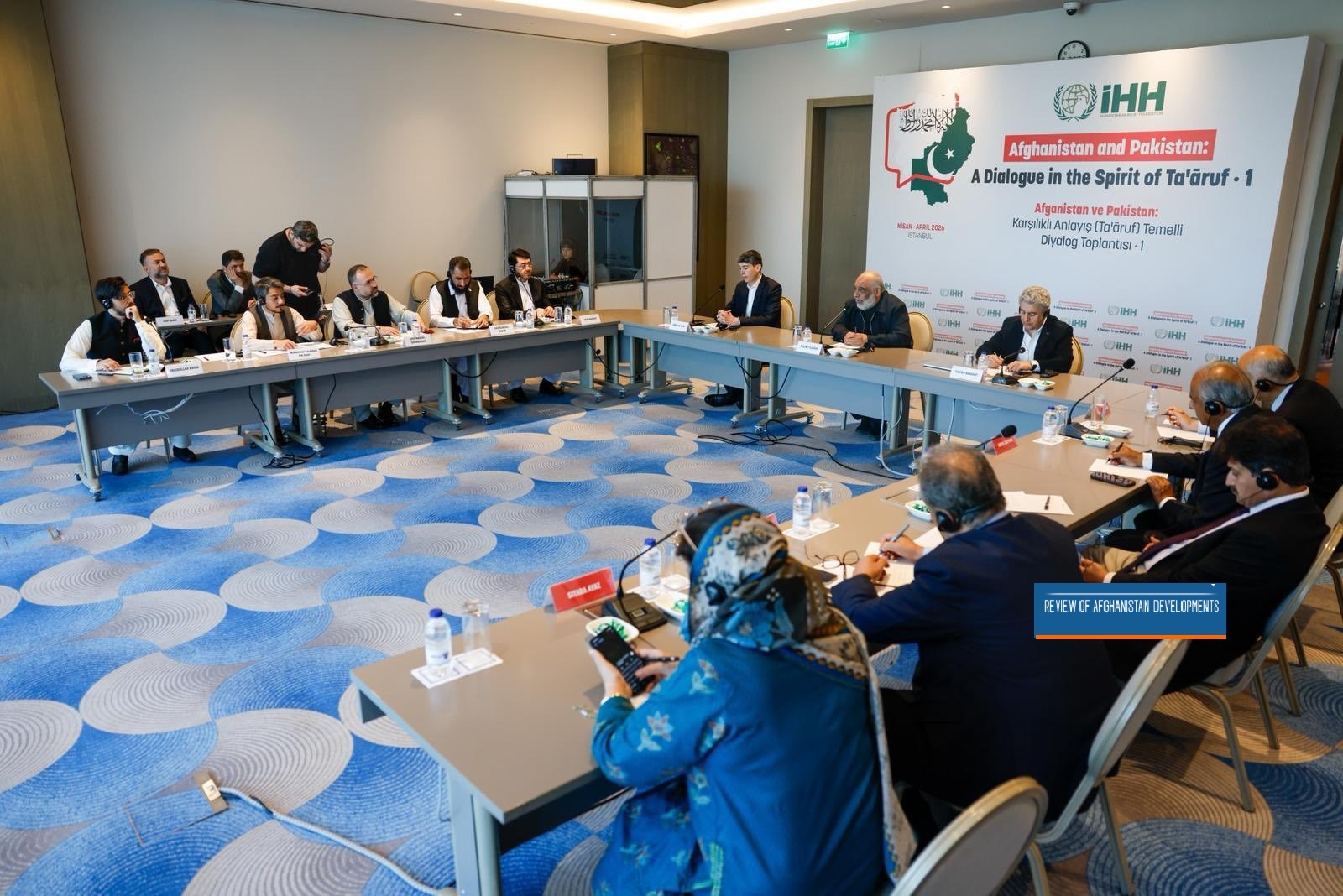
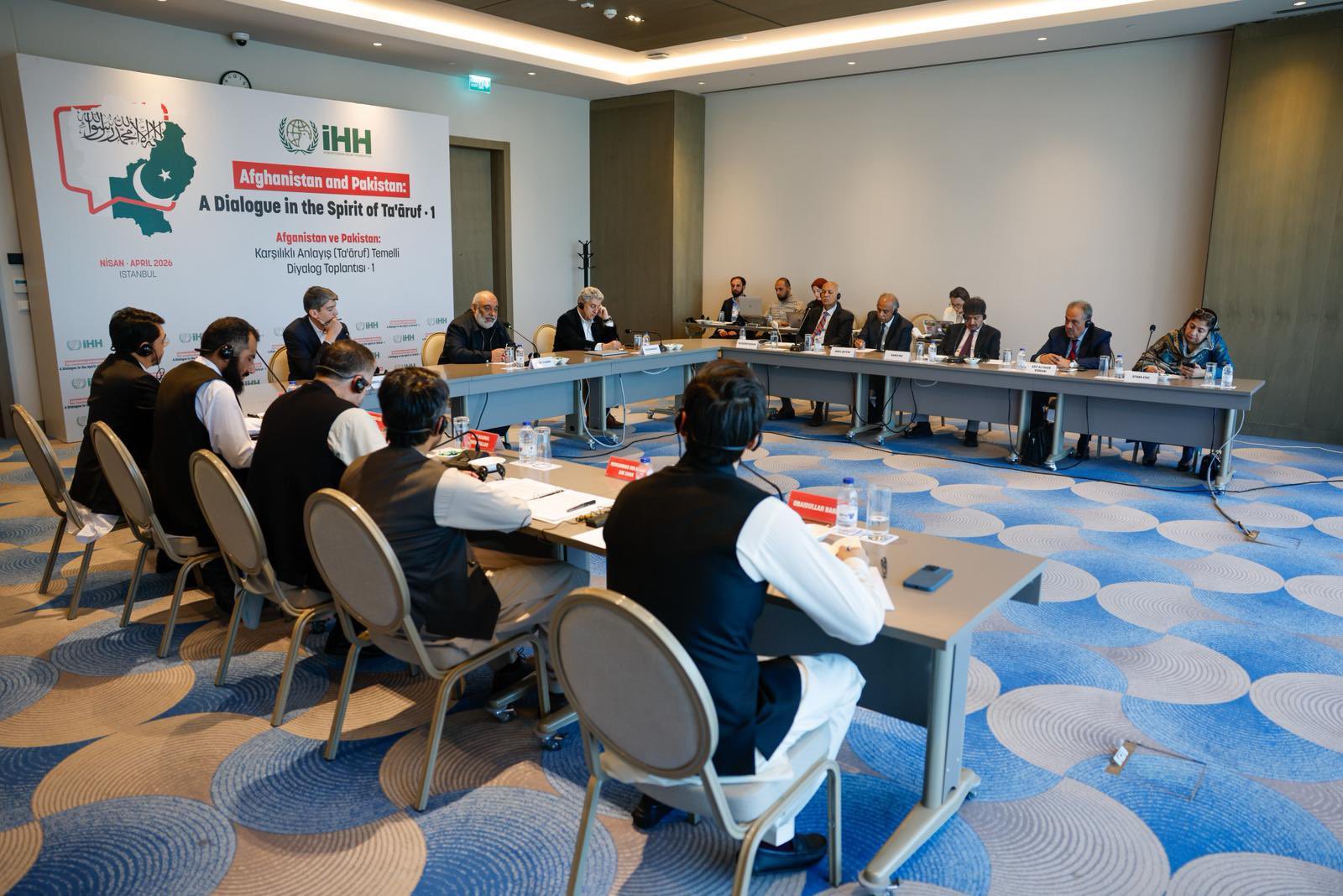
For the first time, Afghanistan-Pakistan Informal Talks was held in Istanbul, Turkey, hosted by a Turkish foundation; a meeting that can be considered a new effort within the framework of Track II diplomacy to reduce tension between the Taliban and Pakistan. The Humanitarian Aid Foundation, known as IHH, invited delegations from Afghanistan and Pakistan and held this informal talks under the title “Afghanistan-Pakistan Informal Talks in the Spirit of Gratitude – 1”.
The meeting occurred during a period characterized by considerable security, political, and border tensions between Kabul and Islamabad in recent months. In light of the growing discord between the Taliban and Pakistan, this marks the inaugural instance where representatives from both parties have participated in informal discussions, apart from formal negotiations, aimed at alleviating tensions and investigating potential solutions for crisis management.
During this informal talk, the Senate member from Pakistan, Mushahid Hussain, along with former Special Representative for Afghanistan, Asif Durrani, journalist Hamid Mir, Senator Abdul Qadeer Khan, and former Senator Setara Ayaz were in attendance. Representing Afghanistan were Jafar Mahdavi, a former member of parliament, Atif Mashal, the former Afghan ambassador to Islamabad, Sulaiman Bin Shah, Ghoncha Gul Arman, and university professor Obaidullah Bahir.
An examination of the makeup of the two delegations distinctly reveals that these individuals not only possess a profound comprehension of their nation’s challenges but also accurately recognize the boundaries that should not be crossed, and furthermore, they enjoy the trust of their respective governments.
Why did Afghanistan and Pakistan turn to informal talks and Track II diplomacy?
Track II Diplomacy proves to be effective in addressing international conflicts. It creates an environment where the involved parties can articulate their perspectives openly, beyond the limitations of formal discussions, and in manners that official representatives may find challenging to convey. Indeed, Track II Diplomacy serves as a structure that enables the disputing parties to familiarize themselves with each other’s viewpoints and attain a clearer comprehension of the opposing party’s stance prior to engaging in formal negotiations.
Following the unsuccessful outcome of multiple official negotiations in Qatar, Turkey, Saudi Arabia, and China, Afghanistan and Pakistan appear to be attempting to communicate certain messages and proposals to the opposing side via informal discussions. Undoubtedly, both the Taliban and Pakistan are cognizant of the primary factors contributing to the tension and conflict. The shift towards second-track diplomacy by both parties is not an acknowledgment of the issue at hand, but rather an effort to seek potential solutions to navigate the crisis.
It is probable that both parties will seek to communicate certain sensitive and potentially controversial solutions to one another via this channel, aiming to evaluate the other party’s response and mitigate the political repercussions of possible decisions without assuming formal accountability.
What Are the Chances of Success for the Afghanistan-Pakistan Informal Talks in Turkey?
The informal talks between the Taliban and Pakistan, conducted through Track II diplomacy hosted by Turkey, are taking place against the backdrop of several rounds of formal negotiations – hosted respectively by Qatar, Turkey, Saudi Arabia, and China – all of which concluded without any tangible results. While the convening of these informal talks can be regarded as a step forward amid the prevailing atmosphere of mutual distrust between the two countries, past experience offers little grounds for optimism regarding their success. This assessment rests on a set of structural and behavioral factors suggesting that the divide between the Taliban and Pakistan runs far deeper than can be resolved through sporadic rounds of negotiation.
The first fundamental obstacle is the absence of a shared understanding of the conflict’s root causes. The Pakistani government – particularly its security establishment – identifies the primary threat as the activities of the Tehrik-e-Taliban Pakistan (TTP), which it believes uses Afghan soil as a sanctuary and strategic depth. The Taliban administration, by contrast, either categorically rejects this claim or frames it as Pakistan’s internal affair, accepting no responsibility in the matter.
This perceptual divide brings negotiations to a deadlock from the very outset, as the two sides cannot even agree on the core issue and the fundamental question at hand. In the ongoing informal talks in Turkey, the TTP issue has reportedly been one of the central agenda items for both delegations; though no detailed information has yet been made public regarding the substance of these discussions.
The second factor is the contradiction in the leverage and bargaining tools each side employs. Pakistan attempts to simultaneously wield both diplomatic and military instruments — seeking security cooperation from the Taliban at the negotiating table while, on the ground, resorting to options such as airstrikes on Afghan territory. The most recent example was a deadly airstrike on a university in Kunar province. The Taliban, for its part, regards such actions as violations of its national sovereignty and has set their cessation as a precondition for any meaningful engagement. This dynamic has created a double game in which confidence-building becomes virtually impossible.
The third element is the divergent perception of the balance of power. The Taliban administration, through measures such as closing border crossings and imposing restrictions on trade, seeks to exert counter-pressure on Pakistan and project itself as the stronger party. Pakistan, meanwhile, continues to hold significant economic, geopolitical, and historical leverage over Afghan structures. This asymmetry in how each side perceives the power balance leads both parties to believe they occupy the superior position and consequently, each shows little inclination to make concessions.
The fourth factor is the breadth and sensitivity of Pakistan’s demands. Islamabad expects the Taliban administration to accept measures such as recognizing the Durand Line as an official international border, curtailing ties with India, and even establishing a buffer zone within Afghan territory. These demands are not only sovereignly sensitive for the Taliban, but their acceptance could also undermine the Taliban government’s domestic legitimacy. As a result, the Taliban shows little willingness to accept such conditions; particularly in the absence of any meaningful reciprocal concessions from Pakistan.
Within this framework, even if an agreement were reached, there remains a genuine concern that the balance of concessions would tilt in Pakistan’s favor. Such a perception further reduces the Taliban’s motivation to engage substantively in negotiations, reducing their participation to a largely symbolic level. Evidence such as the low-level composition of delegations and the absence of concrete outcomes from previous rounds reinforces the hypothesis that the informal Afghanistan-Pakistan talks serve primarily a performative function, a means of short-term tension management rather than a genuine resolution of underlying disputes.
Due to the reasons mentioned above, the likelihood of addressing the crisis through informal dialogue seems bleak at present. In this context, Track II diplomacy is not simply a ceremonial activity; it serves as a reflection of the limited expectations held by both parties regarding the outcomes of these discussions.
In the absence of any potential for a strategic agreement, the main stakeholders have opted not to send key decision-makers, thereby maintaining the negotiations at a low-stakes level. Consequently, this limits the quality and effectiveness of the informal discussions, reducing them to a mere exchange of positions and an evaluation of the other party’s responses.
Related Articles
Report on the Afghanistan–Pakistan conflict; Crossing red lines
Consequences of the Failure of the Istanbul Talks
Taken together, a mutually reinforcing cycle has formed among “low expectations,” “the level of representation,” and “weak outcomes” a cycle whose persistence further erodes the prospects of achieving any tangible results.
Unless one of the parties undertakes a fundamental reassessment of its strategic calculations, or external variables; such as regional pressures or shifts in the security equation, change in such a way that the cost of maintaining the deadlock outweighs the cost of compromise, Afghanistan-Pakistan talks will remain less a solution and more an instrument of temporary crisis management and media optics.