
Review of Afghanistan developments
Five years have passed since the fall of Kabul, yet experts continue to debate the reasons behind the Afghan Republic collapse. Was the primary cause the withdrawal of American forces? Did the Doha Agreement facilitate the Taliban’s resurgence? Or should the roots of the collapse be examined within the Afghan government itself?
A large part of the analysis attributes the fall of the republic to a single cause. Some blame Washington’s decision, others point to corruption as the primary factor, while still others argue that the Taliban’s military advantage caused the fall of Afghanistan. The problem with these explanations is that each reveals only part of the truth.
The reality is that the republican system in Afghanistan did not collapse in August 2021. Rather, its fall was the culmination of a gradual erosion that, over more than two decades, weakened the state’s ability to govern, maintain legitimacy, and withstand major challenges. The Taliban capitalized on this weakened state, but they were not the sole cause of its collapse. Likewise, the US withdrawal accelerated the process, but it could not by itself have dismantled a political system within weeks had that system possessed sufficient political, social, and security support.
To understand the Afghan Republic collapse, it is therefore necessary to move beyond simplistic, single-cause explanations and examine the interconnected crises that reinforced one another and ultimately brought the Afghan political system to a point where it could no longer sustain itself. Five factors were particularly important, each reinforcing the others.
1. The Decline of Political Legitimacy
A frequent error in analyzing the fall of Afghanistan is excessive attention to the final days of the republic, as though the crisis emerged only in the summer of 2021. The fall of Kabul, preceded by the collapse of numerous districts and provinces, was not the beginning of the crisis. It was the culmination of a process that Afghan leaders had failed to adequately address for years.
The legitimacy of a political system depends on more than a constitution or elections. It also depends on public trust, elite cohesion, and the effectiveness of state institutions. In its early years, the Afghan Republic enjoyed considerable domestic and international support. Over time, however, that support steadily weakened.
For two decades, disputed presidential and parliamentary elections, together with the creation of the National Unity Government and continuing rivalry between Ashraf Ghani and Abdullah Abdullah, reinforced the perception that the government was more a battleground for competing power factions than a national institution. At the same time, corruption, inadequate public services, and the government’s failure to provide effective justice deepened the divide between the state and its citizens.
By the final years of the republic, the legitimacy of Afghanistan’s political system was being questioned not only by opposition groups and sections of the population, but even by some of the country’s Western allies. Political memoirs written by Western officials who served in Afghanistan after the fall of the regime also illustrate the growing concerns within Western diplomatic circles about the legitimacy of the political framework and the country’s prospects.
2. Military Dependence and the Collapse of the Security Forces
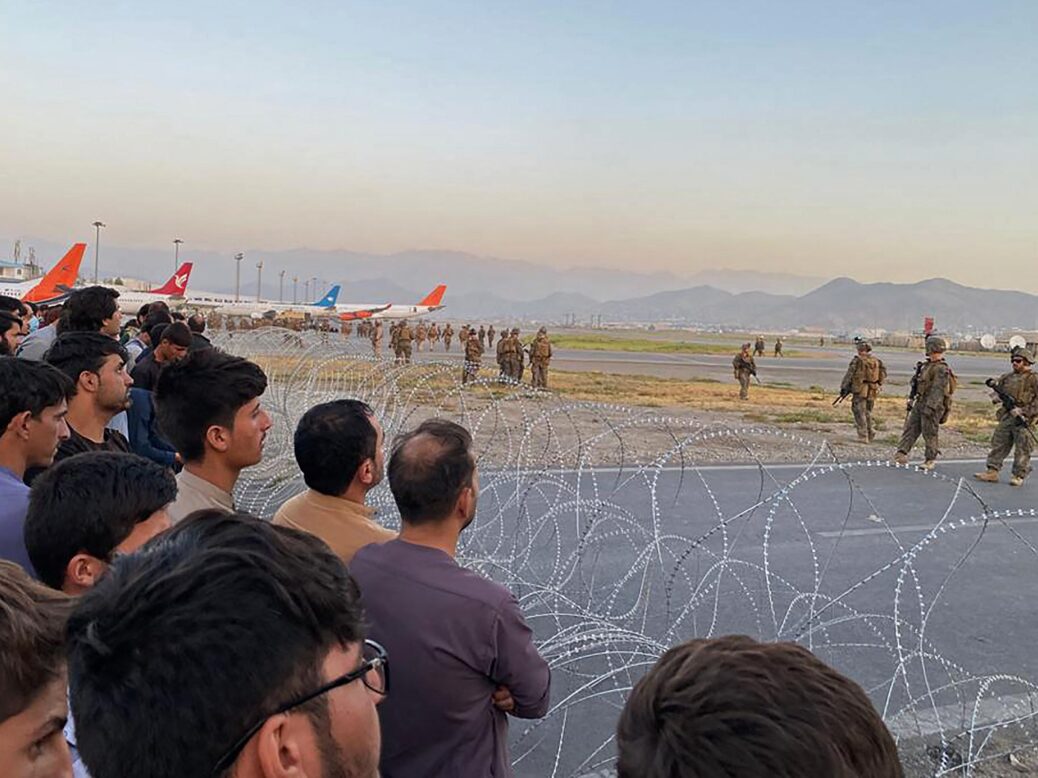
One of the most striking images of August 2021 was the rapid fall of provinces and the Taliban’s entry into Kabul without a major battle. This created the impression that the Afghan military was either incapable of fighting or had lost its will to resist. That interpretation, however, captures only part of the story.
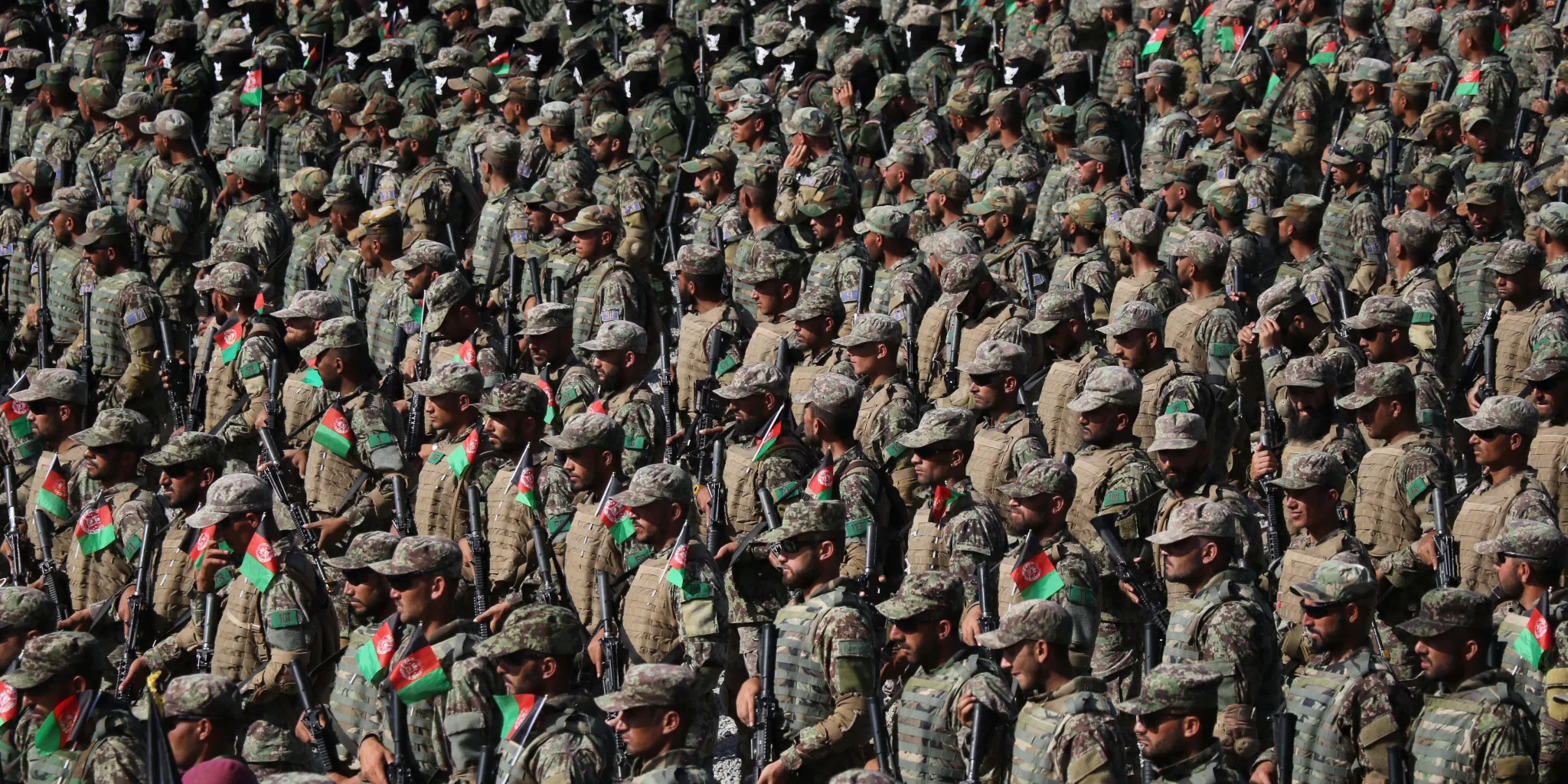
The Afghan army and police were developed over two decades at enormous cost. Approximately 350,000 personnel were trained, advanced equipment was acquired, and a security structure was established that, on paper, ranked among the largest in the region.
Yet the force was built around a model heavily dependent on American support for its survival and operational capacity. This included financing, intelligence, air support, equipment maintenance, and logistics. As that support was rapidly reduced following the Doha Agreement, a significant part of the Afghan security forces’ operational capacity was also lost.
External dependence, however, was only one part of the problem. The military increasingly reflected the divisions that had already emerged in the political system. The politically motivated appointment of some commanders, rivalry among decision-making bodies, and the absence of a unified strategy gradually weakened organizational cohesion.
During the final months, many local commanders increasingly made decisions based on conditions on the ground and their own assessments rather than waiting for instructions from Kabul. Some even took independent steps to surrender territory to the Taliban.
In such an environment, the outcome of the war had begun to take shape in the minds of soldiers and commanders before it was decided on the battlefield. Once the perception spread that the government’s principal foreign ally had decided to leave, while political leaders themselves lacked consensus about the country’s future, the willingness to resist the Taliban rapidly declined.
The collapse of the Afghan security forces should therefore be understood not simply as a military defeat, but as the consequence of a breakdown of trust at both the political and command levels.
3. The Growing Gap Between Government and Society
Governments do not survive through military strength and constitutional structures alone. They also require social capital. When citizens believe that the government does not represent their interests, they are less likely to defend it during a crisis.
The republican system achieved important gains. Education expanded, the media developed, women’s participation in public life increased, freedom of expression grew, and urbanization accelerated. Yet these achievements were not experienced equally across the country.
The gap between urban and rural areas, between the center and the periphery, and between political elites and local communities gradually widened.
At the same time, state-building after 2001 relied heavily on imported institutional models that were not always well connected to Afghanistan’s social structure, which continued to depend on ethnic, local, and traditional networks. Modern institutions were not inherently unsuitable for Afghanistan; the deeper problem was the government’s inability to establish a sustainable connection between those institutions and the country’s social realities.
In many areas, the government was perceived more as a distant administrative authority than as an institution capable of providing security, justice, and public services.
The tendency of Hamid Karzai, and particularly Ashraf Ghani, to centralize authority also created serious governance challenges. Even relatively minor decisions in distant districts could depend on approval from the presidency, while appointments were often influenced by personal preferences and relationships with the central authorities. These practices contributed to wider problems within the political system.
As the security crisis intensified, a significant segment of society did not mobilize to defend the republic. In some parts of Afghanistan, particularly in Pashtun villages, sections of the population also began to align themselves with the Taliban.
More precisely, the state’s social capital had already been severely weakened before its final collapse. This distinction is important for understanding what happened in 2021.
4. US Withdrawal and the Acceleration of the Collapse
The Doha Agreement and the subsequent withdrawal of American forces were among the key factors in the collapse of the Afghan Republic. Among the various crises confronting the system, the actions of the United States following the Doha Agreement had perhaps the most immediate and damaging effect on the republic.
The United States had previously established security commitments with Afghanistan, but subsequently reduced its support for Afghan forces that had become heavily dependent on it. The reduction in funding, combined with the loss of air support, left Afghan forces increasingly vulnerable.
After years of fighting in Afghanistan, Washington had become increasingly determined to end its military involvement. Its decision to withdraw shifted the balance of power sharply against the republic and accelerated the disintegration of a political system that had already suffered significant political and institutional decline.
Had the state been more cohesive, the withdrawal of foreign forces might not have resulted in its collapse within weeks. Other governments have survived despite reductions in foreign assistance.
Afghan republican leaders, particularly Ashraf Ghani and those around him, also misjudged the situation. They continued to believe that the United States would not fully withdraw from Afghanistan. Until only weeks before Kabul fell, they remained optimistic that the capital could remain secure, at least with continued American presence.
By the time it became clear that Washington had implemented a policy of complete withdrawal, it was already too late. Ashraf Ghani, the central figure of the republican system, eventually fled the country.
From this perspective, the US withdrawal should be regarded as a trigger for the collapse, rather than its sole underlying cause. It brought the crises that had accumulated within the republic over two decades to a point where they could no longer be managed.
5. Why Did the Taliban Win?
Assessing the Taliban’s role is perhaps the most contentious part of any analysis of the Afghan Republic collapse.
Two polarized narratives have emerged in recent years. One attributes the Taliban’s victory primarily to its military superiority in an unconventional war. The other attributes the collapse almost entirely to the American withdrawal. A more balanced assessment provides a better explanation.
The Taliban did not rely exclusively on military strength. In various regions, the group negotiated with local leaders, reached agreements with commanders, used psychological tactics, and employed media strategies alongside military operations.
As a result, the capture of many districts and even provinces was not simply the outcome of intense fighting. It was also the product of the Taliban’s ability to exploit political and social weaknesses and the declining willingness of local actors to defend a government they increasingly viewed as unable to survive.
The Taliban’s victory, therefore, should be understood within the broader context of the republic’s weakening political and institutional foundations. The group benefited from a state whose capacity and legitimacy had already been significantly eroded.
Conclusion
The collapse of states rarely results from a single cause. It usually occurs when multiple crises emerge simultaneously and reinforce one another. The Afghan Republic was a clear example of this dynamic.
A crisis of legitimacy weakened public confidence. Ineffective governance weakened the security institutions. The growing gap between the state and society depleted the system’s social capital. Changes in US strategy disrupted the political balance. Finally, the Taliban was able to exploit this vacuum and return to power.
None of these factors, taken individually, was sufficient to explain the rapid collapse of the republic. Together, however, they created a chain of events that culminated in the fall of Kabul on August 15, 2021.
One of the most important lessons of the republican experience is that governments often begin to collapse before they are defeated on the battlefield. When a state loses the ability to build trust, maintain political cohesion, and adapt to its strategic environment, military strength alone may not be enough to preserve it.
The Afghan experience also raises a broader question about the reliability of external security guarantees. The history of Afghanistan demonstrates the risks faced by governments whose survival becomes heavily dependent on the continued commitment of a foreign power. Washington’s support was crucial to the survival of the republic, but the decision to withdraw ultimately demonstrated the limits of that dependence.
Related Articles
• The Economy of Afghanistan under Taliban Governance
• Taliban Government Four Years After Coming to Power