
Review of Afghanistan developments
Is Afghanistan on the brink of entering a new phase of armed conflict, or are the reports regarding the activities of the anti-Taliban fronts indicative of a new security arrangement at the regional level? In recent months, the declaration of attacks by several lesser-known fronts has once again captured the attention of security analysts concerning developments in Afghanistan. The concurrent announcement of these groups’ existence, the geographical scope of their purported operations, and the variance in their activity patterns compared to the historical experiences of Afghan armed groups have prompted significant inquiries regarding the origins, organizational capabilities, and true objectives of these fronts.
The last four years have demonstrated that following the Taliban’s rise to power, the capacity for military action by the group’s adversaries has significantly diminished compared to the republican era. Consequently, the introduction of new players in a context where the Taliban’s security framework is more unified necessitates an analysis that transcends official and media accounts. This note seeks to provide an accurate depiction of recent events in Afghanistan by investigating the development of the Taliban opposition fronts, their current status, and the prevailing theories regarding the factors influencing the emergence of new factions.
In the initial months following the collapse of the republic, approximately 17 armed factions announced their formation in opposition to the Taliban. This development stemmed from the beliefs held by certain leaders and commanders who perceived that the security situation in Afghanistan would mirror that of the republic, thus presenting an opportunity to exploit the security vacuum created by its fragility. Additionally, some of these factions emerged from opportunistic motives, with the notion that lucrative projects could be pursued with available financial resources. In this context, around 17 fronts proclaimed their existence, including the National Resistance Front of Afghanistan, the Afghan Freedom Front, the National Islamic and Freedom Movement of Afghanistan, the National Front of the Freedmen of Afghanistan, the Patriotic Front, the National Front of the Republic, the Freedom Tigers of Turkestan, the Freedom and Democracy Front of Afghanistan, the Freedom Seekers of Western Nuristan Front, the Wolf Squad, and the South Turkestan Front.
At that time, numerous observers believed that Afghanistan’s situation following the fall of Kabul would mirror the experiences of the years after Dr. Najibullah’s government collapsed or even the initial years of the republic. They anticipated that the new security framework would encounter significant obstacles in establishing its authority, thereby creating an opportunity for the anti-Taliban fronts to expand their activities. However, the actual developments on the ground indicated that this evaluation was not in alignment with reality.
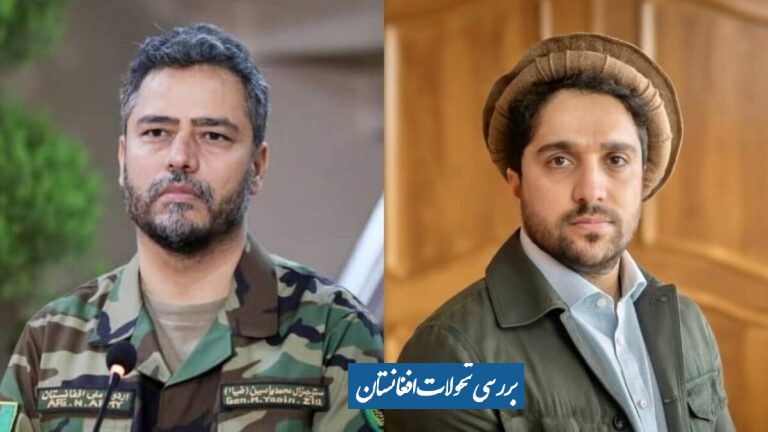
In reality, the Taliban, exercising its military and security power, successfully seized control of the territory, leaving only two fronts operational: The National Resistance Front of Afghanistan (NRF), led by Ahmad Massoud, and the Afghan Liberation Front, led by Yasin Zia. These two fronts encountered significant limitations, as their operational areas were confined to their ethnic regions, and they were progressively pushed out of their original territories. Nevertheless, these groups have managed to sustain their activities up to the present day and are recognized as the primary Taliban opposition fronts.
Over the last four years, contrary to various early forecasts, the Taliban have successfully established a centralized security network that has hindered the formation of multiple resistance cells. This development has significantly diminished the capacity of the group’s adversaries to coordinate large-scale operations, in stark contrast to the republican era. Consequently, it is essential to assess any new developments regarding the activities of the Taliban opposition fronts while considering this security landscape.
Taliban opposing Fronts and the emergence of new actors
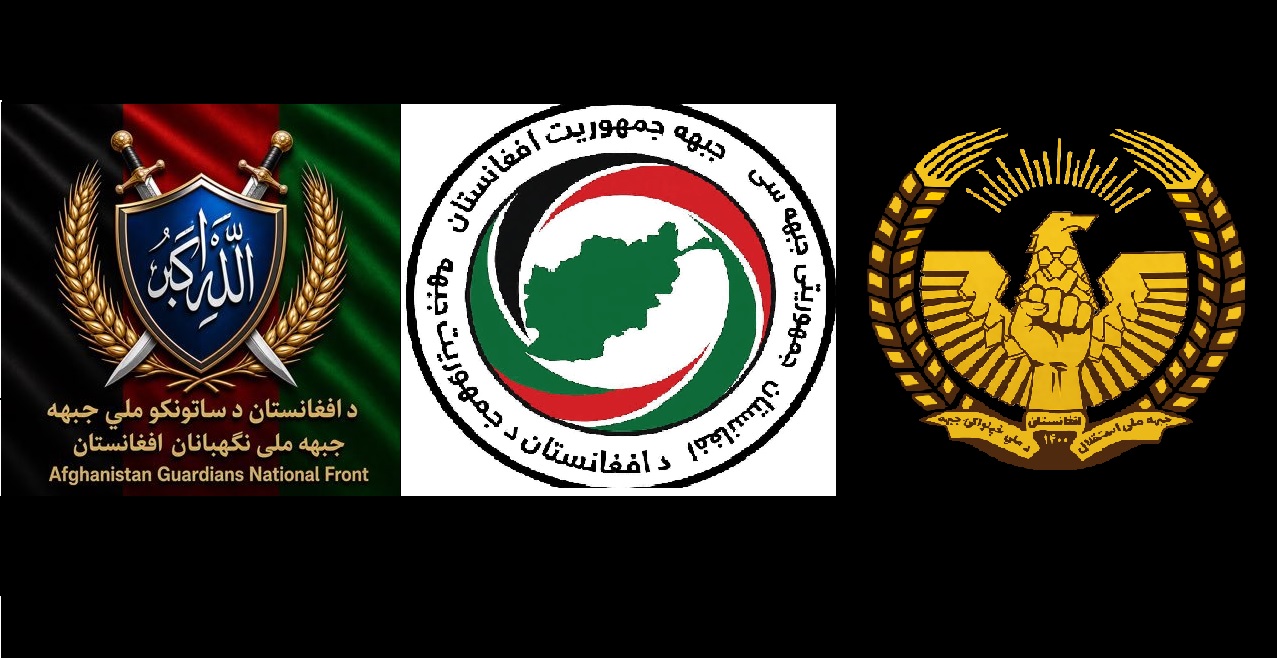
In the past few months, there have been reports of attacks on Taliban forces from at least three fronts. The “National Guardians Front of Afghanistan,” the “National Independence Front of Afghanistan,” and the “Republican Front of Afghanistan,” which previously lacked a name or presence in Afghanistan, are now documenting multiple attacks across various regions of the country.
Regardless of the validity of these claims, the simultaneous emergence of these factions is significant from a security studies perspective. In a scenario where only a handful of Taliban opposition fronts have been able to maintain their ongoing activities in recent years, the revelation of three new groups in a short timeframe raises the question of whether Afghanistan has entered a new phase of opposition organization or if these developments are influenced by external variables.
Several key aspects are noteworthy concerning the operations of these fronts. Firstly, their formation or initiation of activities took place within a similar time period; this overlap may have been reasonable during the collapse of the Republic, but in the present context, it can only be interpreted in one way, which will be elaborated upon below.
The second point pertains to the scope of each of these fronts. Nearly all experts on Afghanistan recognize that ethnicity and geography are two fundamental factors in the establishment of any political party or military front within the country. The majority of parties and military fronts have been created based on these two elements, resulting in their influence and activities being predominantly confined to their respective ethnic or social geographies. This characteristic has been one of the most significant features of Afghanistan’s political and security framework over the past several decades.
Therefore, the timing of their establishment, the initiation of their activities, and the geographical range of the purported operations of these three fronts prompt a critical inquiry: What distinguishes the operational methods of these fronts from other groups in Afghanistan? What factors contributed to their emergence at a particular moment, and how did they manage to broaden their activities across various regions of Afghanistan despite prevailing security constraints? In addressing these inquiries, two primary hypotheses can be proposed, each of which warrants analysis in light of the security developments in Afghanistan.
Is the activation of Taliban opposition fronts a natural process?
The initial hypothesis posits that the circumstances in Afghanistan, along with the governance style of the Taliban, have led to the emergence of these groups engaging in activities in a random and nearly simultaneous manner. This perspective suggests that ongoing economic difficulties, political limitations, a lack of mechanisms for participation, and rising discontent in certain regions have created the necessary environment for the formation of opposition fronts against the Taliban. Advocates of this hypothesis also highlight the geographical distribution of these groups’ operations, which may stem from organized efforts, gradual networking, and coordination among opposition forces; in essence, these fronts have successfully broadened their operational reach beyond traditional confines by leveraging local networks.
While this hypothesis appears credible at first sight, it encounters significant obstacles. The events of the past four years have demonstrated that the security landscape in Afghanistan is fundamentally distinct from that of the republican era. Following their takeover of Kabul, the Taliban, contrary to the predictions of numerous analysts, successfully established relatively cohesive intelligence and security frameworks, thereby thwarting the emergence of various resistance groups. As a result, even the most well-known Taliban opposition fronts are subjected to considerable limitations.
An evident case of this situation is represented by the National Resistance Front of Afghanistan and the Afghan Liberation Front. These two entities, which are better positioned than other factions regarding their organizational history, prominent leaders, human networks, and resources, have not succeeded in establishing the necessary coordination to execute widespread and sustained operations in different provinces of Afghanistan. Their activities are largely restricted to specific areas and, in many instances, they have been subjected to intense pressure from Taliban forces.
In these circumstances, it is noteworthy that groups which had no prior involvement in the Afghan political and security landscape until a few months ago were able to swiftly establish an organizational framework, carry out operations across various regions of the country, and simultaneously announce their presence in multiple provinces. This phenomenon is not entirely aligned with Afghanistan’s historical context. From a security studies perspective, developing such capabilities in a brief timeframe, without the backing of financial, intelligence, and logistical resources, is exceedingly challenging and nearly impossible. Therefore, while the initial hypothesis may be suggested, its explanatory capacity is limited and fails to address all the pertinent questions regarding the rise of Taliban opposition fronts.
Taliban opposition fronts and the hypothesis of Pakistan’s role
The second hypothesis posits that the rise of these groups at a particular moment is a consequence of the increasing friction between the Taliban government and Pakistan, rather than stemming from internal dynamics within Afghanistan. This hypothesis rests on the assumption that the relationship between Islamabad and the Taliban, contrary to earlier beliefs, has transitioned into a phase of strategic discord in recent years.
After nearly five years of trying to subdue the Taliban, Pakistan is now faced with a different reality. Contrary to expectations from a section of the Pakistani security establishment, the Taliban government has demonstrated independence in matters such as managing the Durand Border, dealing with the Tehreek-e-Taliban Pakistan (TTP), relations with regional actors, and some foreign policy considerations. This has led some decision-makers in Rawalpindi to question the effectiveness of their previous policy.
It can be inferred that Pakistani strategists have determined that utilizing the capabilities of former soldiers to establish Taliban opposition fronts is an effective means of exerting pressure on the Taliban government. In this context, efforts have commenced to organize the opposition against the Taliban. In recent months, there have also been unverified reports regarding Pakistan’s invitation to former Afghan factions and soldiers. While these claims remain unconfirmed, their timing coinciding with the formation of new fronts has drawn the interest of analysts.
In this context, the comments made by Atta Mohammad Noor are also significant. In his most recent Eid message, he asserted, “collaborating with others is a betrayal of Afghanistan, and I will not engage in this betrayal.” This statement, while not directly naming any nation, may suggest that certain former Afghan factions and military personnel have entered into cooperation with Pakistan or have received such offers. If this perception is valid, the concurrent emergence of Taliban opposition fronts can also be analyzed in the context of regional rivalries.
The existing evidence, including the timing of the groups’ emergence, the claimed scope of their activities, the alignment with heightened tensions between the Taliban and Pakistan, and the dissemination of some unofficial reports, supports this hypothesis as being more explanatory than the first.
Some experts have also warned about this trend. Among them, Tamim Asey, a former official in the Afghan Ministry of Defense, wrote in a message:
The groundwork and preparations for yet another significant malevolence in Afghanistan are unmistakably apparent. Major powers and regional stakeholders, either directly or via their contracts, networks, and proxy forces, are once again attempting to enlist, align, and convert Afghanistan into a theater of violent and bloody rivalry.
This warning should be interpreted as more than just a political statement. The last forty years have demonstrated that when competition escalates among regional and supra-regional powers in Afghanistan, the nation transforms into a battleground for proxy conflicts. Therefore, examining the actions of Taliban opposition fronts without considering the regional context will yield an incomplete understanding of the situation.
Related Articles
Outcomes of Taliban opposition Meeting in Pakistan
The Struggle among Anti-Taliban Leaders
Conclusion
Recent developments indicate that the rise of Taliban opposition fronts is not merely a military occurrence, but rather a component of a multifaceted security and geopolitical process that requires examination within the framework of internal dynamics in Afghanistan and regional rivalries. The aftermath of the republic’s collapse demonstrated that the Taliban successfully managed to suppress most of the armed opposition by establishing a relatively cohesive security framework, with only two primary fronts, namely the National Resistance Front of Afghanistan and the Afghan Liberation Front, managing to sustain their operations.
In these circumstances, the concurrent emergence of multiple new fronts, their absence of a documented history, and their assertions of operations in various regions of Afghanistan have prompted essential inquiries regarding the origins, organizational methods, and potential backers of these groups. While one could propose the hypothesis of a natural activation of these fronts, the prevailing security constraints significantly diminish this likelihood. Conversely, the theory suggesting that this trend is linked to the escalating tensions between the Taliban and Pakistan, along with the attempts of certain regional players to exploit the capabilities of the Taliban’s adversaries, aligns more closely with the evidence at hand.
In the end, irrespective of which hypothesis aligns more closely with reality, it is evident that if Afghanistan reverts to being a battleground for competing proxy forces, both the internal security of the nation and the stability of the surrounding region will encounter new challenges. Therefore, it will be essential to closely monitor the actions of the Taliban opposition fronts and their potential connections to regional developments in order to comprehend the future of Afghanistan’s security.