
Review of Afghanistan developments
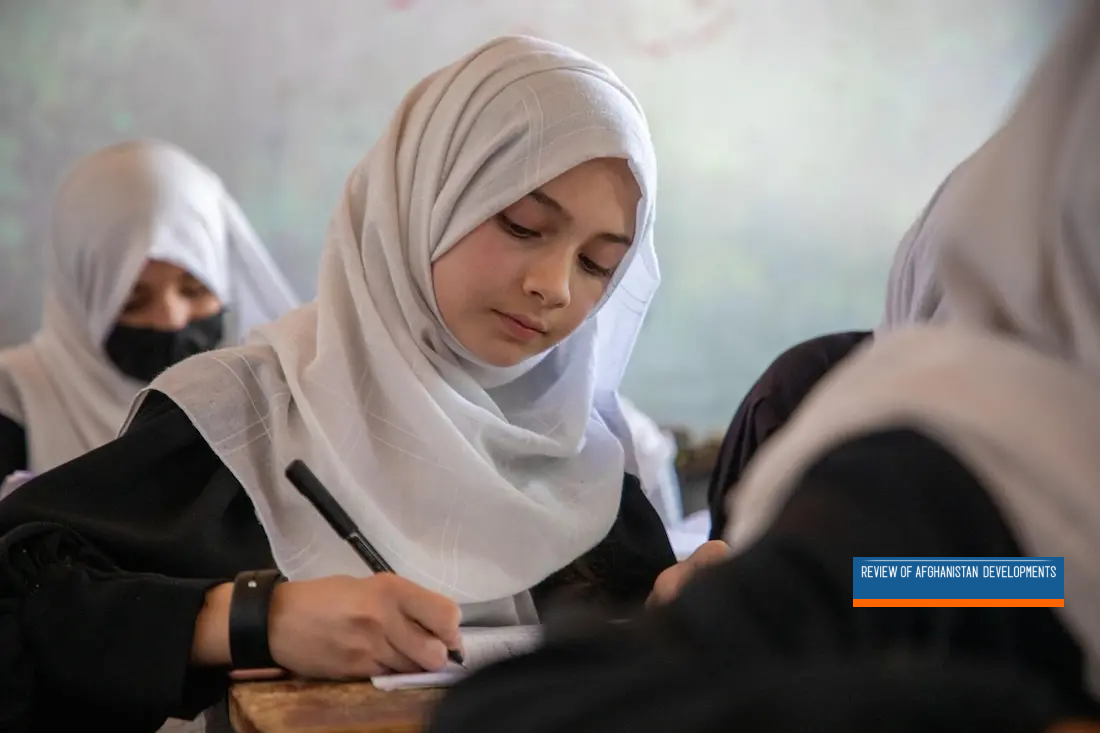
The continued exclusion of Afghan girls and women from formal education is more than an education policy or a temporary disruption to schooling. Five years into the ban on girls’ secondary and higher education, its consequences are beginning to reach far beyond classrooms — affecting human capital, economic participation, household livelihoods, and the country’s long-term development.
The cost of denying Afghan girls an education is not limited to the school years they lose today. Every year of exclusion can mean fewer opportunities to develop skills, enter professional fields, participate in the workforce, and contribute to Afghanistan’s economy. As these losses accumulate, they can weaken the country’s human capital and narrow the opportunities available to future generations.
This makes girls’ education in Afghanistan not only a question of rights or access to schooling, but also a question of Afghanistan’s economic and social future. The longer educational restrictions remain in place, the greater the potential cost — for girls and women themselves, for their families, and for the country as a whole.
Why Denying Girls an Education Is a Compounding Crisis
This issue matters more within the framework of human development. Development can’t be measured by income or economic growth alone — it also concerns people’s ability to grow, advance, and build the life they want. Girls’ education in Afghanistan is a core part of that path. So the ongoing exclusion of Afghan women and girls from education shouldn’t be treated only as a schooling problem, but as a process with compounding effects on individual capacity, social capacity, and the country’s development future. The trajectory of girls’ education in Afghanistan shows that neglecting this area carries a heavy cost for national development.
A Threat to Human and Social Capital
Continued restrictions on girls’ and women’s access to education affect two critical capacities for Afghanistan’s development at once: human capital and social capital. From a human capital standpoint, girls’ education in Afghanistan is a form of investment — one that builds people’s knowledge and skills and expands their capacity to enter specialized fields. Given Afghanistan’s economic constraints, weak infrastructure, and need for skilled labor, this matters even more; educating Afghan girls isn’t a peripheral issue, but a strategic necessity for the country’s economic survival.
Importantly, much of the return on girls’ education in Afghanistan only becomes visible years later, once people enter specialized and economic activity. That means the ongoing denial of education doesn’t just limit today’s opportunities — it’s already shrinking the skilled workforce Afghanistan will need in the years ahead.
The Psychological Toll of Banning Girls’ Education
Adolescence and youth are critical periods for setting goals and shaping a future, and school and university do more than teach — they expose young people to career paths, help build social relationships, and open up different visions of the future. A prolonged break in that path can narrow the range of choices available to girls, and in some cases fuel feelings of powerlessness, hopelessness, depression, anxiety, and a lack of direction — especially when someone feels external restrictions have blocked a path they had chosen for themselves. Girls’ education in Afghanistan could otherwise have served as a refuge for their mental health amid daily hardship.
This continued exclusion can also reshape the transition from adolescence to adulthood. When continued schooling and many educational and career paths become inaccessible, the remaining options for planning a future narrow, and in some families and communities, the odds increase that girls will marry and take on family responsibilities earlier than they otherwise would. In that context, narrower choices and less independence can leave a person more vulnerable in later years — showing that girls’ education in Afghanistan isn’t just a right, but a shield against social harm.
The consequences don’t necessarily stay contained to the individual, either. Women who lose critical years of education and development may enter family life later with more limited knowledge, skills, and social resources. One generation’s educational exclusion can affect the next generation’s opportunities to grow too, passing deprivation forward — which is itself a strong argument for urgently restoring girls’ education in Afghanistan.
The Economic Cost of Denying Afghan Girls an Education
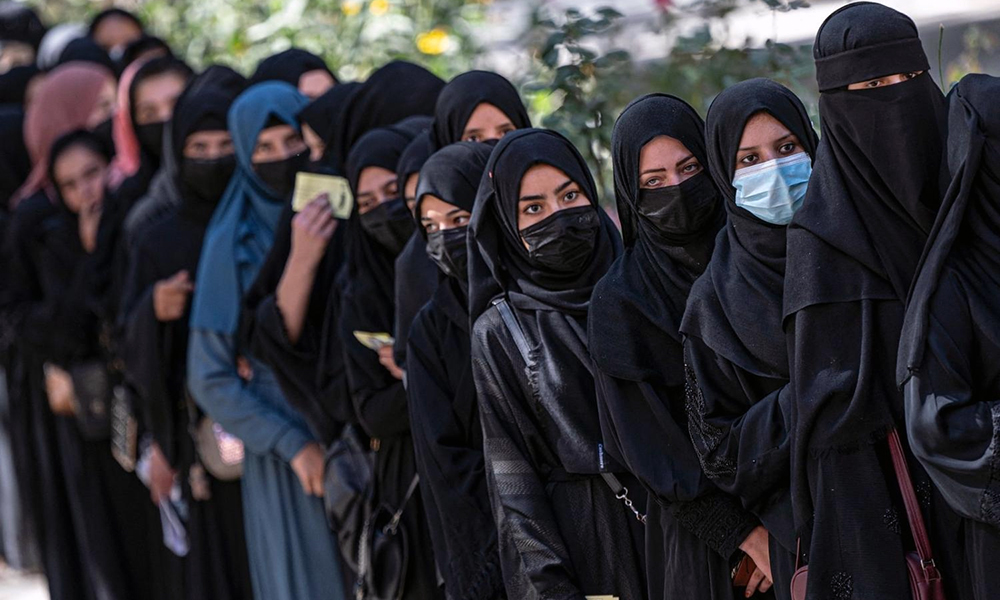
Over the long run, denying girls an education also narrows women’s economic participation. Girls’ education in Afghanistan is one of the main paths to acquiring skills and entering specialized work, and restricting that path reduces women’s presence in skilled jobs, professional services, and income-generating activity. The issue, then, isn’t just lost employment opportunities for women — it’s a shrinking of the workforce capacity society can draw on, capacity that matters a great deal for boosting production, income, and economic resilience in Afghanistan’s fragile economy. Restoring girls’ education in Afghanistan could well be a driving force for improving household livelihoods.
This shows up at the household level too. Women’s economic participation can diversify household income and reduce dependence on a single earner. When women face both educational restrictions and shrinking job opportunities at the same time, some households lose capacity to generate income and absorb economic shocks. This can deepen economic vulnerability, particularly for households already facing poverty or unstable income — showing that girls’ education in Afghanistan isn’t a cost, but a livelihood investment.
At the macro level, continuing this trend means sidelining part of the population from economic participation and shrinking the country’s potential capacity for production, entrepreneurship, and specialized services. The economic cost of denying education, then, isn’t just the income women can’t earn today — part of that cost shows up in economic opportunities that simply won’t materialize in future years, unless girls’ education in Afghanistan is restored as a national priority.
Political and International Consequences
Beyond individual opportunity, education helps people engage with social issues, understand rights and responsibilities, and build the capacity to participate in public life. Continued exclusion from girls’ education in Afghanistan can reduce part of society’s presence and influence in civic and social processes — something with particular weight in Afghanistan’s political context.
This matters at the governance level because effective decision-making depends on understanding the varied experiences and needs of different groups in society. When part of the population is sidelined from education and professional paths — and, as a result, from parts of public life — their experiences and perspectives are less reflected in decision-making and policymaking. Over time, that gap can limit governing institutions’ ability to accurately understand issues and respond to society’s diverse needs — a gap that girls’ education in Afghanistan could otherwise help bridge.
These effects extend to Afghanistan’s relationship with the international community as well. Girls’ education in Afghanistan is a core part of human development and equal opportunity, and continued exclusion can be read as a sign of a narrowing path toward human development and social participation. This matters more for Afghanistan because part of its development and economic capacity depends on international cooperation and support, and any shortfall in girls’ education in Afghanistan can carry a real cost in global engagement.
That said, Afghanistan’s level of cooperation with the international community, or the external pressure it faces, can’t be attributed to education policy alone. Afghanistan’s relations with the international community stem from a mix of political, security, economic, legal, and geopolitical factors. Even so, continued educational exclusion of women is likely one factor widening the gap between Afghanistan and the standards many development institutions care about, raising the cost of international engagement and cooperation.
Related Article
The Taliban’s jurisprudence Impediments to Girls’ Education
Empowering Women in Afghanistan: Challenges and Solutions
The Long-Term Cost of Excluding Afghan Girls
Five years of continued restrictions on girls’ education in Afghanistan show this is no longer just a matter of lost school years. As the exclusion drags on, its effects accumulate — across individual opportunity, human and social capital, household and community economic capacity, and women’s ability to participate in different areas of life. That accumulation is exactly what makes this urgent: some of the opportunities being lost today may not be easy to recover later, and that’s the biggest warning girls’ education in Afghanistan carries right now.
Education, too, is more than the transfer of knowledge. It’s a space for learning, social interaction, exposure to different viewpoints, asking questions, and discovering different paths in life. Media, the internet, and family can meet part of that need, but they’re no substitute for the full educational and social experience of school and university. So the core problem with educational exclusion isn’t simply whether people are informed or not — it’s inequality in access to the opportunities that build the ability to learn, choose, and shape a future.
These consequences aren’t confined to women’s individual lives, either — they can ripple through families and affect the next generation’s opportunities to learn and grow. More broadly, shrinking women’s economic and social participation, and restricting girls’ education in Afghanistan, means a gradual decline in the skilled workforce and human capital the country will need in the years ahead. If this continues, it will limit Afghanistan’s capacity for reconstruction, economic growth, and development, and widen the gap with societies that are investing in their own education and workforce.
So the return of girls and women to education in Afghanistan isn’t just about making up for lost years. It’s an action to preserve Afghanistan’s human and social capacity and prevent existing gaps from deepening further. The cost of continued exclusion isn’t only in today’s lost opportunities — it’s in the capacity that simply won’t form for the future. Ultimately, girls’ education in Afghanistan is part of the country’s capacity to build its future, and turning away from it means turning away from Afghanistan’s future itself.