
Review of Afghanistan developments
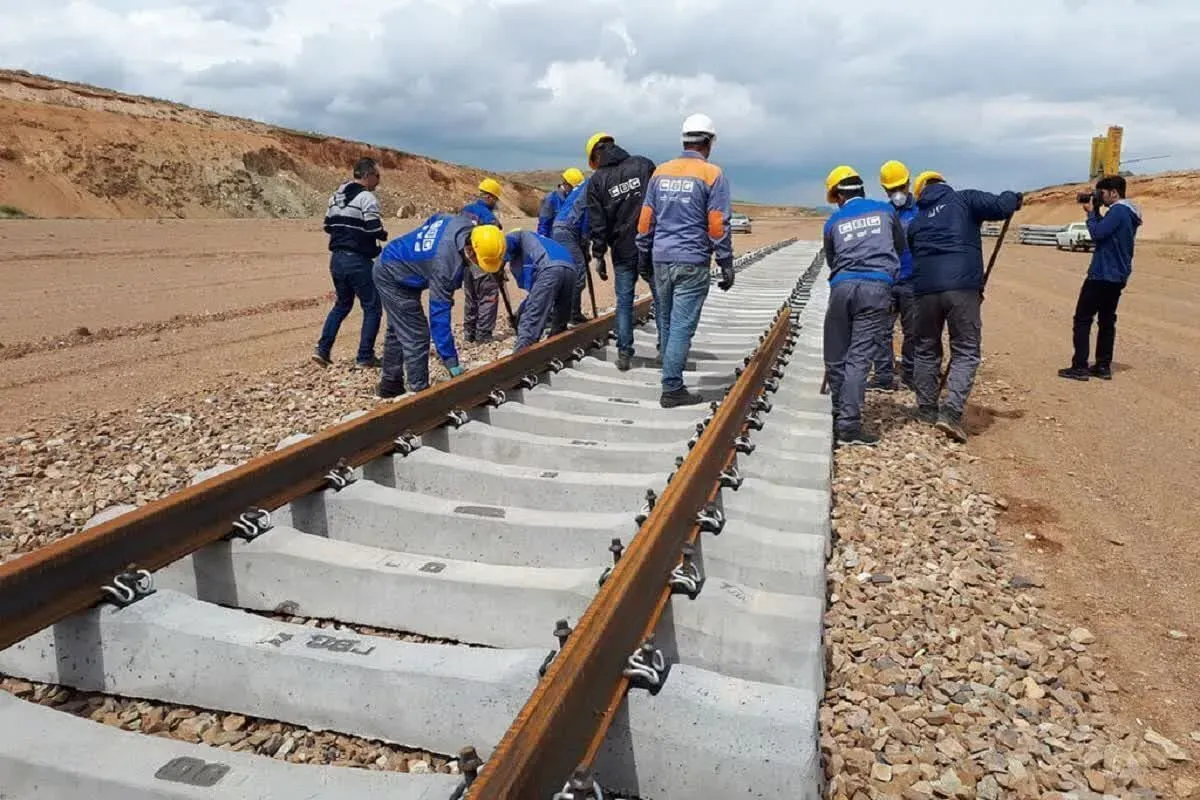
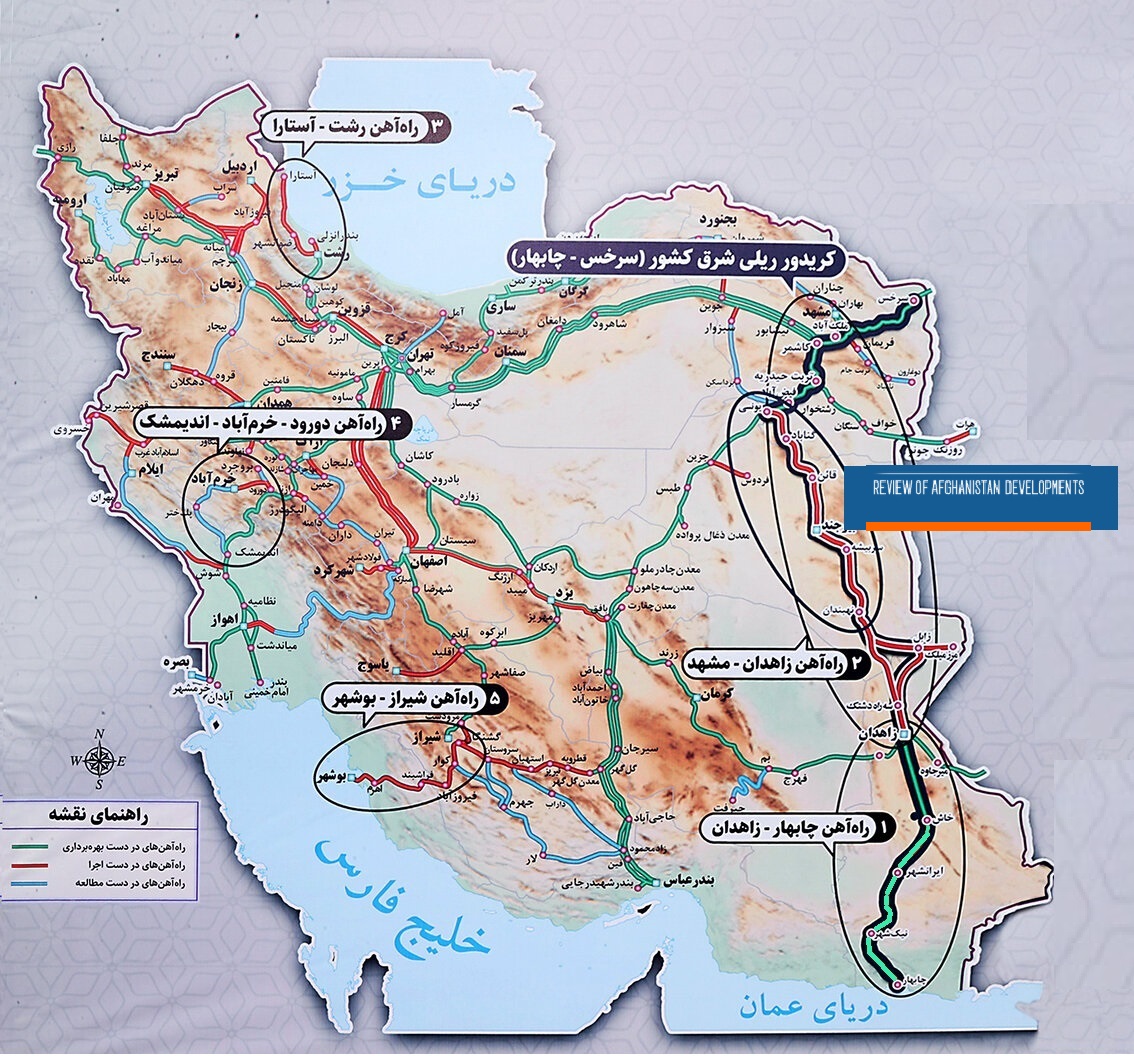
The Chabahar-Zahedan railway could reshape Afghanistan’s transit calculations — and even the broader layout of trade corridors across Central and South Asia. Track-laying on the roughly 630-kilometer line (about 735 kilometers including branch lines), which connects the port of Chabahar to Iran’s rail network, has been completed, and the project has now entered the pre-operational phase.
The Chabahar-Zahedan railway’s significance for Afghanistan becomes clearer once it’s viewed as part of a larger network — one that could extend from Chabahar and Zahedan to Zaranj, Delaram, Kandahar, and Herat, and from there into northern Afghanistan and Central Asia. Not just Iranian and Central Asian experts, but Indian strategists too, have long pointed to the potential of linking the Mazar-i-Sharif–Herat railway to the Chabahar-Zahedan route, creating a continuous transport network connecting Central Asia, Afghanistan, Iran, and India.
The Chabahar-Zahedan Railway and Afghanistan’s Geo-Economic Opportunity
Afghanistan holds a rare geographic position, but that position only translates into economic power once the country can connect itself to regional rail networks. In a significant and parallel development, the completion of phase one of segment four of the Khaf-Herat railway on one side, and the Chabahar-Zahedan railway on the other, have brought the vision of this connected network closer to reality.
Over the past year, more coordinated talks have taken place among Afghanistan, Iran, India, and some Central Asian countries on building the Mazar-i-Sharif–Herat railway, with growing momentum behind this strategic line as more countries see a stake in it.
Completing the Chabahar-Zahedan railway carries three strategic consequences for Afghanistan, both realized and potential. First, this rail route would let Afghanistan more easily reduce part of its foreign trade’s dependence on Pakistani routes. Second, by building several rail lines on its own soil, Afghanistan could shift from a landlocked country to a transit country linking Central Asia with open waters. Third, once India moves past the current state of conflict in the Persian Gulf, it’s likely to engage more readily in trade with Afghanistan and investment in transit routes connecting the two.
The Chabahar-Zahedan Railway’s Impact on the Trans-Afghan Railway
The Trans-Afghan railway debate can currently be examined through two main route options.
The “Kabul Corridor” is the eastern route, running from Termez in Uzbekistan to Mazar-i-Sharif, then Naibabad, Logar, and Kabul, before finally connecting to Pakistan’s rail network via the Kharlachi crossing.
The second route, the “Kandahar Corridor,” has a different structure. It runs from Mazar-i-Sharif to Herat, Delaram, and Kandahar, and from there could connect to Chaman and Pakistan’s rail network. Related plans pursued by other Central Asian countries, including Turkmenistan and Kazakhstan, follow the same logic through a proposed Turghundi–Herat–Kandahar–Spin Boldak link. Studies by some Central Asian think tanks argue the Kandahar Corridor carries different strategic potential than the Kabul Corridor, thanks to its ability to connect simultaneously to both Iran and Pakistan, giving it a relative edge.
Why the Kandahar Corridor Matters More for Afghanistan
The Kandahar Corridor’s first advantage is its more direct connection to the Chabahar-Zahedan railway — the most important geo-economic difference between the two routes. The Kabul Corridor steers Afghanistan toward Pakistan’s network, while the Kandahar Corridor could connect Afghanistan to both Pakistan and Iran at once. If the Trans-Afghan corridor is built along the Kandahar route, the cities of Herat, Delaram, and Zaranj would also gain a connection to Iran’s network and, ultimately, to Chabahar.
Second is the western route’s geographic and technical advantage. The Kabul Corridor faces serious engineering challenges crossing mountainous terrain and the Salang Pass. The Turghundi–Herat–Kandahar route, by contrast, is technically simpler, running over largely flat terrain compared to the high elevations of Salang. Any rail route crossing the high Salang Pass will be more vulnerable to snow, ice, route closures, and winter maintenance difficulties.
Third is construction cost. Regional assessments suggest the Trans-Afghan project via the Kabul Corridor faces higher costs than the Kandahar Corridor, due to difficult terrain and the need for numerous bridges and tunnels.
Fourth, the Kandahar Corridor enjoys support from more regional players. India, Kazakhstan, and Turkmenistan have backed the Turghundi–Herat–Kandahar–Spin Boldak route in recent years, and Kazakhstan has announced financial commitments to developing parts of the network. Russia has also shown practical interest in the western route. Moscow sees the Turghundi–Herat–Kandahar–Spin Boldak route as an extension of its own North-South Corridor, and views the Trans-Afghan railway as an opportunity to extend one branch of the International North-South Transport Corridor. Moscow wants to see this plan realized but is wary of how Kabul-Islamabad tensions could affect its future, which is why it favors the Kandahar Corridor — a route that, alongside Pakistan, also offers a connection to the port of Chabahar. With the Chabahar-Zahedan railway now complete, the Kandahar Corridor overlaps considerably with Russia’s own geo-economic interests.
Recommendations for Afghanistan
The Chabahar-Zahedan railway is a strategic project sitting right along Afghanistan’s western border, and the Afghan government needs to design and build a multi-route network on its own soil to capture the maximum benefit from it.
As a first step, Afghanistan should pursue construction of the Mazar-i-Sharif–Herat railway more seriously, since this line could connect Central Asia to Iran’s rail network via Afghanistan and generate substantial transit revenue for the country.
Second, connecting Zaranj and Kandahar by rail to Iran’s network should be placed on the medium-term agenda. Given Afghanistan’s geographic breadth, the country could design three loading terminals along its western border for three separate zones.
Third, now that the completed Chabahar-Zahedan railway has laid the groundwork for an economic corridor stretching from the Indian Ocean to Central Asia, Kabul needs to press ahead with building the Kandahar Corridor and encourage interested countries to invest in its construction. Russia, India, Turkmenistan, and Kazakhstan all show strong interest in building this rail route.
Related Articles
Wakhan Corridor: The intersection of interests of regional powers
The interests of regional countries in the Trans-Afghan Railway
Conclusion
The completed Chabahar-Zahedan railway has created an exceptional opportunity for Afghanistan — one that could reduce the country’s historical dependence on Pakistani ports and open up more options for foreign trade. The project’s real significance becomes clear once it’s linked, within a single network, to the Khaf-Herat and Mazar-i-Sharif–Herat lines and the cities of Zaranj and Kandahar.
Within this picture, the choice of route for the Trans-Afghan railway carries decisive weight. The Kabul Corridor pulls Afghanistan further into Pakistan’s network, while the Kandahar Corridor could connect the country to both Pakistan and Iran at once — and, via Zaranj and the Chabahar-Zahedan railway, provide access to the port of Chabahar and the Indian Ocean.