

By: A. Shakouri
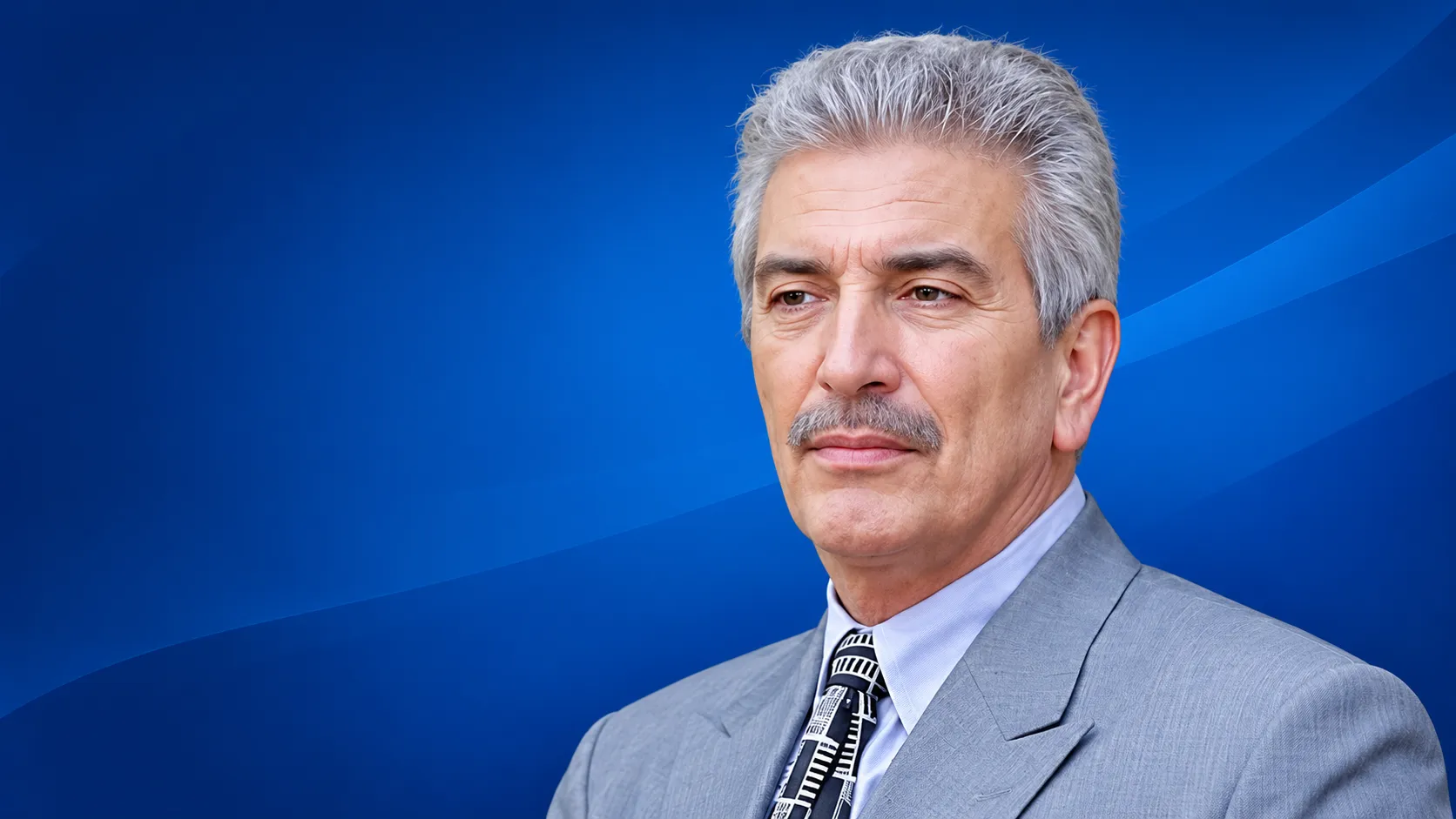
Wasef Bakhtari (1943–2023) stands as a foundational architect of Afghanistan’s Persian/Dari literary transition from classical rigidity to poetic modernity. By harmonizing the linguistic precision of antiquity, the structural tenets of Nimaic versification, and acute socio-philosophical anxieties, he crafted a benchmark for modern Persian poetry in Afghanistan. This paradigm was technically peerless while addressing the harrowing historical realities of systemic violence, incarceration, displacement, and political disillusionment.
Intellectual Genesis and Formative Trajectory
Born in Mazar-i-Sharif, Bakhtari commenced his schooling at Bakhtar Primary School before attending the historic Habibia High School in Kabul. He subsequently earned a Bachelor’s degree in Persian Language and Literature from Kabul University, followed by a Master’s degree in Education from Columbia University in the United States. This convergence of traditional Persian humanities and Western intellectual inquiry forged a multifaceted thinker: poet, academic, philologist, literary translator, and political dissident.
While his early craft was rooted in classical ghazals and rubaiyat, encountering the modern poetics of Nima Yushij transformed his artistic horizon. Bakhtari immortalized this evolution with the phrase: “And thus, I followed the master of Yush”—an admission that was simultaneously an earnest acknowledgment of literary influence and the genesis of an autonomous aesthetic endeavor. Wasef Bakhtari was among the rare Afghan modernists who applied Nimaic structural principles with meticulous discipline, cementing his Nimaic verse as the standard of formal modernism across Afghanistan’s literary spectrum.
The Poetics of Linguistic Rigor
The defining signature of Bakhtari’s verse is its linguistic immutability. He regarded poetic language not as arbitrary semantic play, but as a deliberate, architectonic structure; to him, a linguistic slip signaled an intellectual failure. This rigorous discipline protected the poetry of Wasef Bakhtari from vapid sentimentalism and incoherent ambiguity, endowing his oeuvre with profound internal cohesion.
Bakhtari’s formal trajectory progressed deliberately: moving from the classical ghazal to Nimaic meters, and ultimately toward free verse (sher-e sepid). Yet, he never broke with classical traditions. Archaic lexicons, historical allusions, an epic cadence, and Khorasani stylistics permeate his modernist verse. This synthesis of archaic diction and modern forms positioned him as an intellectual bridge linking classical Persian/Dari heritage with modernist experimentation.
Defamiliarization and normative subversion remain his foremost creative instruments. By constructing paradoxical and unexpected imagery, Bakhtari disrupted habitual cognitive assumptions, compelling intellectual reflection. Formulations such as “pregnant with void” or images of boxwood trees growing upside down embody this paradoxical idiom. Furthermore, he deliberately introduced unpoetic, industrial, and geopolitical terms—such as “scaffolding,” “equator,” and “barbed wire”—anchoring his verse directly within modern realities and socio-political friction.
Symbolism, Mythology, and Existential Inquiry
Bakhtari’s verse transcends superficial aesthetic evaluation; he was fundamentally a philosophical poet. Existential preoccupations—mortality, temporality, estrangement, ontological meaning, and human destiny—occupy central positions in his work. However, these themes are never rendered as pedestrian polemics or didactic philosophical prose; they materialize organically through sustained metaphor, allegory, and myth.
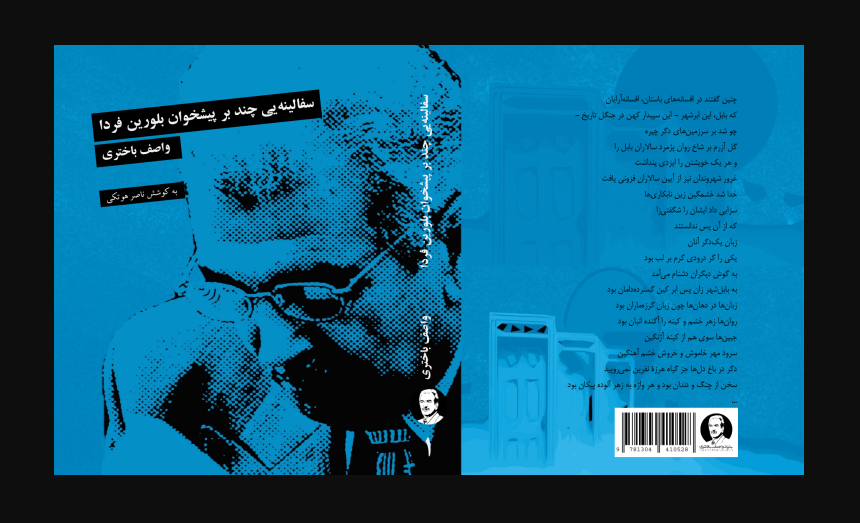
Drawing from Persian epic mythology—specifically figures like Rostam, Sohrab, and Siyavash—alongside sacred lore, Bakhtari reconfigured ancient motifs to deconstruct contemporary trauma. Myth in his poetry functions as an interpretive grammar for institutional violence, autocratic repression, and spiritual dislocation. This intellectual dimension distinguishes his work from purely affective lyrical verse, imbuing it with historical consciousness and philosophical density. His definitive compiled works were published under the title A Few Earthenwares on the Crystalline Counter of Tomorrow.
The Evolutionary Arc of Wasef Bakhtari’s Oeuvre
Bakhtari’s poetic evolution can be demarcated into two distinct phases:
1. The Formative Phase: Dominated by subjective emotional journeys, individual experimentation, and the ideological turbulence of youth. This period was heavily informed by his alignment with leftist movements, his activism within the Sholaye Jawid organization, his imprisonment following the 1978 Saur Coup, and direct confrontations with state violence.
2. The Societal Phase: Transcending individual angst to interrogate broader humanitarian and structural crises. In this mature era, the core functional impetus of the verse of Wasef Bakhtari became social responsibility and philosophical articulation. This transition placed him within the lineage of committed literature (adabiat-e mota’ahhed), wherein artistic elegance serves as an instrument of critical consciousness rather than an isolated aesthetic end.
Translation, Philology, and Literary Scholarship
A considerable facet of Bakhtari’s legacy comprises his scholarly research and translation corpus, spanning more than twenty books across poetry, critical theory, and philosophy. Translating primarily from English, he introduced Afghan readers to seminal literary works from India, Russia, Kurdistan, the United States, and beyond. Guided by a philosophy of creative recreation rather than literal translation, his translated volumes maintain an autonomous linguistic and poetic vitality.
As a scholar, foundational treatises such as Song and Speech in the Balance (prosody and metrics), Ladder of Heaven (Rumi studies), and The Report of the Red Intellect (philosophy and literary criticism) confirm that Bakhtari was both a master poet and a rigorous theorist. He synthesized academic discipline with artistic intuition, establishing an empirical paradigm for Afghan literary scholarship.
Institutional Footprint: Education and Academia
The institutional impact of Wasef Bakhtari across Afghanistan’s educational landscape is profound. For years, he served within the Ministry of Education writing and editing foundational Dari language and literature curricula, authoring the standard seventh-grade Dari Literature textbook during an influential instructional era.
As a senior lecturer at Kabul University and an instructor at the Writers’ Association, he educated successive generations of Afghan poets, essayists, and academics. His critical monographs and verses remain foundational fixtures of university syllabi covering prosody, modern poetry, literary criticism, and stylistics. Through these contributions, Wasef Bakhtari bridged primary education, academic research, and contemporary letters, solidifying his role as an indispensable cultural authority.
Cultural Legacy and Contemporary Resonance
Bakhtari’s poetry shares deep resonance with Afghanistan’s youth. His pervasive symbols—the night, despair, historical defeat, and collective grief—speak directly to generations shaped by uninterrupted warfare, instability, and exile. His scathing verse condemning political corruption and ideological betrayal mirrors ongoing realities.
Although forced exile and fragmented distribution hindered his global visibility, literary circles throughout the Persian-speaking sphere routinely rank Wasef Bakhtari alongside towering twentieth-century modernists such as Nima Yushij, Ahmad Shamlou, and Mehdi Akhavan-Sales. He honored classical canons while fearlessly modernizing them; he revered syntactic purity while demanding social accountability. Ultimately, Wasef Bakhtari remains an epochal figure who guided Afghan Persian/Dari poetry into the modern age.
Related articles
Rahman Baba; a Poet of Morality and Mysticism in Pashto
Saleh Mohammad Khaliq; life and works
Selected Verse by Wasef Bakhtari
I. The Ephemeral Transit
A brief spell we lingered in this wilderness, then passed,
With the sickle of lust, we reaped the thorn, then passed.
Lest death’s closing eyes succumb to sleep awhile,
We spun a futile fable in the dark, then passed.
Like lightning across the weary scroll of being,
We etched a fugitive name, wiped it clean, then passed.
O rushing flood, why mock this fist of weeds and dust?
’Twas we who cleaved the path for you, then passed.
The prologue of hope never reached its promised close;
We appended a solitary line to the page, then passed.
Our deliberate silence answers the clamorous crowd;
And those who were worthy, we praised, then passed.
II. The Burden of Silence
Though a hundred seals constrain our muted lips,
’Tis our echoing outcry that traverses every land.
Turn away from the merchant who boasts of buying art—
Flee, for his covert trade is to barter you and me.
Woe if the caravan’s guide should wander off the trail,
Under this crushing “trust” that rests upon our shoulders.
III. The Defiance of the Homeland
The tyrant who unsheathed the blade above our heads
Presumes he has prevailed; yet he has lost the fray.
Look, O Motherland, upon your son on battle’s plain:
Against the arrow of oppression, his chest stands as a shield.
Whoever grew nurtured within your jewel-strewn lap,
Beneath the celestial vault, has recognized none but you.
The valor of your warriors and their towering grace—
How brightly they have burned, how high they have ascended!
Though Mount Alborz reigns sovereign over all archers,
Before your unyielding majesty, its blade surrenders low.
Your peaks, your emerald vales, your ravines, your woodlands
Have cast a resonant tumult across the startled world.
May the warrior’s face shine proud among the men of earth—
Whoever abandoned self to rise in your defense!
About the Author: A. Shakouri is a Kabul-based Afghan affairs and security analyst specializing in regional dynamics, intellectual history, and domestic political transitions.