
By: N. Jami
Afghanistan has faced one of the world’s longest and most complex humanitarian crises in recent years—a crisis driven by the convergence of decades of conflict and insecurity, chronic poverty, economic fragility, weak public infrastructure, climate change impacts, and sanctions. The Taliban’s return to power in 2021 (1400 SH) and subsequent political and institutional shifts, alongside the heavy reliance of essential public services on external funding, have further heightened the vulnerability of the healthcare system and household livelihoods.
Among the various dimensions of this crisis, the health of Afghan women and children holds particular significance, as gender-based restrictions, exclusion from education and employment, barriers to accessing medical and nutritional services, and declining household purchasing power have severely curtailed their capacity to cope with the crisis. Moreover, women’s and children’s health is not merely an individual or domestic matter; it is directly linked to preserving human capital, the learning capacity of future generations, and Afghanistan’s socio-economic development. Additionally, childhood malnutrition and the lack of medical care constrain physical and cognitive development as well as individual learning opportunities over the long term.
Conversely, a substantial portion of primary healthcare, maternal and child care, immunization, and malnutrition treatment in Afghanistan is delivered through the financial and operational backing of international organizations and humanitarian agencies. Consequently, resource contractions facing these institutions heighten the risk of rising preventable diseases and mortality rates.
According to the 2026 Afghanistan Humanitarian Needs and Response Plan (HNRP), published by the United Nations Office for the Coordination of Humanitarian Affairs (OCHA), approximately 21.9 million people—equivalent to 45 percent of the country’s population—require humanitarian assistance, with 17.5 million designated as the target population to receive aid. Implementing this plan requires roughly $1.71 billion in funding. Speaking at a press briefing on November 6, 2026, Bruno Lemarquis, Deputy Special Representative of the UN Secretary-General and Humanitarian Coordinator for Afghanistan, stated that financial resources for the Afghan humanitarian response have declined from approximately $2 billion in 2023 to $1 billion in 2025, and down to $570 million at the time of his remarks in 2026.
Funding Contractions and Limited International Humanitarian Capacity
The decline in humanitarian assistance to Afghanistan cannot be attributed solely to domestic developments within the country; rather, this trajectory has unfolded within the broader contraction of the international financing architecture and shifting political and economic priorities among donors, reflecting tightening global resources and intensifying competition among multiple crises for financial support.
In this context, the shift in United States foreign assistance policy in 2025 played a decisive role in curtailing the operational capacity of aid organizations in Afghanistan. The suspension and cancellation of the vast majority of programs funded by the U.S. Agency for International Development (USAID), alongside budget reductions at the U.S. Department of State, led to the suspension or closure of numerous health, nutrition, food security, and water, sanitation, and hygiene (WASH) initiatives. Simultaneously, overall reductions in global humanitarian budgets, rising defense expenditures across several European nations, and shifting domestic priorities among donor governments have further constricted the funding landscape for protracted crises.
Domestically within Afghanistan, political conditions and operational restrictions following the Taliban’s return to power have further complicated humanitarian delivery. Restrictions on women’s employment and participation in certain domestic and international agencies, barriers to women’s mobility and access to services, and difficulties faced by female aid workers operating across various regions have posed serious operational challenges to relief programs. Furthermore, the lack of formal political recognition of the Taliban government, constrained financial and banking channels, and international agencies’ concerns over legal and operational liabilities have impacted both fund transfers and program implementation.
Another structural challenge lies in the confinement of most foreign assistance to short-term humanitarian relief, alongside Afghanistan’s restricted access to development financing. The bulk of available resources remains humanitarian and short-term in nature, whereas many of Afghanistan’s core challenges stem from structural and developmental deficits; sustaining medical services, procuring equipment, training and retaining healthcare personnel, and developing health infrastructure cannot be achieved solely through short-term emergency interventions.
Alongside the drivers of declining financial resources, a combination of demographic, economic, and climatic shocks has further escalated Afghanistan’s humanitarian needs. The large-scale return of migrants from Iran and Pakistan has placed compounded strain on public service delivery, the labor market, and household livelihoods. Moreover, consecutive droughts, floods, and other natural disasters, outbreaks of infectious diseases, rising food and transportation costs, and a weak labor market have eroded household purchasing power and economic resilience.
Crisis in the Health of Afghan Women and Children
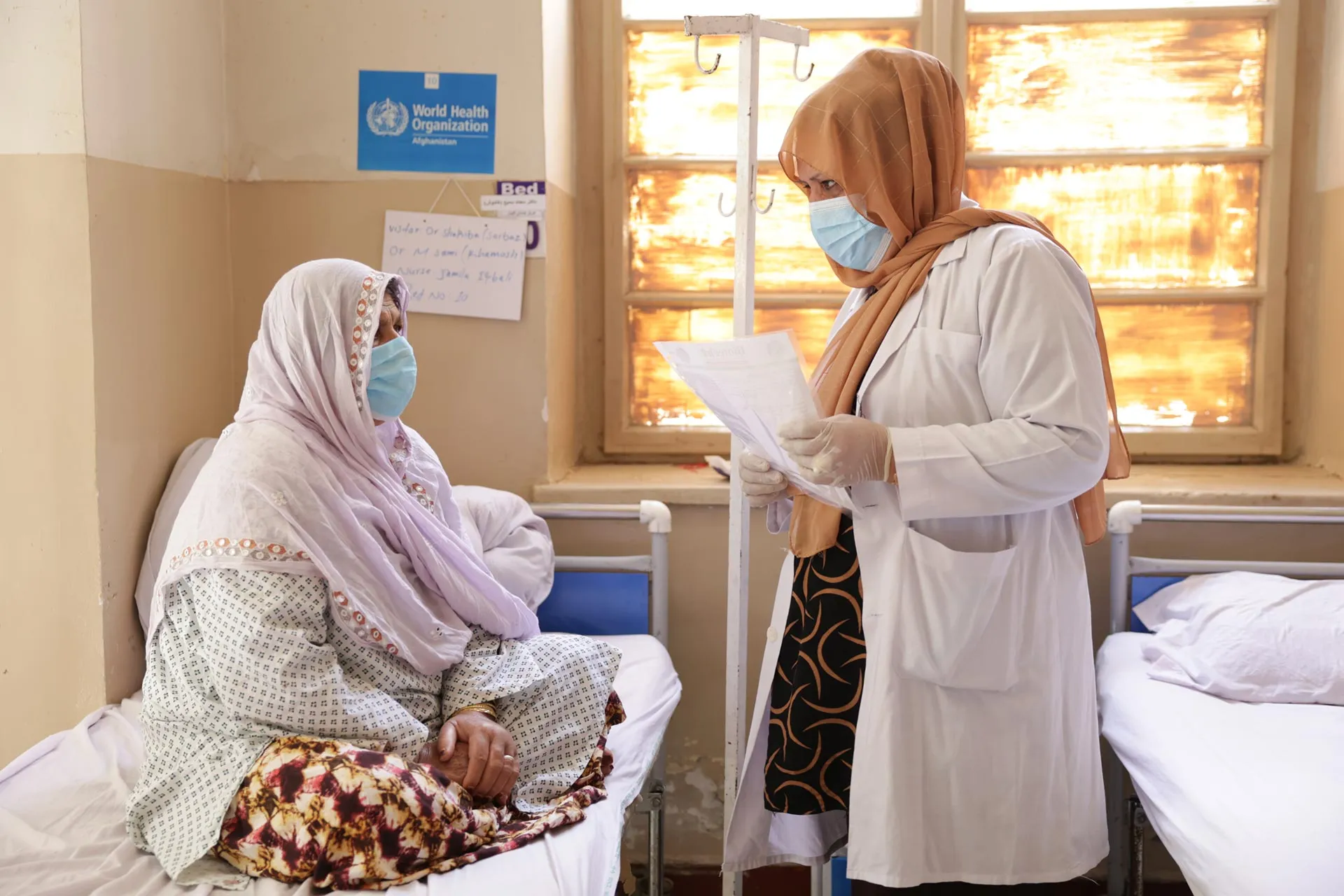
One of the most direct consequences of shrinking humanitarian funding is the weakening of healthcare system capacity and restricted public access to primary medical services. Heavy reliance of medical facilities on external financing, shortages of specialized healthcare personnel, and uneven distribution of health services—particularly in rural and remote areas—have caused budget cuts to translate rapidly into reduced access to essential care.
Alongside constrained medical services, food insecurity and malnutrition constitute the most acute manifestations of Afghanistan’s humanitarian crisis. According to the Integrated Food Security Phase Classification (IPC) analysis published on October 13, 2026, roughly 15.9 million people—32 percent of Afghanistan’s population—experienced acute food insecurity at Crisis level or worse between September and October 2026, with 3.4 million people in the Emergency phase. IPC projections indicate that with the onset of winter, between November 2026 and April 2027, the number of people facing acute food insecurity will climb to approximately 19.2 million—38 percent of the population—with nearly five million people falling into the Emergency phase.
Child and maternal nutrition indicators also reveal alarming dimensions. According to the IPC acute malnutrition analysis, approximately 4.04 million children aged 6 to 59 months will require treatment for acute malnutrition in 2027, comprising nearly 1.1 million suffering from severe acute malnutrition (SAM) and roughly 2.95 million experiencing moderate acute malnutrition (MAM). Furthermore, an estimated 1.27 million pregnant and lactating women will require treatment for acute malnutrition during the same year.
The spread of malnutrition is not driven solely by physical food shortages; rather, a combination of economic, health, and social determinants plays a critical role. Childhood illnesses, outbreaks of communicable diseases, and inadequate access to safe water, sanitation, and preventive or curative healthcare significantly increase both the risk and severity of malnutrition.
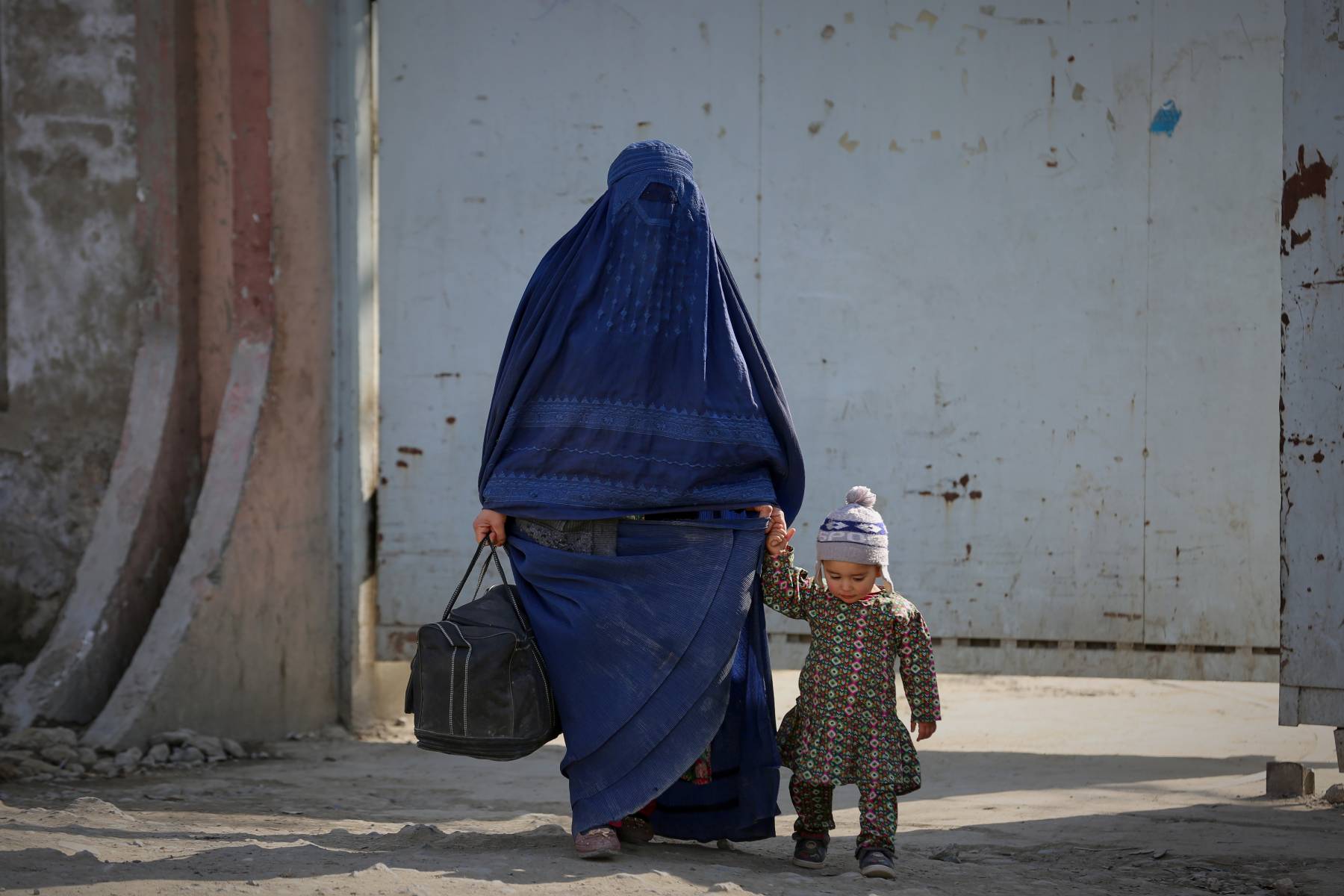
In the domain of maternal health, restricted access to essential care has generated severe risks. Barriers such as limited health facilities in rural districts, treatment costs, transportation difficulties, social restrictions, and shortages of female physicians and healthcare workers have curtailed women’s access to antenatal care, safe deliveries, and postnatal services. According to data from the United Nations Population Fund (UNFPA), only around one-quarter of pregnant women in Afghanistan receive four or more antenatal care visits.
Meanwhile, UNFPA reports indicate that more than 100 UNFPA-supported Family Health Houses in remote communities have shut down due to funding shortfalls and operational constraints. Because these facilities play a vital role in delivering reproductive health services, maternal care, and primary healthcare, their closure widens the geographic and financial divide separating women from medical care and exacerbates the risk of delayed diagnosis and treatment of pregnancy-related complications.
Related Analysis
Ban on Girls’ Education in Afghanistan: A Human Capital Crisis
The Impact of Afghanistan War on Mental Health
Strategic Outlook and Policy Imperatives
An examination of the health of Afghan women and children demonstrates that declining international humanitarian assistance—occurring against a backdrop of structural poverty, gender-based restrictions, and weak public service capacity—has become a primary driver exacerbating societal vulnerability. On one hand, this contraction has curtailed the financial resources and operational reach of aid agencies; on the other, it has unfolded while humanitarian needs remain vast due to food insecurity, migrant returns, climate shocks, and fragile household livelihoods. The closure of primary health outposts, surging demand for malnutrition treatment, and restricted female access to antenatal care confirm that the repercussions of this trend extend beyond mere aid volume reductions, directly jeopardizing the continuity of essential services.
The gravity of the crisis affecting the health of Afghan women and children lies in its long-term, intergenerational consequences. Persistent childhood malnutrition, deprivation of medical care, and restricted maternal healthcare threaten the physical and cognitive well-being of future generations. Furthermore, barriers to women’s economic and social participation, compounded by obstacles to healthcare access, risk reproducing an entrenched cycle of poverty, disease, and inequality. Consequently, the crisis surrounding the health of Afghan women and children must be assessed not only as an acute humanitarian emergency, but also as a warning sign of eroding human capital and diminished capacity for Afghanistan’s social and economic recovery.
Addressing the crisis in the health of Afghan women and children requires adopting a multi-tiered approach within international cooperation. In the short term, predictable and sustained financing for primary healthcare, malnutrition treatment, immunization, and maternal and child care must be prioritized. Supporting local health clinics, preserving female healthcare workforce capacity, and guaranteeing safe female access to medical services are likewise essential to prevent deepening deprivation. Over the medium and long term, strengthening health infrastructure, supporting pharmaceutical and medical supply chains, and developing independent, sustainable financing mechanisms can reduce public reliance on external emergency aid.
Along this trajectory, the international community’s responsibility to support the civilian population must be decoupled from political disputes and the question of recognizing the Taliban government. International assistance should never serve as a permanent substitute for a governing authority’s obligations toward its citizens; equally, political and diplomatic policies must not result in cutting off lifelines directly tied to survival, well-being, and fundamental human rights—particularly the health of Afghan women and children.
About the Author: N. Jami holds a Master’s degree in Social Sciences and is an analyst focusing on Afghan affairs.