
By: A. Shakouri
The official visit of Russian Deputy Prime Minister Alexei Overchuk to Afghanistan on November 12, 2026, at the head of a high-ranking governmental and economic delegation, marks a critical inflection point in Russia’s policy in Afghanistan, particularly regarding its posture toward the Taliban administration.
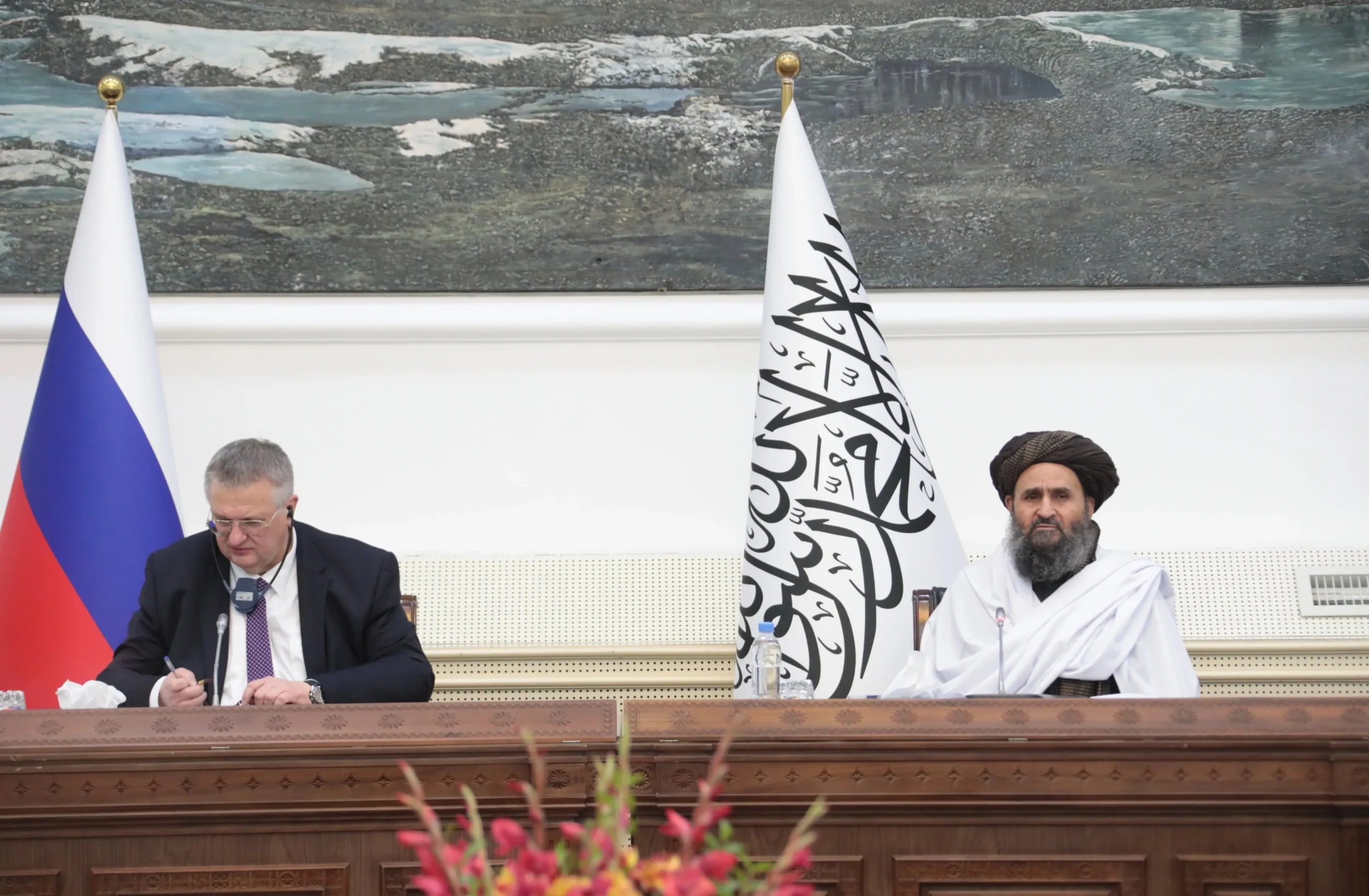
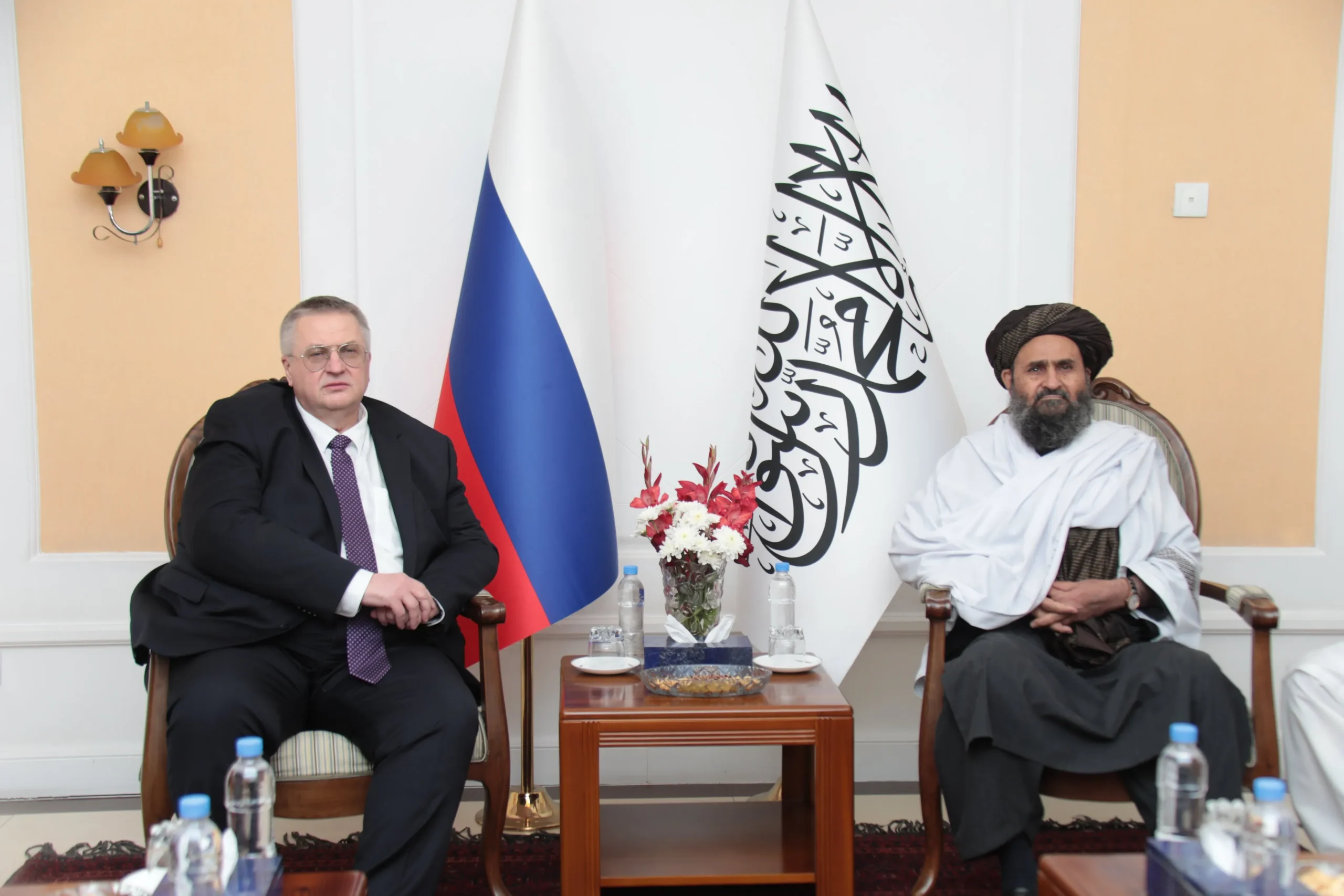
Conducted just two days after preliminary consultations led by Zamir Kabulov, the Russian President’s Special Representative for Afghanistan, Overchuk’s mission received a formal diplomatic welcome from Taliban Acting Foreign Minister Amir Khan Muttaqi. The visit included substantive high-level meetings with Acting Prime Minister Mullah Mohammad Hassan Akhund and Deputy Prime Minister for Economic Affairs Mullah Abdul Ghani Baradar.
The concrete, officially announced deliverable of this visit was the signing of 15 commercial memoranda of understanding (MoUs) between the private sectors of both nations, carrying a cumulative value of $103 million. These agreements prioritize the export of essential Russian commodities—specifically wheat, flour, vegetable oil, and pharmaceuticals—to Afghanistan, juxtaposed against the import of fresh Afghan agricultural produce, notably pomegranates, into the Russian market. According to Dmitry Antonov, Chairman of the Business Council for Cooperation with Afghanistan at the Russian Chamber of Commerce and Industry, the primary mandate of the delegation was expanding bilateral trade and evaluating direct investment opportunities.
Russia’s Policy in Afghanistan: Institutionalizing Diplomatic and Economic Ties
The foundational analytical takeaway from this engagement lies in its legal and diplomatic architecture. Following Moscow’s watershed decision in July 2025 to become the first major global power to extend formal diplomatic recognition to the Taliban government, bilateral relations definitively transitioned out of informal, back-channel engagement into institutionalized, high-level diplomacy. The arrival of a senior Russian Deputy Prime Minister alongside more than seventy prominent Russian business executives—and the resulting commercial agreements—represent the direct dividends of this normalized diplomatic framework.
More profoundly, the shifting composition of Russian delegations dispatched to Kabul underscores a strategic recalibration inside the Kremlin. Over the past five years, Russian envoys traveling to Afghanistan were overwhelmingly drawn from security, military, and intelligence apparatuses. Moscow’s paramount anxieties during that phase centered on containing fallout from the Western withdrawal, securing Central Asian buffer zones, and monitoring the operational activities of regional terror networks—foremost among them the Islamic State Khorasan Province (ISIS-K).
Dispatching a senior economic policymaker directly responsible for Russia’s regional integration across the Eurasian space confirms that Russia’s policy in Afghanistan is deliberately pivoting from “security-centric containment” to “economic-driven engagement.” While Moscow’s concerns regarding transnational militant groups persist and are periodically articulated by Russian officials, the Kremlin’s operational conduct demonstrates that it no longer views Afghanistan exclusively as an isolated security threat; rather, Moscow is actively leveraging the country as an economic and geopolitical opportunity to anchor Kabul within its political and commercial sphere of influence.
Geopolitical Leverage and Low-Cost Influence Engineering
On a geopolitical plane, Overchuk’s mission illustrates the Kremlin’s capacity to convert commercial interdependence into durable strategic leverage, while simultaneously granting Kabul coveted international legitimacy. Without committing billions of dollars in unrequited financial aid or incurring the immense costs of military intervention, Moscow is systematically linking Afghanistan’s essential food and energy supply chains to Russian markets. This dependency establishes a potent lever over Kabul’s strategic decision-making, incentivizing political and security alignment with core Russian interests.
Concurrently, the joint presence of Moscow’s top Eurasian integration official (Alexei Overchuk) alongside senior diplomat Zamir Kabulov serves to gradually weave Afghanistan into the broader Eurasian geopolitical fabric. For the Taliban administration, this high-profile engagement represents a substantial political victory—demonstrating high-level diplomatic normalization and establishing a precedent designed to encourage other regional capitals to formalize relations.
Commercial Agreements and Bilateral Trade Horizons
An evaluation of the economic ledger—Moscow’s primary driver for dispatching such a senior economic envoy—confirms that bilateral cooperation has progressed beyond broad diplomatic gestures into an operational, structural phase anchored by direct private-sector participation. According to official trade data released during the Kabul summits, bilateral trade turnover between Afghanistan and Russia surged by an impressive 150 percent (a 2.5-fold increase) during the first seven months of 2026. With over 70 Russian industrialists and corporate representatives directly engaging Afghan counterparts in Kabul, this commercial trajectory is poised for rapid acceleration. The tangible output of these consultations—15 private-sector commercial MoUs valued at $103 million—establishes a calculated equilibrium between import requirements and export capacities:
• Stabilizing Domestic Afghan Markets: Contracts for importing strategic Russian staples—including wheat, flour, cooking oil, petroleum products, and medicines—directly reinforce Afghan food security, mitigate inflationary pressures, and stabilize domestic commodity markets.
• Expanding Afghan Export Corridors: Parallel agreements facilitating the export of Afghan agricultural goods, dried fruits, and particularly fresh produce such as pomegranates to Russian consumer markets provide critical foreign currency inflows, support domestic farmers and orchardists, and open the vast Eurasian Economic Union market to Afghan products.
Beyond immediate commodity trade, the strategic agenda dominating Overchuk’s consultations with Mullah Abdul Ghani Baradar and senior cabinet ministers outlines a long-term roadmap to transform Afghanistan’s regional economic posture. During these negotiations, Kabul presented formal investment portfolios inviting Russian state and private enterprises to enter mining extraction, energy production, industrial manufacturing, and special economic zones. In response, the Russian delegation signaled readiness to streamline business visa issuance, resolve cross-border banking bottlenecks, and reduce customs tariffs.
Simultaneously, intensive bilateral focus on rehabilitating transit infrastructure, expanding dry ports, and securing direct participation from Russian engineering and contracting firms in railway construction—most notably along the Trans-Afghan corridor—reveals a shared ambition. Moscow and Kabul aim to lower regional transit costs, elevating Afghanistan from an isolated consumer market into an active regional transit hub connecting Central Asia to South Asian markets. Deputy Prime Minister Overchuk’s explicit remark during his meeting with Baradar—asserting that Afghanistan possesses the structural capacity to serve as the central transit nexus between northern and southern Eurasia—underscores this strategic objective.
Related Articles
Russia-Taliban Relations and U.S. Competition in Afghanistan
Mutual expectations of Russia and Taliban
Russia–Afghanistan: Strategic Outlook and Geopolitical Costs
The Russian Deputy Prime Minister’s visit to Kabul and the execution of fifteen private-sector commercial agreements signify the maturation of pragmatic diplomacy in Russia’s policy in Afghanistan. Moving beyond the purely security-driven posture of the past half-decade, Moscow is systematically institutionalizing its formal partnership with the Taliban government. Although the Afghan market does not carry decisive macroeconomic weight for Russia’s aggregate economy, this low-cost, calibrated strategy enables the Kremlin to advance two overarching strategic imperatives simultaneously:
1. Consolidating Afghanistan within Moscow’s political and economic orbit to secure Russia’s vulnerable southern periphery.
2. Positioning Russian enterprises to capture foundational transit infrastructure projects, diversifying Eurasia’s long-term trade corridors.
For the Taliban administration, elevating diplomatic ties with Moscow offers an essential avenue to circumvent international isolation, while expanding commercial trade with a stable Russian market provides a vital lifeline for national food and energy security. Nevertheless, deepening strategic alignment with Russia will inevitably carry geopolitical costs for Kabul, particularly regarding relations with Western capitals. Modern Afghan history consistently demonstrates that expanding Russian influence in Afghanistan triggers acute Western pushback—a strategic reality Kabul has never navigated without paying a substantial political price.
About the Author: A. Shakouri is a Kabul-based geopolitical and strategic analyst.