
Review of Afghanistan developments
On Friday, August 25, the Panjshir Supreme Council issued a statement announcing that it had appointed a leadership body for the National Resistance Front of Afghanistan (NRF).
The move amounts to an internal coup within the front. Since its founding, the NRF has been led by Ahmad Massoud, son of Ahmad Shah Massoud. Now the Council — a faction from within the NRF, a front whose founders are a group of political and military leaders from Panjshir province — has implicitly announced Massoud’s removal and the transfer of major decision-making to the Council.
Over the past five years, the NRF’s leadership, policies, and its personality-driven, family-centered structure have drawn repeated criticism. According to published reports, the main criticisms center on calls for:
● Ending personality-based leadership and moving the front to a council-based system
● Bringing commanders and trusted figures into the leadership council
● Eliminating informal circles and parallel structures
● Financial transparency
● Separating the front’s resources from personal interests
● Auditing performance
The Panjshir Supreme Council’s action points to three things. First, disputes among the front’s leaders have reached a level where negotiation could no longer resolve them, leaving formal, public action as the only route. Second, from the perspective of the Panjshir Supreme Council, the front belongs to a specific geography — the Panjshir Valley — meaning it’s “national” in name but, in essence, belongs to Panjshiri leaders. Third, at least some members of the front no longer accept Ahmad Massoud’s continued leadership.
Hafiz Mansoor: A Key Figure in the Panjshir Supreme Council
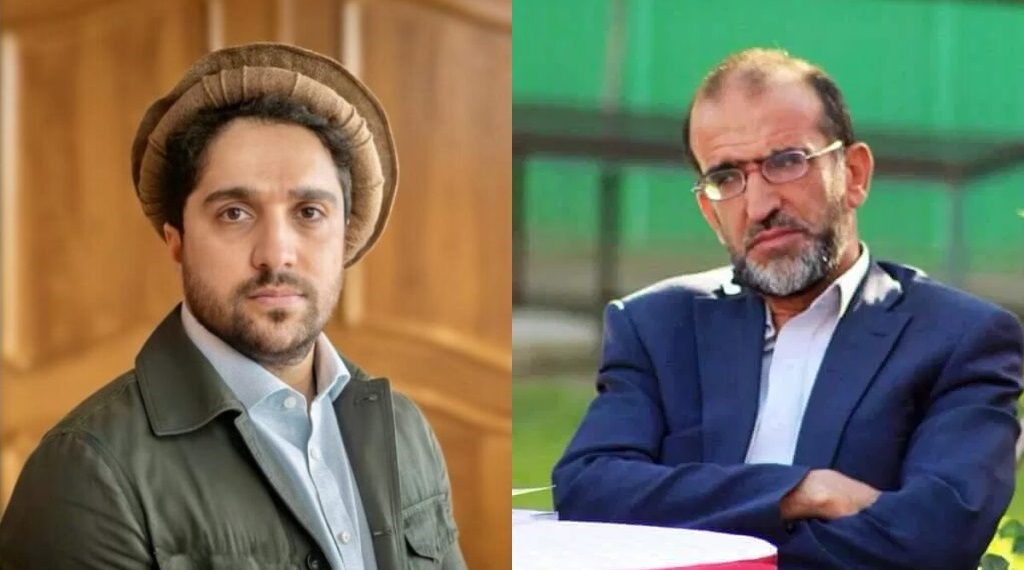
Hafiz Mansoor is a core member of the Council and, at the same time, a critic of Ahmad Massoud. Reports of disputes between Massoud and Mansoor have circulated for several years. Shamsuddin Hamed, a Tajik from Panjshir and a well-known NRF figure, wrote about Mansoor’s sharp criticism of Massoud at a meeting held in 2024 under the name “Supreme Resistance Council.” According to Hamed, Mansoor told Massoud at that meeting:
“Mr. Ahmad Massoud, you’ve done nothing in this time, brought no reforms and aren’t bringing any, and have no accountability or transparency in your work. Please step aside and let the council hand me the front’s leadership for a while. My courage is greater than yours, and so are my knowledge, my work ethic, and my willingness to make decisions.”
These blunt remarks show that Mansoor has long been a critic of the NRF’s leadership, structure, and performance under Massoud, and has wanted him to step down.
Mansoor also holds distinctive views on today’s Afghanistan and national identity. In a piece he published in 2022 titled “The National Resistance Front’s Vision for the Future of Afghanistan/Khorasan,” published in Etilaatroz newspaper, he wrote that the name Afghanistan and the mandatory application of the “Afghan” identity are factors that entrench ethnic supremacy in the country. He called for a dual name — “Afghanistan and Khorasan” — and for rewriting national history, restoring historical place names, revising national symbols, and renaming Afghanistan’s currency. These sharp views prompted even one of the NRF’s own commanders to write a critique of the piece.
Deeper Rifts Inside the National Resistance Front
Even so, these disputes and criticisms aren’t limited to Mansoor. From the front’s earliest years, there have been differing views inside the NRF on the nature of the resistance, Afghanistan’s future structure, the preferred political system, and the limits of the front’s Islamic and national identity. Those differences were one reason Amrullah Saleh quietly went his own way and revived the Green Trend organization.
Seen this way, the latest dispute can’t be reduced to rivalry between Ahmad Massoud and Hafiz Mansoor, or among a few Panjshiri figures.
The Panjshir Supreme Council’s decision to appoint a council to lead the NRF shouldn’t be treated as mere competition between Massoud and Mansoor — the deeper layers of division inside this front need to be examined.
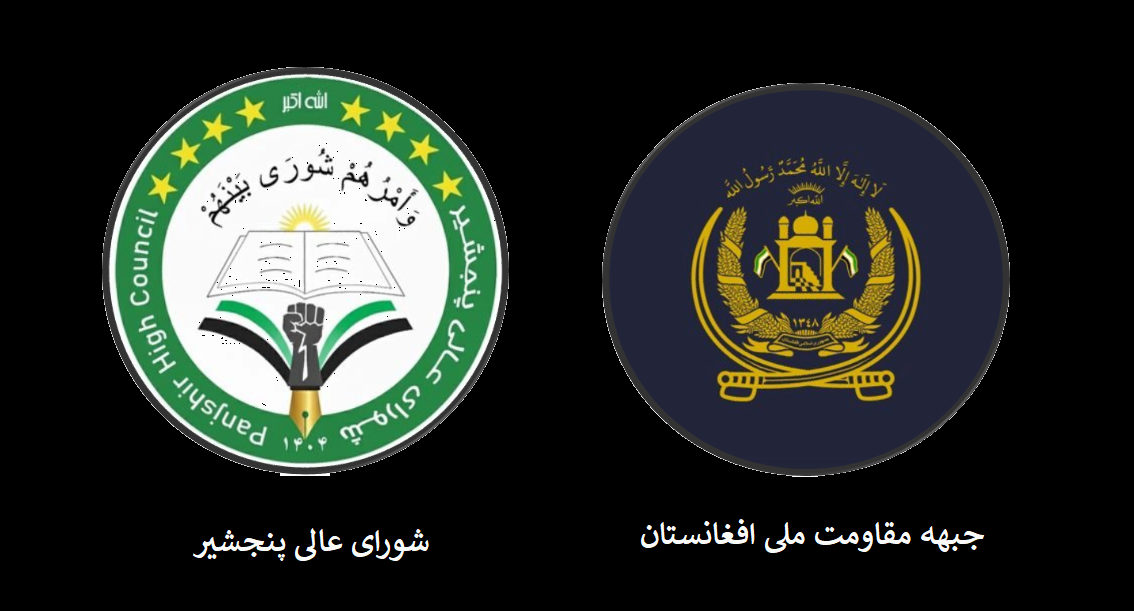
The emblems of the Panjshir Supreme Council and the National Resistance Front of Afghanistan (NRF), highlighting the Council’s role in the recent internal divisions and leadership dispute within the NRF.
The Future of the National Resistance Front of Afghanistan
Given Ahmad Massoud’s lineage and international profile, it’s very unlikely that he and his supporters will accept removal and hand responsibilities over to a leadership council appointed by the Panjshir Supreme Council. That’s especially true because the Panjshir Supreme Council focuses on Panjshir’s geography rather than on a national, inclusive front. Two men the Council named as its Tehran representatives — Mohammad Sohrab Sohrab and Abdul Sami Yousefi — have refused to accept that role, which shows that even some of its own members can’t accept this coup-like move.
But because the Panjshir Supreme Council has taken its position public with a statement, the most likely scenario is that part of the NRF’s membership will split from the front and form a new movement, probably operating under the name “Panjshir Supreme Council.”
Another possibility is that the Council’s leaders, through mediation by individuals or even countries, back down and announce that, with changes to the structure, Ahmad Massoud will remain the NRF’s leader.
A History of Splits Among Afghan Coalitions and Parties
Afghanistan’s political history is full of splits and fractures among parties and coalitions. Experience shows that military and political coalitions without a clear, agreed-upon mechanism for their nature and structure can collapse or fragment into factions in times of crisis. Jamiat-e-Islami is a clear example. In what was Afghanistan’s largest political party, a dispute over the leadership structure after the assassination of Burhanuddin Rabbani led to a split, producing two Jamiat parties — one led by Atta Mohammad Noor and the other by Salahuddin Rabbani.
The lesson for the NRF is that coalitions stay stable when personal disputes can be channeled into institutional mechanisms. Otherwise, a dispute over leadership turns into a dispute over legitimacy, and then into organizational fracture.
Consequences of the Panjshir Supreme Council’s Move for the Future
The Council’s action carries five likely consequences:
● Damage to internal cohesion: It’s now clear that the Panjshiri wing of the NRF is deeply divided and lacks the cohesion it needs. This will eventually affect the front’s military networks and resources
● Weakened battlefield capacity: A dispute over leadership, or a weakened leadership, will sap fighters’ morale. If it continues, leaders’ energy goes toward internal rivalry instead of confronting the Taliban. During the republic, some of Afghan forces’ defeats stemmed from rivalries among political leaders — and now the NRF, one of the most active anti-Taliban military fronts, has fallen into the same trap
● A boost to the Taliban’s narrative: Because of the Panjshir Supreme Council’s action, the Taliban can now argue forcefully that the NRF is divided and cite that as a sign of the front’s weakness
● Reduced ability to recruit beyond its traditional base: If the public reads the current dispute as a fight among Panjshiri elites, the front’s effort to become an inclusive coalition gets harder, and recruiting suffers badly
● International standing: The NRF has managed to establish itself internationally as a political and military faction, but after the Panjshir Supreme Council’s move from within, its unity and cohesion in the eyes of international actors has been damaged, and its weight could even shrink to that of a regional faction inside Afghanistan
Related Articles
Taliban opposition fronts: Why new Afghan groups emerged?
The Struggle among Anti-Taliban Leaders
Conclusion
More than a personal dispute between Ahmad Massoud and Hafiz Mansoor, the Panjshir Supreme Council’s action is a sign of deeper fault lines in the National Resistance Front’s leadership structure, decision-making mechanisms, and question of representation. The push from a Panjshir-rooted council to turn the front’s leadership into a council-based body again raises the question of how far the front has managed to evolve from a largely Panjshiri, Tajik-centered base into a genuinely inclusive national movement. If the dispute continues, it could damage the front’s political and battlefield cohesion and its capacity to recruit beyond its traditional base.
The episode also reveals something more important in the sixth year of Taliban rule: Taliban opponents haven’t just failed to reach cohesion or a broad coalition — the divisions have now reached inside individual movements themselves.