
Review of Afghanistan developments
The international community’s pressure policy on the Taliban over the past five years has rested on one assumption: that rising economic and political costs would change the regime’s behavior. That logic holds up in theory, but only works when there’s a direct link between the cost imposed and the actor it’s meant to target. In Afghanistan, that link is very weak.
Economic restrictions and reduced aid don’t necessarily impose a proportional cost on the Taliban government; a significant share of that cost lands first and directly on households, women, children, returning migrants, and civil institutions. Assuming that economic pressure on society will eventually convert into political pressure on the Taliban requires evidence that hasn’t been sufficiently observed so far. The pressure policy on the Taliban hasn’t changed the behavior of the “Islamic Emirate of Afghanistan” — it’s Afghan society that has paid the price.
The Pressure Policy on the Taliban and the Cost-Transfer Error
Freezing assets, cutting off access to the international banking system, reducing development aid, and imposing diplomatic isolation are the core components of the pressure policy on the Taliban — by design, a classic sanctions toolkit. The stated goal is for the Taliban government to feel the cost of its own conduct and change course. But have the architects of this policy actually achieved that goal?
The United States has frozen roughly $9.5 billion in Afghan central bank assets, and sanctions have cut Afghanistan off from the international banking system. Between 2001 and 2021, international aid covered about 75% of Afghanistan’s public spending; after the Taliban takeover, that flow shrank sharply, and in early 2025 the US suspended its humanitarian assistance, which had made up around 45% of all aid to the country.
The 2026 humanitarian response plan raised only $269 million, while the funding gap reached $1.44 billion. The World Food Programme had planned to reach 11.9 million people, but only 4.3 million actually received assistance, leaving 7.6 million without the support they were counted on to get, purely due to funding shortfalls.
UN Development Programme data also shows that three-quarters of Afghan families now lack reliable access to food, sanitation, safe drinking water, basic health care, or adequate housing. Child malnutrition hit its highest level on record in 2026, with roughly 3.5 million children under five malnourished. Around 17.4 million Afghans faced acute food insecurity in 2026.
These numbers show that, at the implementation level, the pressure policy on the Taliban has turned into something closer to an anti-humanitarian policy — one that hasn’t changed the regime’s behavior so much as collapsed the public service system. Dominik Stillhart, director of operations at the International Committee of the Red Cross, put it this way after visiting a children’s ward in Kandahar: “The intent of the sanctions was to punish officials in Kabul, but in practice, they have deprived millions of Afghans of basic survival conditions.”
A Fundamental Analytical Flaw in the Pressure Policy
The international community’s biggest mistake was analyzing the Taliban through the logic of a conventional state, when the Taliban itself sees the state as merely a tool for realizing its own Sharia-based order. Western policymakers assumed that holding power, the burdens of governing, and the need for international legitimacy would gradually push the Taliban toward accepting the norms of modern governance.
But for the Taliban, government legitimacy isn’t measured by international recognition — it’s measured by fidelity to Sharia rule. On matters like women, the structure of the education system, and the limits of social freedoms, there is no room for negotiation; these are treated as part of the ideology itself. That’s why the Taliban is willing to absorb heavy economic and diplomatic costs rather than retreat on these fronts.
Internal Cohesion Over International Legitimacy
After taking control of Afghanistan, the Taliban faced a challenge it hadn’t previously had to manage: distributing resources, positions, and privileges among a diverse range of supporters, commanders, and members. That reality made internal cohesion and unity the Taliban’s top priority — even above financial resources and international recognition, and a driving reason the pressure policy on the Taliban has struggled to gain traction.
For Taliban leader Hibatullah Akhundzada, Sharia-compliant policymaking signals religious commitment to an internal audience — supporters, rank-and-file members, and commanders. These policies reduce the risk of defection toward rival groups like ISIS-Khorasan. As a result, external pressure hasn’t pushed the Taliban toward flexibility, and won’t — if anything, it pushes the movement toward hardening its ideological positions to shore up its internal legitimacy.
Eroding Leverage and Shrinking Dependence
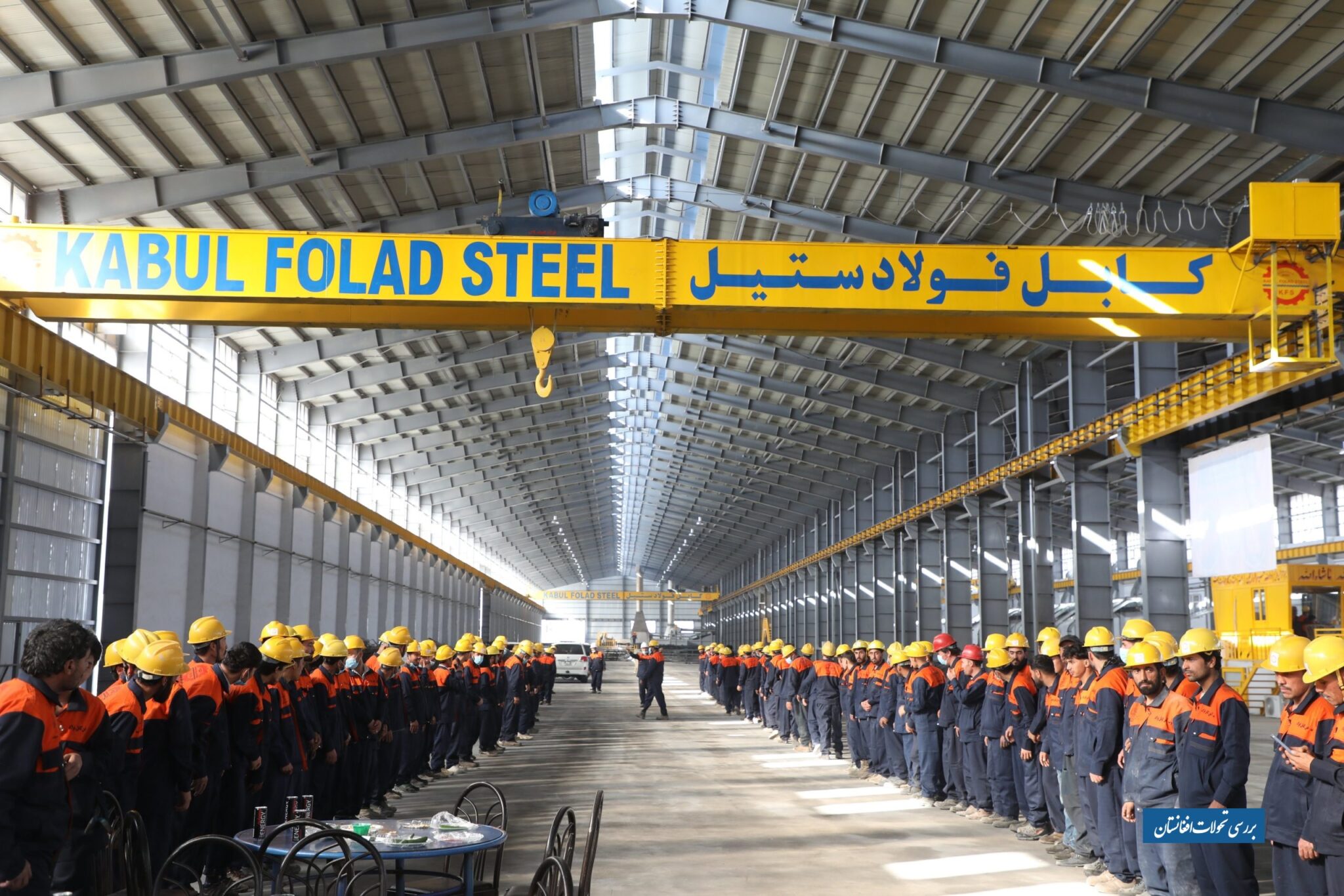
The main levers of the pressure policy on the Taliban from Western countries — financial aid, sanctions, and diplomatic isolation — have gradually lost their effectiveness. While the cutoff of international aid shrank Afghanistan’s economy by more than 20% in 2021, the World Bank assessed in October 2025 that Afghanistan’s economy was expanding, citing “signs of a gradual shift toward self-reliance.” By increasing domestic revenue collection, the Taliban has reduced its dependence on foreign aid. Self-sufficiency remains a long way off, and the Taliban government’s progress toward budgetary self-reliance obviously doesn’t translate into better welfare or livelihoods for ordinary Afghans — but the trend itself is real.
On the political front too, the recognition lever has worn thin. While the West continues to treat withholding recognition as the central tool of its pressure policy on the Taliban, Russia formally recognized the Taliban government in 2025. That move, along with normalizing relations from China, Iran, the Central Asian states, and other regional countries, has sharply devalued the West’s “recognition card.”
The Taliban appears to have concluded that it can gradually gain legitimacy and engagement without making concessions — and without retreating on domestic, Sharia-based issues.
A Fractured Pressure Front
The international front applying the pressure policy on the Taliban was never unified. Three distinct camps emerged:
● A regional bloc (China, Russia, Iran) that has normalized diplomatic relations with the Taliban in pursuit of stability and economic interests
● An isolationist bloc (European countries) insisting the Taliban meet international standards and human rights benchmarks — though some members of this camp have also gradually drifted toward engagement
● A pragmatist bloc (the US, UK) that has moved toward “gradual engagement” without compromising on core values
The US itself has shifted from a human-rights-based approach to what amounts to “selective contact” built around narrow interests like counterterrorism and prisoner exchanges. For the Taliban, these contacts sent a clear message: even Washington eventually has to engage, without the Taliban having to change its behavior in return.
Related Articles
The Taliban Leader’s Discourse in Eid Messages (2023–2026)
US Policy Toward Afghanistan and the Taliban
Conclusion
The pressure policy on the Taliban over the past five years achieved neither a change in the group’s behavior nor an improvement in ordinary Afghans’ lives. The data shows that, at the implementation level, this policy amounted to shifting costs from the regime onto society. By freezing assets, cutting aid, and imposing diplomatic isolation, the pressure policy on the Taliban collapsed the public service system and turned ordinary households — especially women, children, and returning migrants — into the ones actually footing the bill.
On the political side too, as its own leverage eroded and the international front applying the pressure policy on the Taliban fractured, this approach failed to bring the Taliban to the negotiating table or shift its core policies.
Continuing this policy won’t just be ineffective — it risks becoming one of the main drivers of Afghanistan’s ongoing humanitarian crisis.