
Review of developments in Afghanistan
Water is more than a natural resource for Afghanistan; it is a foundation of food security, energy, and economic development. The country has significant surface and groundwater resources, while many of the region’s major rivers originate in its highlands. Yet Afghanistan has not been able to fully translate this water potential into reliable services for development. Limited storage capacity, inadequate infrastructure, weak resource management and allocation, and growing vulnerability to drought and climate change continue to constrain the effective use of its water resources.
This makes water governance in Afghanistan about more than the availability of water. It is also about the country’s capacity to manage, allocate, and use water sustainably. The gap between water potential and the ability to utilize it has consequences that extend well beyond the water sector, directly affecting agriculture, food security, energy, and economic resilience.
Agriculture’s heavy dependence on rainfall, inadequate water infrastructure, vulnerability to water shortages and drought, and limited access to energy all constrain Afghanistan’s capacity to produce food and energy sustainably. In this context, water governance cannot be reduced to the technical management of water resources. It also involves the ability of institutions to regulate and allocate resources, develop and maintain infrastructure, guide investment, and coordinate the water, agriculture, and energy sectors.
The water-energy-food nexus provides a broader framework for understanding these relationships. Water is essential for agriculture and food production and plays an important role in certain forms of energy generation, particularly hydropower. At the same time, energy is required to extract, pump, transport, and utilize water, as well as to support agricultural activities. Weakness or disruption in any one of these sectors can therefore affect the others.
Water and Food Security in Afghanistan
Agriculture in Afghanistan depends heavily on both access to water and the way water is managed. As a result, the quality of water governance in Afghanistan directly affects the country’s capacity to produce food and sustain rural livelihoods.
However, expanding access to water alone cannot guarantee food security. Low water productivity, deteriorating irrigation networks, transmission losses, and inefficient irrigation methods mean that part of the available water is lost before it reaches agricultural land. The central challenge for agriculture, therefore, is not simply to increase the volume of water used, but to increase the production and economic value generated by each unit of water.
This challenge becomes more significant because Afghanistan’s agriculture is simultaneously exposed to drought, substantial dependence on rainfall, and fluctuations in water availability associated with climate change. Expanding cultivated areas without considering the capacity and sustainability of water resources could increase pressure on both surface and groundwater resources and undermine future food security.
Effective water policy can improve agricultural productivity without a proportional increase in water consumption. Reforms to cropping patterns, the selection of crops suited to local climatic conditions, the adoption of more efficient irrigation methods, and the rehabilitation of water conveyance networks can all contribute to this objective.
Water Management and Agricultural Resilience
Achieving these changes, however, requires more than physical infrastructure. Equitable water distribution, clearly defined water rights and rules governing consumption, continuous maintenance of irrigation networks, mechanisms for resolving disputes, and the participation of local communities in decision-making are all important elements of water governance in Afghanistan.
In many areas, the challenge is not simply a lack of water, but the absence or weakness of clear rules and effective mechanisms for allocating and managing available resources. Strengthening local institutions and coordination mechanisms across different levels of governance, alongside infrastructure rehabilitation, can therefore improve the sustainability and efficiency of irrigation systems.
From this perspective, the role of water governance in food security is also connected to the sustainability and resilience of food production. More reliable access to water and higher water productivity can reduce fluctuations in agricultural output and decrease the vulnerability of rural livelihoods to drought. These improvements can become an important foundation for strengthening food security in Afghanistan.
The process, however, also depends on energy. Water extraction, pumping, and transportation require energy, while agricultural development increasingly depends on reliable access to electricity and other forms of energy.
Water and Energy Security in Afghanistan
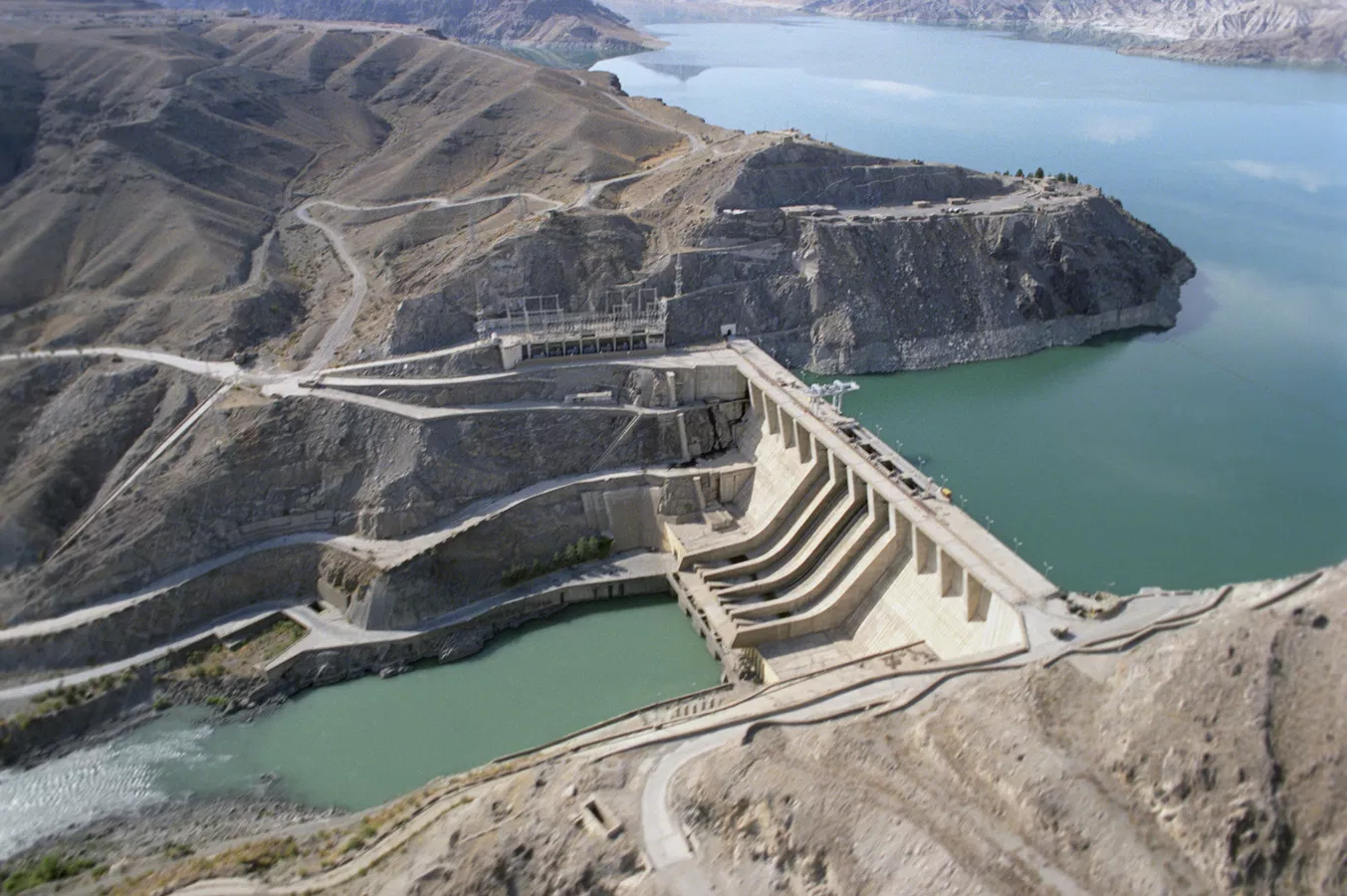
Energy is one of the most important areas in which Afghanistan’s water potential can be converted into economic and developmental value. Rivers originating in the Hindu Kush and natural differences in elevation across some river basins provide considerable potential for hydropower generation.
However, weaknesses and vulnerabilities in power generation and transmission infrastructure, combined with limited investment, have prevented Afghanistan from fully utilizing this potential. As a result, part of the country’s electricity demand continues to be met through imports.
Energy development is not merely one of the economic uses of water. It is also a prerequisite for the effective utilization of Afghanistan’s water resources. Electricity is important for water extraction and pumping, transportation and distribution, and the development of irrigation systems. In agriculture, reliable energy can facilitate more effective use of available water resources.
Stable access to energy also supports the processing and storage of agricultural products and strengthens related economic activities. The relationship between water and energy is therefore reciprocal: water can contribute to electricity generation, while energy increases the capacity to extract, transport, utilize, and manage water.
Water Governance and Afghanistan’s Hydropower Potential
Hydropower represents an important advantage for Afghanistan, but its development cannot be pursued independently of other water uses or the effects of climate change.
Declining precipitation, longer droughts, and fluctuations in river flows can reduce hydropower generation. During periods of water scarcity, these conditions can also intensify competition between agricultural water needs and energy production.
For this reason, decisions concerning water allocation and storage should be made in a way that prevents short-term energy interests from undermining agricultural sustainability and food security over the longer term. This is one of the central challenges facing water governance in Afghanistan.
Water Governance in Afghanistan: Beyond Resource Management
Water governance in Afghanistan extends beyond the technical management of resources and the development of infrastructure. It concerns how decisions are made, how resources are allocated, how responsibilities are distributed, and how relationships among stakeholders are regulated.
The construction of dams, expansion of irrigation networks, and increase in water storage capacity can contribute to sustainable development only when they operate within a clear institutional framework. Such a framework must coordinate competing demands, including those of agriculture, energy, the environment, and local communities.
From this perspective, Afghanistan’s challenge is not simply a lack of physical capacity. It is also the weakness of the mechanisms needed to transform that capacity into sustainable and coordinated economic and social benefits.
Institutions, Data, and Water Allocation
One of the requirements for effective governance is an integrated water information system and stronger coordination among the institutions responsible for water management.
Reliable data on precipitation, river flows, Afghanistan’s groundwater resources, and water consumption are essential for resource allocation and risk management. Alongside reliable data, the participation of farmers and local communities, as well as transparent rules for water allocation, dispute resolution, and infrastructure maintenance, can strengthen the implementation of water policies.
Equitable access is equally important. Unequal distribution of water resources and the benefits generated by water projects can undermine the legitimacy of water policies and create conditions for conflict.
Climate Change and Water Governance
Climate change makes these requirements increasingly important. Greater uncertainty about the timing and availability of water makes planning based on historical patterns more difficult.
As a result, water governance in Afghanistan needs to move beyond a purely supply-oriented approach toward risk management, demand management, improved efficiency, and adaptation to changing conditions. Water-related decisions should take future needs into account, as well as the consequences of allocating water among different sectors.
This requires a broader understanding of water management—one that considers not only how much water is available today, but also how different allocation decisions may affect Afghanistan’s agricultural, energy, and economic needs in the future.
Transboundary Water and Regional Cooperation
The issue also has important regional implications. Afghanistan’s position within several transboundary river basins means that decisions concerning the development and use of its water resources can have consequences beyond the country’s borders.
For this reason, domestic water governance in Afghanistan should be accompanied by information sharing, dialogue, and mechanisms for cooperation with downstream countries. Such cooperation can help transform the management of shared water resources from a potential source of tension into an opportunity for regional cooperation.
Water Governance in Afghanistan and the Future of Development
Within this framework, water should be viewed as a strategic asset for development. Its value depends not simply on the volume of available resources, but also on the value generated from each unit of water used in agriculture, energy, and other economic activities.
The evaluation of water projects should therefore consider more than construction costs. Water productivity, maintenance costs, social and environmental impacts, and long-term benefits should also be taken into account. At the same time, policies aimed at improving productivity should preserve equitable access for vulnerable groups.
Ultimately, water governance in Afghanistan requires a transition from a project-based approach to an integrated approach in which water allocation reflects the connections and interdependence among agriculture, energy, and other uses of water.
Related Articels
Water crisis in Kabul: causes and consequences
Qosh Tepe Project through the Lens of Western Think tanks
The Future of Afghanistan’s Water Resources
The future of Afghanistan’s water resources cannot be secured through resource management or infrastructure development alone. The central challenge is not necessarily an absolute lack of water, but the gap between the country’s water potential and its governance capacity.
Infrastructure development and increased extraction will not necessarily produce sustainable benefits without improvements in decision-making, resource allocation, and coordination among different sectors. What matters is increasing the economic and social value generated by each unit of water while managing resources according to their capacity and future needs.
The importance of this challenge becomes even clearer within the water-food-energy nexus. Water is essential for food and energy production, while energy is necessary for extracting, transporting, and utilizing water and for developing agricultural activities.
Strengthening water governance in Afghanistan can therefore provide a starting point for an integrated water-food-energy policy. Such a policy would pursue higher water productivity, climate-compatible agriculture, and renewable energy development alongside stronger institutional mechanisms, equitable resource allocation, and regional cooperation.
Such an approach could strengthen Afghanistan’s food and energy security while reducing the country’s dependence and vulnerability. It could also enhance Afghanistan’s economic and social resilience in the face of climate change and other shocks.