
Review of Afghanistan developments
Five years after the collapse of the Afghan republic, evaluating Taliban performance requires more than political debate over the group’s legitimacy. Two separate questions matter: how effectively the Taliban has built the political and administrative system it wanted, and how much that system has improved security, the economy, infrastructure, and daily life for Afghans.
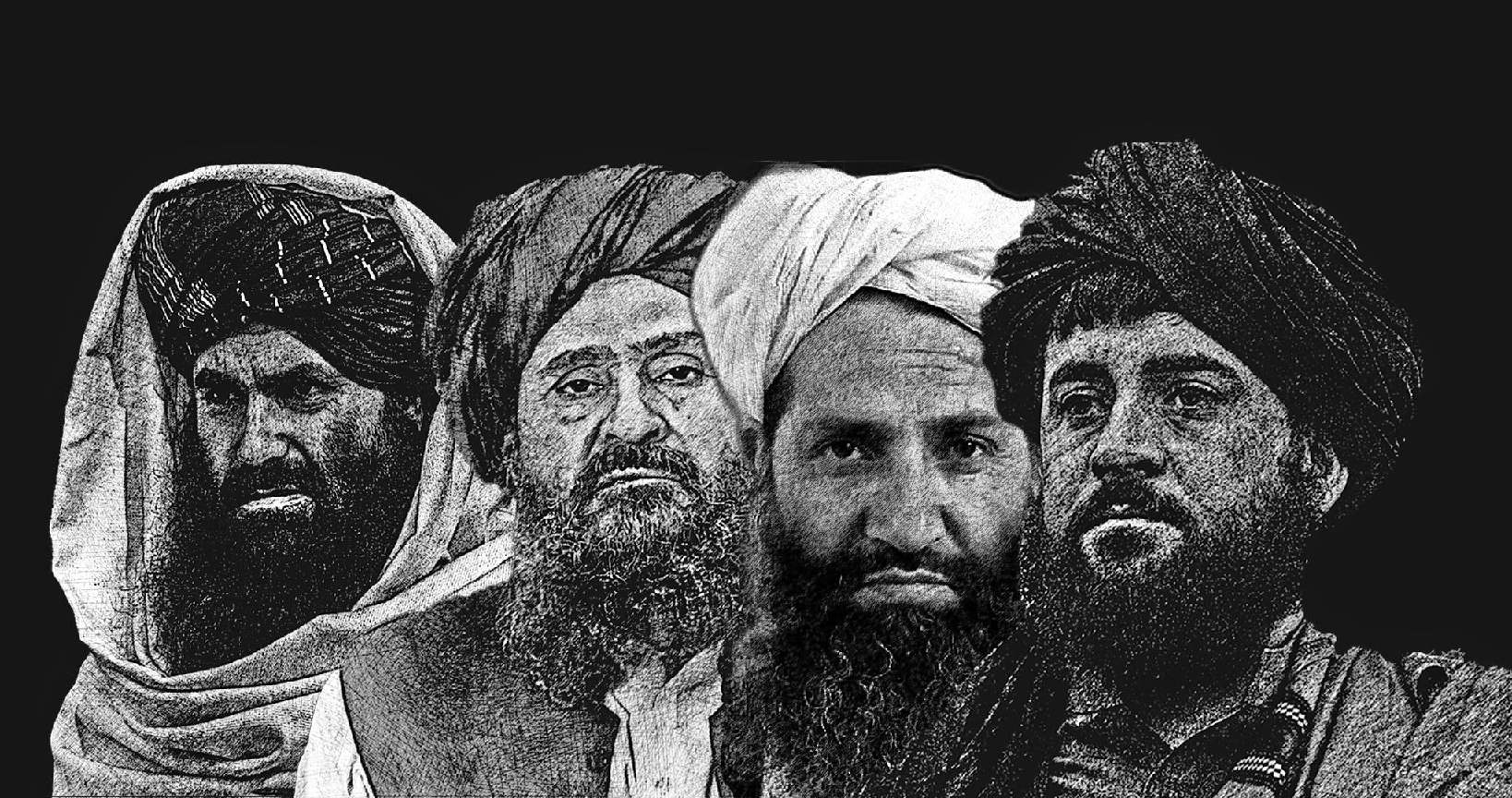
Taliban performance over this period has been uneven. The economy has recovered from its 2021 collapse, though poverty and weak investment persist. Governance has become more decisive, but Afghanistan still lacks a clear legal framework and accountability system. In foreign policy, Afghanistan has moved from isolation toward closer regional integration.
In short, Taliban performance cannot be labeled a total success or a total failure. It is a mix of real achievements, structural weaknesses, and contradictions that will shape Afghanistan’s future.
Security: The Biggest Change in Taliban Performance
Before 2021, Afghanistan’s conflict wasn’t just between the Taliban and the government. Local power brokers, armed commanders, and rival factions controlled many regions independently of Kabul. Security depended on geography, local strongmen, and how far the government’s reach actually extended.
Five years on, that has changed:
● Local power centers outside government control have largely disappeared
● The Taliban has established a near-monopoly on the use of force nationwide
● Arbitrary checkpoints, highway robbery, and warlord intimidation — once routine — have sharply declined
This doesn’t mean crime has vanished. Poverty and unemployment still drive theft, kidnapping, and other criminal activity in some areas. But these are now isolated incidents, not part of a broader multi-front conflict.
It’s also worth separating two different questions: does a terrorist group exist in Afghanistan, and can it actually threaten the state? ISIS-K, for instance, remains active but has been unable to hold territory or seriously challenge Taliban authority nationally after years of Taliban crackdowns.
The exception is Tehreek-e-Taliban Pakistan (TTP). Cross-border tensions between Afghanistan and Pakistan tied to TTP activity have become one of the region’s most complex security problems — especially since the Taliban has refused to act as a subordinate partner to Islamabad’s regional strategy, contrary to Pakistan’s early expectations.
Overall, the clearest Taliban achievement has been ending large-scale civil war and eliminating armed rivalries between competing power centers. Afghanistan’s security challenges today are narrower: terrorism, crime, and regional friction — not a nationwide security collapse.
Taliban Performance on Economic
Assessing Taliban economic performance means looking at three separate things: macroeconomic stability, government revenue capacity, and inclusive growth.
Key figures:
● GDP growth: about 2.5% in 2024, 4.3% in 2025, with the World Bank projecting 4.8% for 2026
● Per capita income fell roughly 5.6% over the past year, driven by population growth and returning refugees
● Domestic revenue reached 19.8% of GDP in 2025 (World Bank)
● Customs revenue rose about 18.6% in the first seven months of fiscal year 2025
During the republic, foreign aid covered more than 75% of public spending. Today, the Taliban funds most current expenditures domestically — driven by better tax collection, higher customs revenue, tighter border control, and reduced corruption in customs operations.
Major investment signals include a $10 billion memorandum of understanding with Azizi Energy Group to expand power generation, alongside infrastructure projects like the Qosh Tepe canal, power grid expansion, and new roads, railways, and energy projects. The TAPI pipeline, the Trans-Afghan Railway, and private investment in energy, mining, health, and industry point toward an economy trying to move beyond aid dependency.
Still, Taliban economic performance is best described as a work in progress: Afghanistan has recovered from its 2021 collapse and improved government finances, but growth has not yet translated into higher household income, broad job creation, or reduced structural poverty.
Taliban Performance on Governance and the Missing Legal Framework
Taliban governance doesn’t fit neatly into conventional metrics. The system runs on Sharia as the source of political legitimacy, with Taliban leadership at the top. Standard benchmarks — separation of powers, competitive elections, power rotation, modern rule of law — show how far this system sits from liberal governance, but they don’t fully explain how it actually functions.
One defining feature is internal unity. Despite occasional disagreements among Taliban leaders, none have led to an organizational or political split in five years — largely because avoiding a return to civil war has been a shared priority.
The Taliban has also shifted from day-to-day administration toward medium-term planning:
● A five-year national development strategy launched in 2026, covering governance, security, economic growth, and social development
● A five-year electricity plan approved, covering 25 power generation projects plus transmission, substation, and distribution programs
The biggest gap in Taliban governance remains legal. Since 2021, Afghanistan has had no new constitution and no coherent legal framework defining the relationship between state institutions, citizens’ rights, and the limits of government power. Much of the legal system today runs on Taliban leadership decrees, administrative directives, and leftover republican-era laws.
Taliban Social Policy: Women’s Rights and Minority Communities
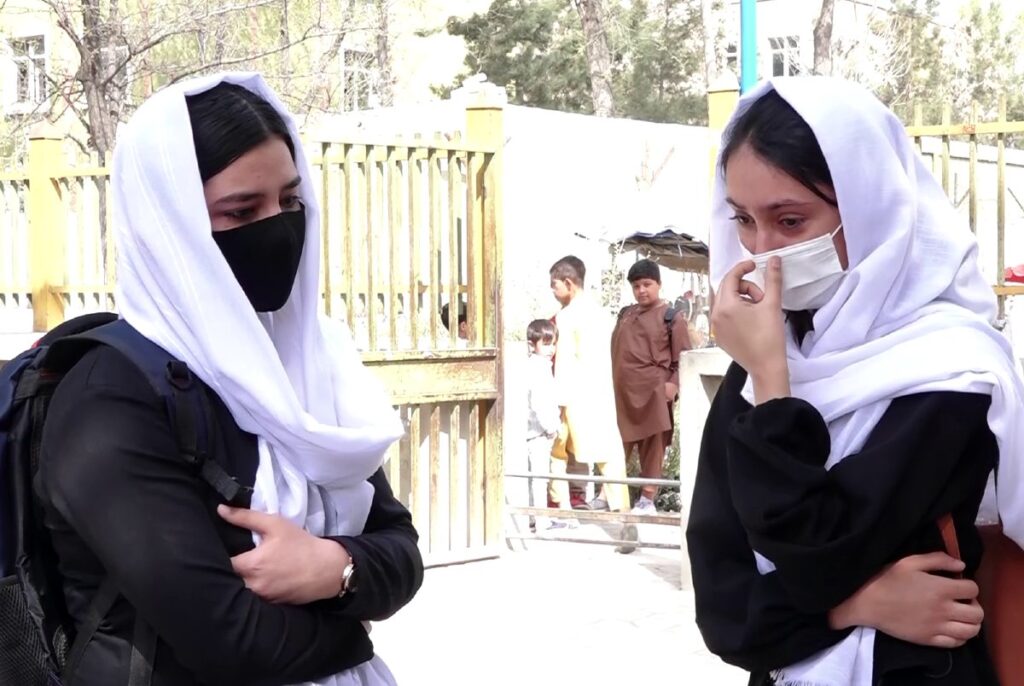
Taliban performance on social policy is defined largely by its restrictions: girls remain barred from secondary and university education, and women face significant limits on work and public life. Exceptions exist mainly in education and healthcare roles where female staff are needed to serve women and girls.
Enforcement is inconsistent, though. Official policy is restrictive, but the government’s actual capacity — and society’s real needs — mean rules aren’t applied uniformly:
● Kabul differs from Kandahar
● The north differs from the south
● Cities differ from rural areas
Underground and home-based schooling networks for girls have grown in major cities, filling part of the gap left by the formal ban. This inconsistency likely reflects limited state capacity and some practical flexibility — not a change in official policy.
The shia community, roughly 25% of Afghanistan’s population, presents another governance challenge. Taliban officials are split between strict and pragmatic approaches, and this divide — combined with the community’s size — has delayed personal-status laws and other legal protections for Shiites. Questions about their political participation, religious freedom, and legal equality remain unresolved.
Taliban Foreign Policy: From Isolation to Regional Integration
The Taliban faced serious diplomatic isolation in the months after taking power. That has since changed.
Afghanistan now maintains active political and economic ties with China, Russia, Iran, India, Central Asian states, Qatar, Turkey, and several Arab countries. Russia formally recognized the Taliban government in 2025, and China has deepened ties by formally accepting a Taliban-appointed ambassador.
This approach amounts to a form of regional multilateralism: The Taliban avoids dependence on any single power while engaging simultaneously with regional rivals — China, Russia, Iran, and India, alongside Central Asian and Gulf states.
Normalization with the West, however, hasn’t happened. Europe has expanded engagement on migration, consular affairs, and economic and humanitarian issues, while the United States remains the most cautious major power in dealing with Kabul.
Projects like TAPI and the Trans-Afghan Railway show that Taliban foreign policy goes beyond diplomacy alone — Kabul is using Afghanistan’s geography as economic leverage. If Afghanistan can position itself as a corridor linking Central and South Asia, its geopolitical weight will grow, despite ongoing tensions with Pakistan.
Overall, Taliban foreign policy today looks like a gradual, uneven integration of Afghanistan into the region’s economic and security architecture.
Development and Public Services Under the Taliban
Since 2021, the Taliban government has put growing emphasis on infrastructure, most visibly through the Qosh Tepe water canal project.
The Kabul Municipality reports roughly 450 kilometers of streets and roads built or renovated in the capital over the past four years, with more urban development projects planned for 2026 — including overpasses, underground bridges, waste management, and city cleanliness programs.
This points to a broader shift: The Taliban government is moving from a purely security-focused administration toward one increasingly organized around development projects.
Conclusion: How Should We Judge Taliban Performance?
After five years, Taliban performance presents a mixed picture:
● Security: large-scale war has ended, rival armed factions have disappeared, and daily security has improved
● Economy: domestic revenue and government financial capacity have grown, and the economy has recovered from its 2021 collapse
● Governance: internal unity has held and medium-term planning has begun, but the absence of a constitution and legal framework remains a major weakness
● Social policy: restrictions on women’s rights and limited minority inclusion have blocked a more inclusive political order
● Foreign policy: Afghanistan has moved past regional isolation but has not achieved full normalization internationally
Taliban performance, then, is neither a total success nor a total failure. It is a fragile stability now facing its hardest test: turning political and security stability into sustainable development, public welfare, and real institutional governance.