
By: A. Azizi
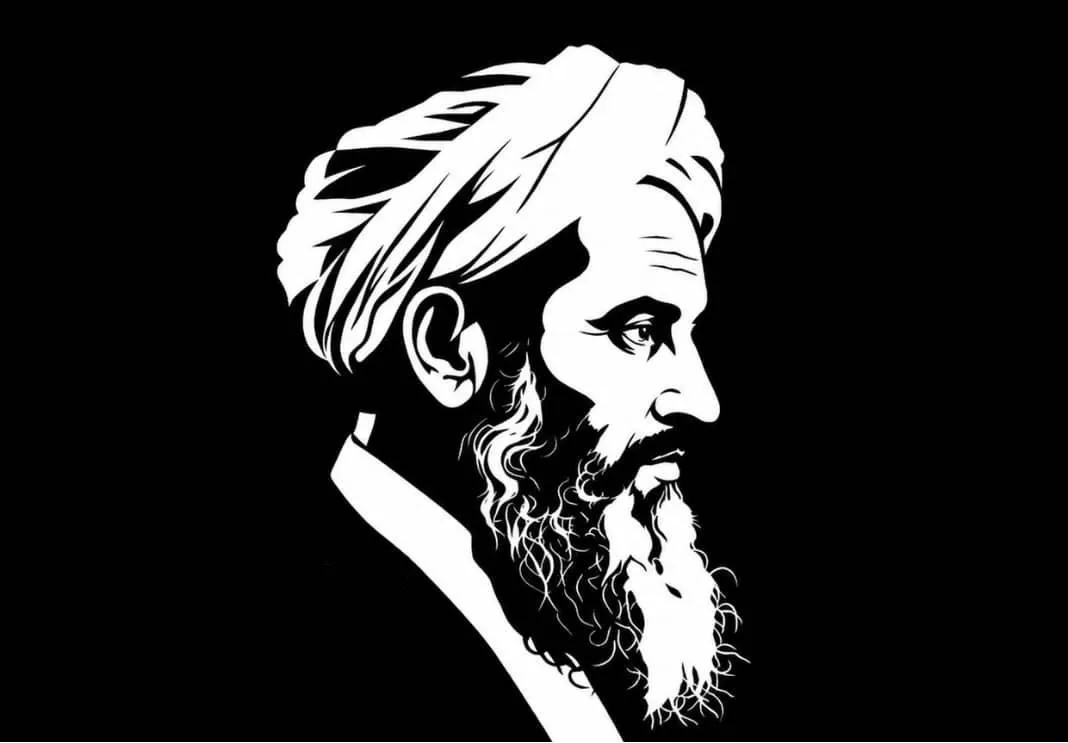
The Taliban leader’s speech at Kabul University must be assessed beyond a ceremonial appearance at a gathering of religious scholars, situated instead within a broader effort to consolidate the political, ideological, and executive foundations of the administration. During this visit, Hibatullah Akhundzada addressed not only the ulama, but also senior government officials and political opponents, articulating positions on the role of Sharia in state governance, the responsibilities of religious scholars, the imperative of unity within the governing structure, and the prospect of opponents returning to the country. Taken together, these stances indicate that his recent trip to Kabul, the capital of Afghanistan, encompassed pivotal dimensions of domestic politics and internal power dynamics.
This visit differed in several respects from Akhundzada’s first public appearance in Kabul following the Taliban’s return to power. In June–July 2022 (Tir 1401 SH), his presence was largely confined to attending the grand gathering of religious scholars and delivering an address before them. By contrast, his recent trip combined participation in the Kabul University conference with formal government meetings and inspection tours across parts of the capital. This divergence can be interpreted as an effort by the Taliban leader to expand direct engagement across multiple tiers of the power structure five years after establishing rule.
During the visit, Sheikh Hibatullah Akhundzada met with senior government officials—including provincial governors—at the Ministry of Defense headquarters, before holding consultations with the Prime Minister (Ra’is al-Wuzara) and cabinet members at the Presidential Palace (Arg). Touring sections of Kabul city and laying the foundation stones for two mosques and one religious madrasa also featured on his itinerary. Furthermore, on his return route to Kandahar, he visited Maidan Wardak and Ghazni provinces. This sequence of engagements demonstrates that his trip extended well beyond attending a conference, directly intersecting with the executive and administrative branches of the government.
Sharia-Centrism: Basis of Legitimacy and Governance Mechanism
The central pillar of the Taliban leader’s speech at Kabul University was an emphasis on Sharia as the foundation of legitimacy and the primary decision-making framework within the Islamic Emirate. Akhundzada stated explicitly that government policy is formulated in accordance with the Quran and Islamic rulings. The analytical significance of these remarks lies in how they define the relationship between religious authority and executive power. Within this model, the supreme leader sits atop the political hierarchy while simultaneously serving as the ultimate authority defining the government’s official interpretation of Sharia rulings. Put differently, political and administrative unity is pursued through uniformity in the official interpretation of Sharia.
On one hand, this approach can foster cohesion within the government’s decision-making apparatus and prevent the emergence of competing centers of power. On the other hand, it raises critical questions regarding the boundaries of consultative bodies’ authority, the role of alternative jurisprudential perspectives, and the potential for diverse religious spectrums to participate in shaping public policy. Consequently, Sharia-centrism in the Taliban’s governance model functions simultaneously as the basis of political legitimacy and as a mechanism regulating relations among the supreme leader, state officials, and society.
Remarks by Neda Mohammad Nadim, the Taliban’s Minister of Higher Education, reinforce this interpretation. He emphasized that the decrees of the Taliban leader do not merely solidify his authority, but actively strengthen state administration, as ministries and state institutions are required to align their laws and regulations within the framework of Sharia. This position indicates that the emphasis on decrees aims not only at securing ideological obedience, but also at standardizing the executive framework across all government apparatuses. Overall, legislative processes under the Taliban government will continue to proceed along a Sharia-centric trajectory.
The Ulama: Connecting Link Between Leadership and Society
Another major theme of the Taliban leader’s speech at Kabul University was elevating the stature of the ulama within Afghanistan’s political and social architecture. Convening a conference attended by roughly 3,000 religious scholars—featuring 1,876 submitted papers, 947 accepted papers, and the publication of accepted works as a 75-volume collection—demonstrates that the Taliban planned an organized gathering of substantial scale.
The Taliban leader seeks to transform the ulama from a purely religious class into an active conduit for consolidating and transmitting the government’s ideological foundations. Hibatullah Akhundzada’s call upon religious scholars to prevent internal division, counter sedition (fitna), invite the public toward unity, and strive for the success of the Islamic system is directly intelligible within this framework.
Nevertheless, a fundamental question remains: within this governance model, are the ulama tasked solely with explaining and endorsing decrees, or can they play a substantive role in shaping and amending policy decisions? The distinction between these two roles is decisive in evaluating the true standing of religious scholars within the Taliban’s political system. The prominence given to religious scholars during the Taliban leader’s speech at Kabul University underscores their significance within the administration’s ideological framework, yet the boundaries of their institutional independence and authority remain unclear.
Opposition Status in the Taliban Leader’s Speech at Kabul University
Perhaps the most novel and politically consequential segment of the Taliban leader’s speech at Kabul University was his direct address to political opponents. Akhundzada announced that an amnesty decree remains in place and that opponents are free to return to Afghanistan. He further stated that should they possess competence and merit, government responsibilities could be entrusted to them, emphasizing that they must not resort to warfare to attain state offices and positions.
This posture carries significance in two distinct respects:
1. Advancing Beyond General Amnesty: The Taliban leader explicitly raised the prospect of opponents returning and participating within the governing structure—a step that moves beyond a mere reiteration of general amnesty.
2. Strict Structural Conditions: The invitation operates within a clearly defined framework: accepting the existing political system, demonstrating capability and merit, and participating strictly inside the established order.
Consequently, these statements should not be interpreted as signaling Taliban readiness to negotiate over the nature of the political system or to revise the institutional structure of the Islamic Emirate. The core message is that opponents may return to the country and assume administrative responsibilities within the existing framework, but the fundamental political system and its underlying principles remain non-negotiable.
In this light, Akhundzada’s remarks constitute a limited political opening—one that introduces the possibility of incorporating figures outside the current establishment, yet offers no clear explanation regarding implementation mechanisms, necessary guarantees, vetting criteria, or the scope of authority granted to returnees.
Opposition Reactions: From Rejection to Calling Him “Respected Amir”
Reactions among anti-Taliban political currents to the speech were far from uniform. Jamiat-e Islami Afghanistan and the National Resistance Front (NRF), emphasizing the right of citizens to determine the political system through free elections, declared their opposition to dividing government posts among political factions. Similarly, Yasin Zia, leader of the Afghanistan Freedom Front (AFF), stressed that his movement’s struggle is not aimed at acquiring political power or wealth.
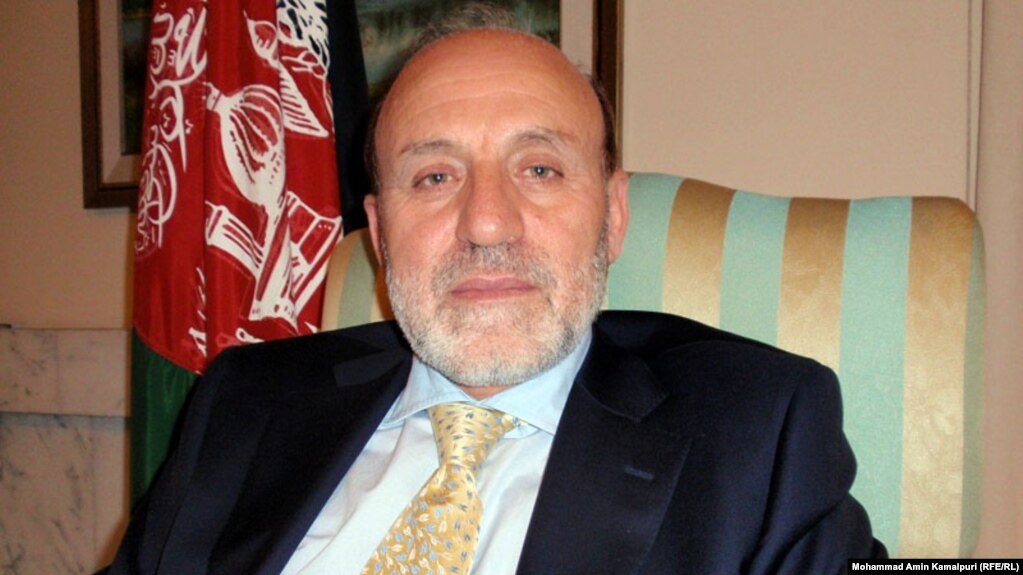
Conversely, the response of Omar Daudzai, former Afghan Minister of Interior and rotating chair of the National Assembly for the Salvation of Afghanistan, carried distinct political weight. In an unprecedented formulation, he used the title “Respected Amir of the Islamic Emirate” to address Hibatullah Akhundzada, characterizing recent developments as worthy of serious reflection and evaluation. Daudzai assessed these developments as potentially marking the onset of a new phase in Afghanistan’s political landscape, underscoring the necessity of wisdom, patience, and strategic foresight.
The significance of this stance lies not merely in his choice of honorific, but in the potential shift it signals within the political lexicon of a segment of the Taliban’s opposition. Employing such terminology indicates, at minimum, a willingness to step back from purely confrontational rhetoric and explore avenues for political engagement. While one cannot infer from this statement that Daudzai or his political coalition have fully accepted the current governing structure, this rhetorical divergence is notable within Afghanistan’s deeply polarized political arena.
Hanif Atmar also extended a conditional welcome to Akhundzada’s remarks, emphasizing that if these statements reflect genuine political will on the part of Taliban leaders, the next step must be initiating inclusive intra-Afghan negotiations. This position highlights the fundamental gap separating the Taliban’s conception of individual administrative participation from the demands of opposition figures seeking negotiated political settlement.
Related Analysis
The Taliban Leader’s Discourse in Eid Messages (2023–2026)
The Struggle among Anti-Taliban Leaders
Strategic Outlook
Taken together, the Taliban leader’s speech at Kabul University can be assessed as part of a concerted effort to consolidate the movement’s political and ideological structure five years after assuming power. During this visit, Akhundzada reaffirmed the continuity of the current governance model and Sharia-centrism while calling for tighter alignment between the ulama and state officials. Inviting political opponents to return and participate in governance signals a desire to widen participation within the existing structure, rather than an openness to negotiating structural change.
Nevertheless, Omar Daudzai’s calibrated response and Hanif Atmar’s conditional welcome suggest that the speech could provide grounds for rethinking relations between the administration and segments of the opposition. Whether this opening translates into substantive political engagement or remains confined to rhetoric will depend on concrete actions taken by the authorities. Ultimately, the foremost test confronting the Taliban lies in how they balance Sharia-centrism, internal cohesion, economic efficacy, and the accommodation of social pluralism.
About the Author: A. Azizi is a Kabul-based geopolitical and security analyst focusing on Afghan political and security developments, regional geopolitics, and its evolving dynamics. At the author’s request, their identity remains pseudonymous.