
Review of Afghanistan developments
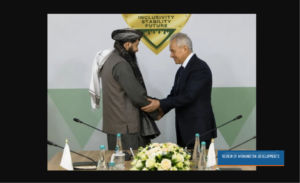
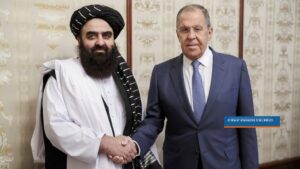
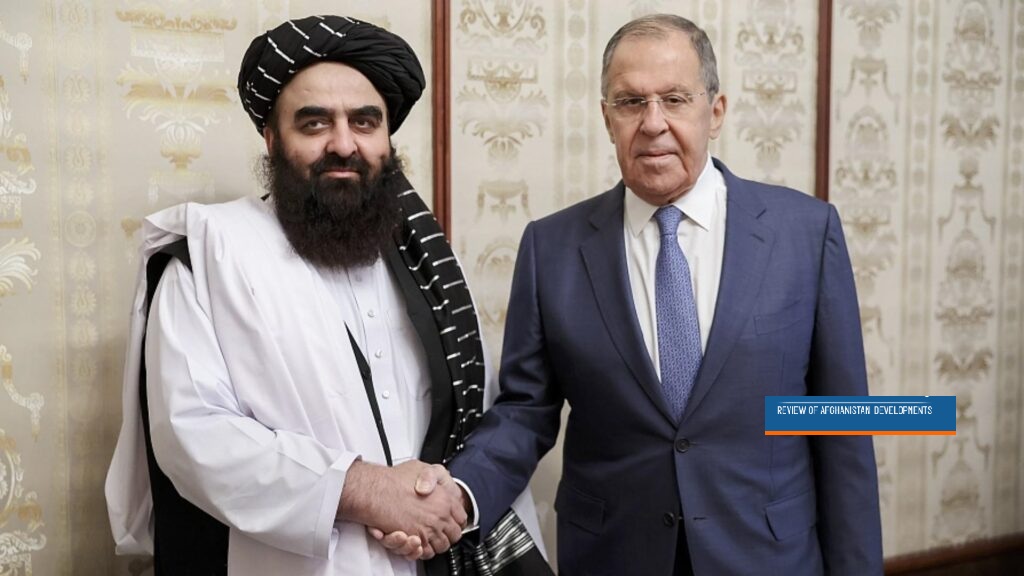
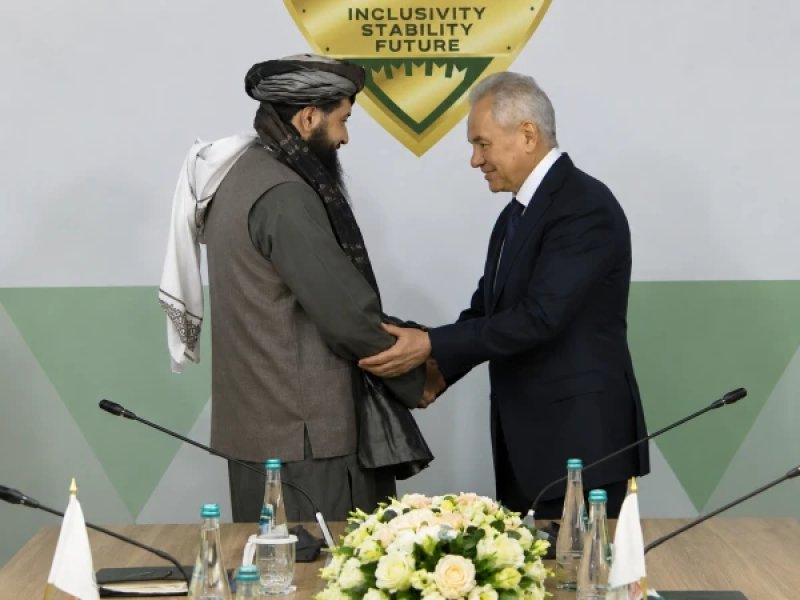
In recent years, the relationship between Russia and the Taliban has evolved from mere pragmatic interactions to a more substantial engagement. The development of political ties, strengthened economic connections, and notably, Russia’s recent military agreement with the Taliban government, suggest a shift towards strategic collaboration. This emerging trend prompts the inquiry of whether Afghanistan will transform into a new battleground for rivalry between the United States and Russia.
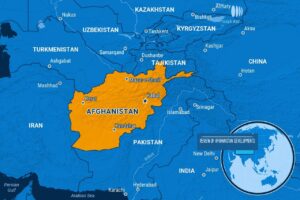
Despite the fact that following the withdrawal of US military forces from Afghanistan, this nation is no longer regarded as a priority in foreign policy for the United States and its Western allies, Afghanistan’s strategic geopolitical location indicates that it possesses the capability to affect both regional and global dynamics, and it undeniably contributes to the rivalry among major powers.
The Root of the West’s Concerns About Afghanistan
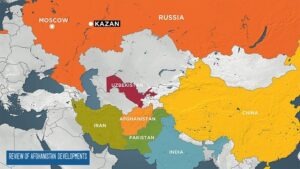
The geopolitical apprehensions of the West regarding the relations between Russia and the Taliban extend beyond the characteristics of the Taliban themselves, primarily concentrating on the potential role of Afghanistan in Russia’s regional strategy. The West has accurately recognized that Moscow aims to secure enduring political influence in Kabul, obtain long-term access to Afghanistan’s natural resources and economic capabilities, and leverage the country’s strategic location to enhance its influence throughout Central Asia.
The exit of American troops has resulted in a considerable power vacuum in Afghanistan, which Russia is keen to exploit for its own benefit. Should this pattern continue, Afghanistan will transition from being primarily a domestic concern and a bilateral matter to becoming a component of a prolonged structural rivalry between Russia and the West. This evolution could alter the regional balance of power in favor of Moscow and diminish the West’s, particularly the United States’, capacity to regain influence over Afghanistan and Central Asia.
From this viewpoint, the relations between Russia and the Taliban, particularly the military agreement established between Kabul and Moscow, represent more than just a tactical security collaboration; they signify a geostrategic maneuver with a long-term outlook. The West’s reaction to this development will necessitate a reevaluation of regional strategies and an investment in alternative partnerships within Central Asia.
The West’s Historical Awareness of Russian Influence in Afghanistan
The West’s apprehension regarding the Taliban’s proximity and connections with Russia can be elucidated through theoretical frameworks of international relations, such as the balance of power and geopolitical rivalry; however, this matter transcends mere theoretical speculation and is deeply rooted in history. The experiences of the last two centuries indicate that whenever Afghanistan has emerged as a region of increasing Russian influence, it has elicited a response from Western nations. In the 19th century, as the Russian Empire’s reach extended into Central Asia, significant unease emerged in London. Britain was concerned that Russia’s expansion would ultimately jeopardize the security of India, which was Britain’s most vital colony at that time. Consequently, Afghanistan was established as a buffer zone between the two empires, leading to the emergence of the competition known as the ‘Great Game.’ In this light, the first, second, and third wars between Afghanistan and Britain cannot be understood solely through the lens of bilateral relations between Kabul and London.
Potential actions and responses from the United States regarding the improving relations between Russia and the Taliban
Despite the alterations in the international system and the relocation of the focal point of global competition to regions like East Asia, Europe, and the Middle East, which have diminished Afghanistan’s relative significance in global dynamics, it does not imply that the West is entirely unconcerned about the events unfolding in Afghanistan. Specifically, should Russia succeed in establishing its presence in Afghanistan under Taliban governance beyond mere diplomatic relations and integrate the nation into its political, economic, and security sphere of influence, it is probable that responses will emerge from the United States and its Western partners.
These responses are probably indirect in character. The two decades of warfare in Afghanistan, along with the shifting strategic priorities of the United States, have largely removed the option for direct and expensive intervention. Therefore, it is likely that Washington will opt for less expensive and more adaptable tools.
In the realm of politics, the ongoing refusal to acknowledge the Taliban government and the persistence of diplomatic pressure may constitute a component of this strategy. The United States, leveraging its influence within international organizations and utilizing its capabilities to exert pressure on nations globally, has posed a considerable challenge to the recognition of the ‘Islamic Emirate.’ Following the recent improvement in relations between Russia and the Taliban, it is anticipated that Russia will exploit this avenue to hinder the acknowledgment of the Taliban government, thereby competing with Moscow’s interests in Afghanistan.
In the realm of economics, ongoing financial, banking, and sanctions limitations may hinder Afghanistan’s complete integration into Russia’s economic sphere. For several decades, the United States has applied significant pressure on political systems that do not align with its interests through the use of sanctions. The “Islamic Emirate” has encountered this obstacle since its inception, and it is anticipated that recent advancements in Russia-Taliban relations will prompt the United States to utilize this strategy to intensify pressure on Afghanistan, a partner of Moscow, in an effort to counter Russia.
However, the most significant potential area of competition between Russia and the West in Afghanistan may lie within the security domain. In contrast to the political and economic realms, which serve as relatively clear instruments of influence, security competitions are typically conducted indirectly, utilizing local and regional actors. Should the relationship between Russia and the Taliban evolve into a form of sustainable strategic cooperation, there exists a possibility that Afghanistan could once again emerge as a battleground for geopolitical rivalry among foreign powers. In such circumstances, any element that hinders the consolidation of the Taliban’s political authority or the growth of Russian influence in Afghanistan will inevitably gain greater significance.
In this context, the ongoing operations of ISIS-K will represent one of the most significant security challenges for both the Taliban and Russia. ISKP not only undermines the legitimacy and authority of the Taliban government, but also hinders the establishment of stability essential for fostering long-term political, security, and economic collaboration between Afghanistan and Russia. Therefore, the persistent insecurity instigated by ISIS-K may indirectly influence the strategic rapprochement process between the Taliban and Russia.
Furthermore, factions and organizations that oppose the Taliban could emerge as a significant factor in both regional and international rivalries moving forward. While these groups presently do not possess the unity, military strength, or societal support necessary to challenge the Taliban regime effectively, Afghanistan’s historical context indicates that internal factions can gain prominence amid the competition among foreign powers.
Furthermore, certain regional players, particularly Pakistan, may assume a crucial role in future dynamics owing to their considerable political, security, and economic influence in Afghanistan. The escalation of rivalry between Russia and the West concerning Afghanistan is expected to impact the actions of these players and create opportunities for applying indirect pressure on the Taliban.
In summary, while a resurgence of the extensive proxy wars characteristic of the Cold War period appears improbable, the strengthening of ties between Russia and the Taliban, particularly if the relationship between Moscow and Kabul attains a strategic dimension, may result in the development of a constrained and indirect security rivalry. This rivalry could see the vulnerabilities stemming from the actions of extremist factions, the movements of adversaries to the Taliban, and the involvement of regional players being utilized as instruments to sway the power dynamics in Afghanistan.
Related content
Russia’s Pendulum Movement towards the Taliban Government
Mutual expectations of Russia and Taliban
Advice to the Taliban government
Recognizing that Afghanistan’s relationship with Russia is a crucial geopolitical requirement for the nation’s stability and growth, it is essential to ensure that Afghanistan does not turn into a battleground exclusively for the interests of major powers. The historical lessons from the “Great Game” illustrate that when Kabul is involved in the strategic rivalry of foreign nations, it is the Afghan populace that suffers the consequences. Therefore, it is advised that the Taliban administration take into account the following principles in its foreign policy.
Favoring Foreign Partners
The Taliban administration ought to refrain from relying on a singular power, while simultaneously fostering and enhancing its relations with Russia, and striving for balanced ties with China, Iran, Pakistan, and India. This engagement with the region, coupled with a commitment to balance, raises the expenses associated with the West’s detrimental strategies in Afghanistan.
Prioritizing internal stability
The primary element that may undermine the Taliban government’s relationship with Russia is its failure to ensure security, resulting in Afghanistan becoming a refuge for terrorist organizations, such as ISIS Khorasan. The greater the internal stability and border control, the fewer justifications the West, particularly the United States, will possess to intervene or compete regarding Afghanistan’s security. Furthermore, in terms of domestic politics, the Taliban administration must tackle internal issues, including the education of Afghan girls, the rights of minorities, and the involvement of various ethnic groups in governance, while also enhancing public satisfaction with their administration.
Russia’s application of influence over the West
Considering the sensitivity exhibited by the West, particularly among European nations, towards Russia, the Taliban administration may leverage its closeness to Russia to alleviate Western pressure. A prudent policy necessitates that Afghanistan, in light of geopolitical necessities, broaden its connections with Eastern countries and utilize these ties to counteract Western overreach.
Strengthening economic diplomacy based on national interests
Russia and China exhibit a greater interest in Afghanistan’s natural resources, such as copper, lithium, oil, and gas, as well as transit corridors, rather than in military collaboration. The Taliban administration has the opportunity to lessen its reliance on any single power by emphasizing transparent and mutually beneficial economic agreements with all regional nations and countries, which includes initiatives like the Trans-Afghan Railway, the TAPI pipeline, CASA 1000, and the Herat-Mazar-e-Sharif railway. As the bilateral relations between Afghanistan and neighboring countries become increasingly rooted in economic factors, and as this investment is sourced from a variety of channels, the political pressure on Kabul will diminish.