
Review of Afghanistan developments
The geopolitical changes in Afghanistan following the Taliban’s resurgence have not only altered the internal dynamics of the country but have also opened new avenues for competition among regional and trans-regional powers. In contrast to previous decades, Russia has sought to engage with Kabul through a different approach this time; one that relies not solely on the Kremlin’s formal diplomacy but also incorporates paradiplomacy. Central to this strategy is the Republic of Tatarstan, a Muslim-majority region within the Russian Federation that has emerged as the primary communication link between Russia and the Taliban over the last two years. The rise in reciprocal travel, the expansion of trade, the advancement of industrial and transportation initiatives, and the significance of the Kazan Forum in the interactions between the Taliban and Russia indicate that the relationship between Afghanistan and Tatarstan has evolved beyond mere economic cooperation, becoming a component of the geopolitical reconfiguration of Eurasia.
Tatarstan; a Muslim republic in Russia and the gateway to Afghanistan
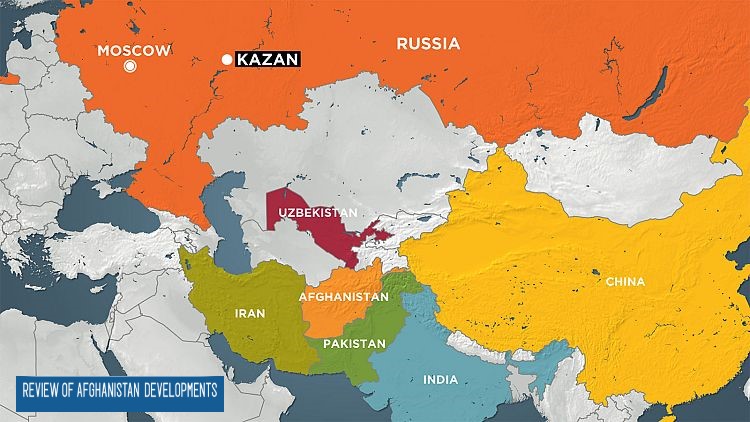
Tatarstan is a significant federal republic within Russia, situated in the Volga region, with Kazan as its capital. Kazan is recognized as a key center for economic, industrial, and Islamic activities in Russia. This republic, characterized by its developed oil, gas, petrochemical, machine-building, and automotive sectors, is vital to the Russian economy. The renowned Kamaz factory, one of the largest truck manufacturers in Eurasia, is based in Tatarstan and has emerged as a symbol of industrial collaboration between the Taliban and Russia in recent years.
The relationship between Afghanistan and Tatarstan has grown considerably since the Taliban regained control. Tatarstan businesses began to penetrate the Afghan market prior to Russia’s formal acknowledgment of the Taliban. This indicates that Kazan has served, and continues to serve, as Moscow’s unofficial conduit for engagement with the Taliban.
Following the Taliban’s rise to power in Mordad 1400, Russia became the first nation to establish a trade representative office in Kabul, linked to the Kazan-based Charitable and Patriotic Foundation of Russian Muslims. This action underscored the significant role of Tatarstan in Russia’s policy towards Afghanistan.
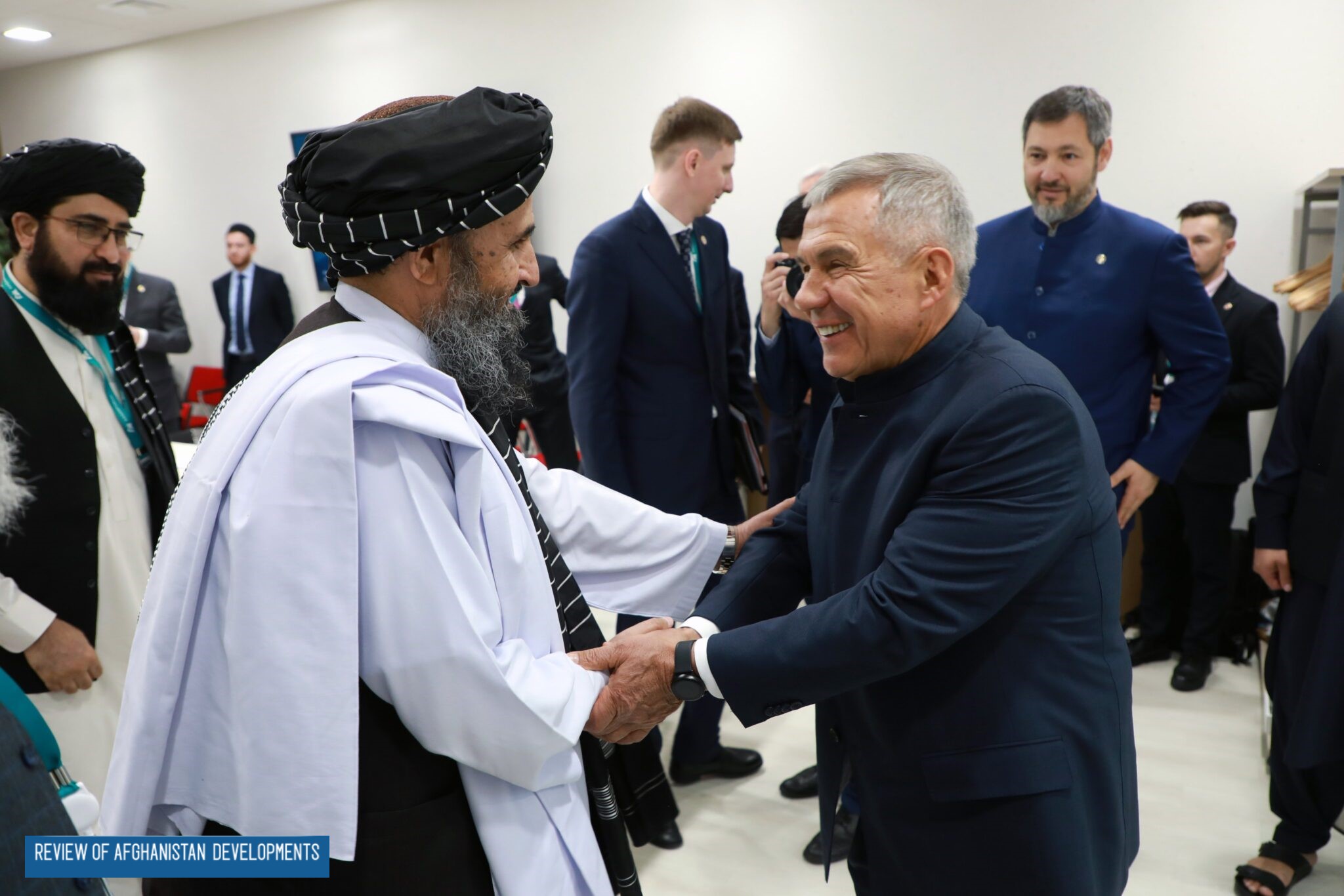
In the last five years, representatives from the Taliban and Tatarstan governments have undertaken multiple visits to Kazan and Kabul. In May 2025, Mullah Abdul Ghani Baradar, who serves as the Taliban’s Deputy Prime Minister for Economic Affairs, led a prominent delegation to Kazan where he engaged with Tatarstan President Rustam Minnikhanov and officials from the Russian federal government. During this visit, five memorandums of understanding were established between the officials of Kabul and Tatarstan, focusing on transport, transit, trade development, and collaboration in the private sector. A few months later, Tatarstan Deputy Prime Minister Oleg Korobchenko led an economic and industrial delegation to Kabul, representing the first official visit of a Russian regional delegation of such political significance to Afghanistan since 2021.
The role of the Kazan Forum in Russia-Taliban relations
Tatarstan’s involvement in Russia’s approach to Afghanistan extends beyond mere trade. Moscow has effectively delegated a portion of its strategy for interacting with the Taliban to Kazan via paradiplomacy. Paradiplomacy refers to the practice of utilizing subnational and regional entities to further foreign policy objectives, a framework that Russia is currently implementing in Afghanistan.
Tatarstan possesses numerous significant advantages for fulfilling this role. Firstly, the republic’s Islamic identity facilitates a more amicable and less expensive relationship with the Taliban. Secondly, the historical presence of Tatars in northern Afghanistan, along with the existence of a Tatar-speaking community in provinces like Balkh, Baghlan, and Samangan, is noteworthy. Lastly, Tatarstan’s industrial and economic capabilities render it a desirable partner for Kabul.
However, the primary instrument of this Russian paradiplomacy is the Kazan Forum. The “Russia-Islamic World: Kazan Forum” has been granted official federal status for three years and has emerged as the most significant platform for engagement between Russia and the Taliban. While numerous countries globally maintain restricted interactions with the Taliban, the Kazan Forum has established itself as one of the rare international forums where representatives of the Taliban government are officially present.
At the Kazan Forum, significant discussions occurred among the Taliban, Russian officials, and economic delegations from Tatarstan. In this context, agreements have been primarily established regarding halal trade, energy, mining, transportation, and industrial initiatives. For instance, in 2025, a memorandum of understanding was signed between the Taliban and Tatarstan companies concerning the exploration and extraction of oil and gas in Afghanistan. Additionally, the Taliban extended an invitation to Tatarstan companies to engage in the Panjshir water transfer project aimed at supplying Kabul.
The Kazan Forum 2026 is poised to facilitate the establishment of significant agreements, notably the signing of the trilateral agreement concerning the Tatarstan-Turkmenistan-Afghanistan transport corridor. This initiative has the potential to enhance Kazan’s role from merely a diplomatic venue to a pivotal geopolitical center in Eurasian trade.
Why does the Taliban demonstrate favoritism toward Tatarstan?
The relationship between Afghanistan and Tatarstan is not solely a consequence of Russian interests; the Taliban also possess multiple motivations to embrace this collaboration. The primary motivation is the Islamic identity of Kazan. For the Taliban, engaging with a Muslim-majority Russian republic is significantly more straightforward and less burdensome, both symbolically and politically, than dealing directly with the intricate framework of Moscow.
The second factor pertains to the support and endorsement from Russia. The Taliban administration has come to understand that Kazan cannot assume such a role without the Kremlin’s approval. Consequently, collaboration with Kazan serves as an indirect means to foster closer relations with Russia and to achieve international legitimacy.
The third factor involves the Taliban’s initiatives to establish northern trade routes. The regular closure of borders with Pakistan, along with Islamabad’s transit limitations and the security tensions between the two nations, have compelled Kabul to more earnestly seek northern routes. In this context, Tatarstan and Russia may be able to partially address the gap created by the limitations on Afghan trade with Pakistan.
The Taliban are acutely aware that Russia requires a more robust economic involvement in Afghanistan to effectively compete with China, Turkey, and Arab nations, with Kazan serving as the optimal instrument for this engagement. Consequently, Kabul has embraced investments from companies in Tatarstan across the sectors of energy, mining, and transportation.
The role of Afghanistan-Tatarstan trade on the Trans-Afghan Railway future
A key element of the relations between Kabul and Kazan is the matter of transport corridors. Russia has two primary routes to link Tatarstan with Afghanistan and South Asia.
The initial route is the Uzbekistan corridor, which commences in Termez and extends to Kabul, subsequently leading to South Asia via Mazar-i-Sharif and the Salang Pass. This route is known as the renowned Trans-Afghan Railway project, or the “Kabul Corridor,” which Uzbekistan is vigorously advancing.
The alternative route is the Kazakhstan-Turkmenistan-Afghanistan pathway, which traverses western Afghanistan and links to Pakistan through the Turgandi-Herat-Kandahar-Spin Boldak route. This pathway, referred to as the “Kandahar Corridor,” is technically less complex and seems to present a reduced security threat to Russia. Furthermore, the Taliban administration shows a greater preference for this route over the “Kabul Corridor” as it runs through Kandahar, the Taliban’s stronghold, thereby enhancing its economic influence alongside its political authority.
The trilateral agreement involving Tatarstan, Turkmenistan, and Afghanistan, set to be signed at the Kazan Forum in 2026, signifies Moscow’s intention to simultaneously activate both routes in order to lessen its reliance on a single corridor. This diversification holds significant geopolitical value for Russia, as it not only enhances access to the Afghan market but also establishes connectivity to South Asia.
However, this same concern may also influence the future of the Trans-Afghan Railway. Should Russia and Tatarstan increase their investments in the western Afghan rail route and the “Kandahar Corridor,” the geopolitical significance of the Trans-Afghan initiative is expected to transition from the “Kabul Corridor” to the “Kandahar Corridor,” a route that has garnered greater interest from Kazakhstan and Turkmenistan.
Related content
Mutual expectations of Russia and Taliban
Geo-economics reasons for Russia’s proximity to the Taliban
Conclusion
The city of Kazan, along with the Kazan Forum, has emerged as one of Russia’s key instruments for re-engaging with Afghanistan. The integration of Islamic identity, industrial capabilities, geopolitical significance, and the contributions of the Kazan Forum have positioned this republic at the forefront of Russian diplomatic efforts towards the Taliban.
The connection between Afghanistan and Tatarstan has evolved beyond a mere economic partnership; it is now a component of a broader rivalry concerning the future of Eurasian transit routes. By utilizing Kazan, Russia aims to assert its influence in Afghanistan while avoiding the full political repercussions associated with direct involvement.
In contrast, the Taliban perceive Tatarstan as a means to enhance their relations with Russia, diminish their reliance on Pakistan, and more actively engage in the Eurasian economic framework. Consequently, the future collaboration between Kazan and the Taliban may significantly influence transit routes, the Trans-Afghan Railway initiative, and potentially the geopolitical equilibrium of Central Asia.