
Review of Afghanistan developments
For over twenty years, Afghanistan’s security policy during the republic was founded on a singular principle: to import security from Washington rather than from its neighboring countries. This strategy led to regional isolation, the growth of transnational groups like ISIS-K, and ultimately the downfall of the most fragile security pillar that depended on a foreign military presence. However, the Taliban government today – contrary to the common perception in the West – is reconfiguring the regional security Architecture. This framework is characterized not by a bilateral agreement with a transregional superpower, but by a web of intelligence, military, and operational partnerships with neighboring nations and beyond, including Russia, China, Iran, Pakistan, and Central Asian states. This shift in paradigm stems from lessons learned from the failures of the republican regime: the unilateral reliance on the West not only proved ineffective in containing ISIS-K but also transformed Afghanistan into a proxy battleground. Currently, the Taliban is endeavoring to evolve from being perceived as a ‘security problem’ to becoming a ‘harmonious actor’ by adopting the principle of regional collective security. This analysis explores the indicators, motivations, and potential of this transition.
The Collapse of the Republican Model: Reliance on Western Powers and Inability to Address Domestic Threats
During the republican era, Afghanistan’s security architecture was structured around the Afghanistan-US security agreement, specifically the 2012 Strategic Document and the 2014 Bilateral Security Agreement. While these agreements granted Kabul significant intelligence and operational capabilities, they were accompanied by three primary limitations: firstly, the US controlled the dissemination of information and failed to share it with neighboring eastern and northern countries; secondly, there was a tendency to prioritize the objectives of al-Qaeda and the Taliban over those of ISIS-K, which has seen substantial growth since 2015; and thirdly, this situation fostered a sense of pessimism among regional nations—particularly Iran, Russia, and China—that perceived Afghanistan as a “base for the West.” Consequently, ISIS-K established a presence in the provinces of Nangarhar, Kunar, and Takhar, and the republic struggled to eliminate it, even with the deployment of tens of thousands of NATO forces. In contrast, the Taliban, witnessing this inadequacy, determined that security could not be sourced from outside the region, but rather necessitated the establishment of intra-regional security frameworks.
Concrete signs of the Taliban’s move towards a regional security architecture
One notable instance illustrating the Taliban’s preference for a regional security architecture is the intelligence and operational collaboration between Kabul and neighboring nations aimed at combating ISIS-K. In contrast to the Republic, which required approval from the United States for each operation targeting ISIS, the Taliban has autonomously engaged with the intelligence agencies of regional states. Reports from the field indicate that effective strikes against ISIS strongholds in eastern Afghanistan during the years 2023 to 2025 were executed through intelligence-sharing with multiple regional partners. Acknowledging that ISIS-K poses a shared danger to all nations in the vicinity (not solely Kabul), the Taliban has established a network of regional intelligence entities.
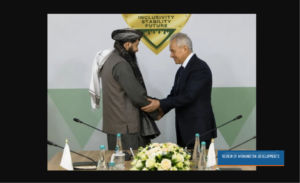
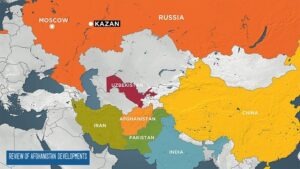
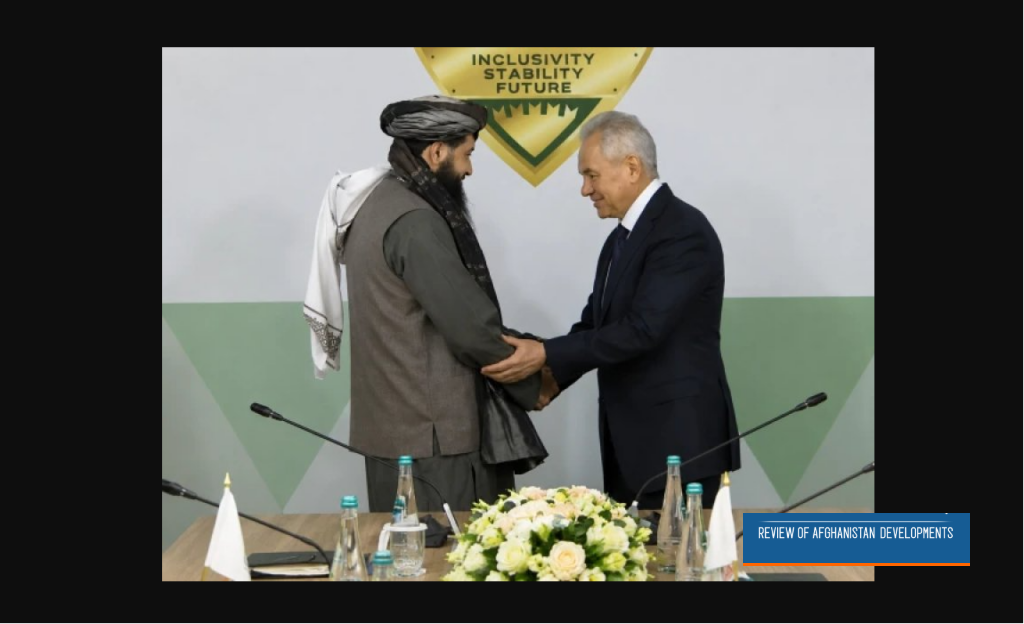
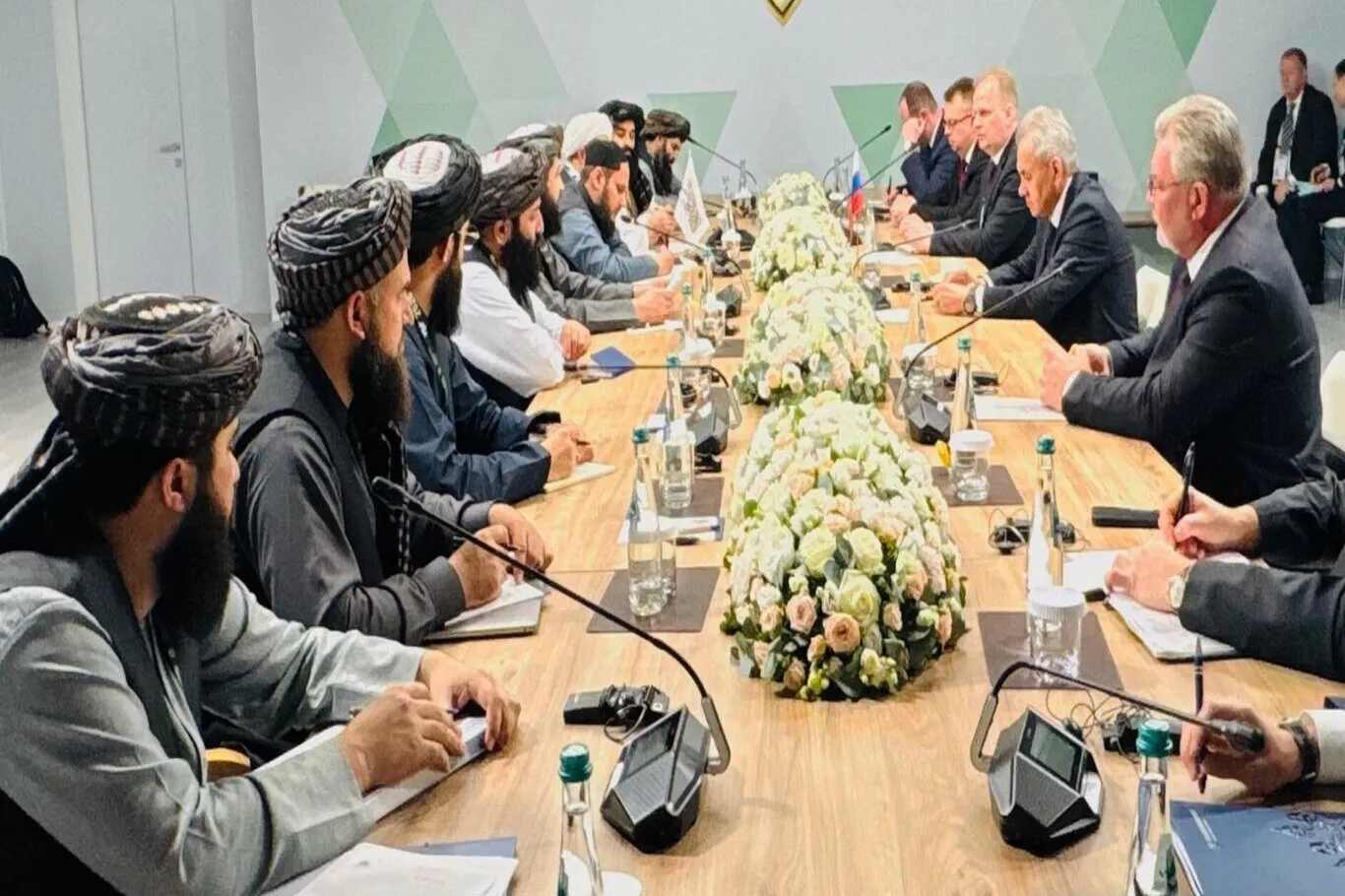
The second significant event was the signing of a military agreement between Russia and the Taliban during Mullah Mohammad Yaqub’s visit to Russia, who serves as the defense minister of the Taliban government. Russia has become the first nation to formalize a military-defense agreement with the Taliban government. In light of Russia’s official recognition of the ‘Islamic Emirate,’ the signing of this document has been regarded as crucial by numerous analysts. While the specifics of this agreement remain undisclosed, it is anticipated that they will encompass the sharing of intelligence regarding the activities of terrorist organizations, particularly ISIS Khorasan, the refurbishment of Russian military equipment for the Afghan army, notably helicopters, the provision of ammunition, technical training for military personnel, and the delivery of various offensive and defensive weaponry.
The discussions between the Taliban and Russia, which began in 2014 and led to the official recognition of the Taliban government, have mainly concentrated on security issues. The protection of Central Asian countries, which act as a defensive buffer for Russian territory, continues to be a major concern for Russian authorities in the southern region. Throughout both the republican period and their later ascension to power, the Taliban have shown that, contrary to the assertions made by their opponents, they do not aim to violate the sovereignty of Central Asian nations, nor do they allow other militant or terrorist groups to do so. As a result, Moscow and Kabul have cultivated an environment of security cooperation, in which it can be claimed that the Taliban government has emphasized the “North-South security axis” (Russia-Central Asia-Afghanistan) within its security architecture.
Why should regional countries welcome this architecture?
The question of whether the Taliban represents a threat or an opportunity has been a topic of discussion among analysts for many years. However, recent evidence indicates that this dilemma is no longer pertinent, as the Taliban does not pose a threat to the region. Furthermore, incorporating the Taliban into the regional security architecture offers at least four advantages for neighboring countries. The first advantage is the decrease in border expenses; China, Iran, and Central Asian nations have invested millions of dollars each year in border fortifications to guard against security threats emanating from Afghanistan. Collaborating with the new Afghan government opens up the possibility for joint border management.
The second objective is to hinder the proliferation of proxy wars; should the Taliban be excluded from regional security frameworks, it will inevitably seek to align itself with trans-regional powers (NATO and the US). This scenario, reminiscent of the republican era, would reignite proxy rivalries, causing Afghanistan to once again emerge as a focal point of threats to neighboring countries. Presently, Afghanistan is largely overlooked by the US due to its engagements in other global regions, presenting an opportunity for regional integration. The third aim is to combat drug production and smuggling; under Taliban governance, Afghanistan has seen an alarming 80% increase in drug cultivation, driven by the rulers’ actions. By incorporating this nation into the regional security architecture, it is possible to eradicate drug trafficking and dismantle smuggling syndicates. The fourth goal is to establish stability in Afghanistan; a nation that is part of the regional security architecture will deter it from becoming a sanctuary for terrorist organizations such as ISIS Khorasan, thereby fostering stability in the region necessary for the execution of regional initiatives.
Therefore, nations in the region, particularly China, Central Asia, and Iran, ought to formalize this architecture via initiatives like the Belt and Road Initiative or the Shanghai Cooperation Organization. The Taliban has demonstrated that it has grasped a crucial lesson from the republic: security is either regional or it does not exist.
Read more
Russia-Taliban Relations and U.S. Competition in Afghanistan
Mutual expectations of Russia and Taliban
From vicarious isolation to functional convergence
The Taliban’s evolution towards a regional security architecture is not merely a tactical decision; rather, it represents a strategic transformation informed by the insights gained from the shortcomings of the republican model. Collaboration in intelligence with neighboring nations to combat ISIS, along with the establishment of a defense pact with Moscow, exemplifies the Taliban government’s development in security as a regional player. Nonetheless, obstacles such as the absence of formal recognition and pressure from Western nations complicate this trajectory. Nevertheless, the region currently faces an unparalleled opportunity to shift Afghanistan from being a security liability to a regional ally, contingent upon the prioritization of policies that emphasize trust-building and the institutionalization of this architecture.