
Review of Afghanistan developments
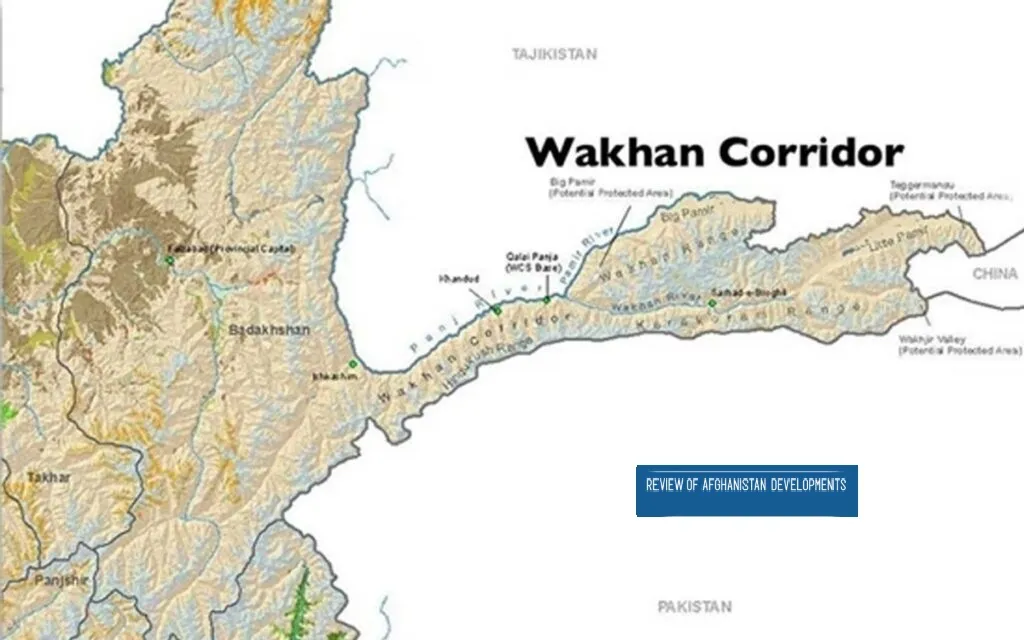
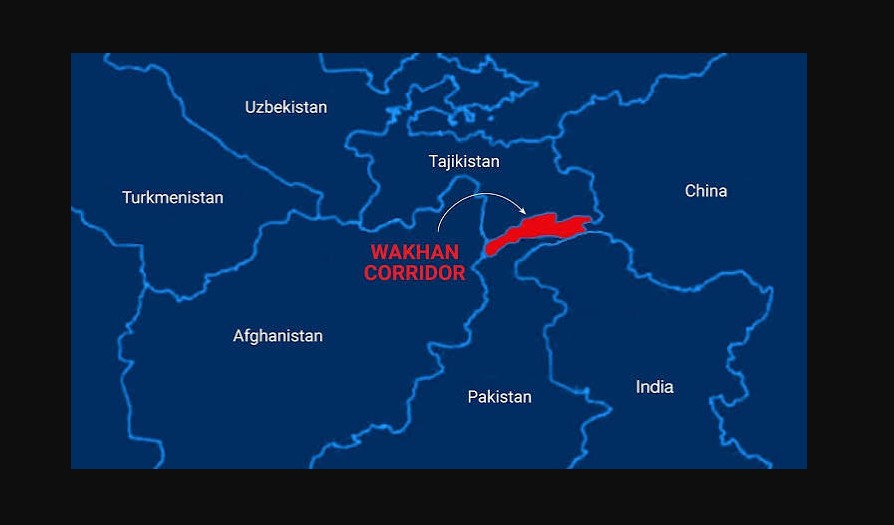
Nestled within the Pamir Mountains, where the borders of four nations—Afghanistan, China, Tajikistan, and Pakistan—converge, is a slender passage known as the Wakhan Corridor. This natural corridor, situated at the northeasternmost tip of Afghanistan, serves as the sole direct link between Afghanistan and China, making it one of the most critical geopolitical points in the contemporary world. In recent years, particularly following the withdrawal of American troops from Afghanistan and the resurgence of the Taliban, the Wakhan Corridor has garnered significant attention from both regional and trans-regional powers. This article explores the strategic significance of the Wakhan Corridor in the calculations of the surrounding countries and provides a thorough analysis of the stark differences in perspectives regarding this strategic passage, particularly between Afghanistan and China, as well as the viewpoints of Pakistan, Iran, and Central Asian nations.
Geographical and historical location of the Wakhan Corridor
The Wakhan Corridor is an elongated and narrow land strip measuring approximately 400 kilometers in length (300 kilometers within Afghanistan and 100 kilometers in China), with a width that fluctuates between 10 and 50 kilometers, narrowing to less than a kilometer at its most constricted point. Situated in the northeastern part of Badakhshan Province, Afghanistan, it shares borders with Tajikistan to the north, Pakistan’s Gilgit-Baltistan region to the south, and the Xinjiang Autonomous Region of China to the east.
The origins of this route can be traced back to the era of the Silk Road. The Wakhan Corridor served as a significant branch of this ancient trade route, utilized by numerous traders and travelers, including the renowned Buddhist monk Hiuen Tsang, who journeyed to China centuries ago. Established in 1893 through the Durand Agreement between the British Empire and Afghanistan, the Wakhan Corridor was designed as a buffer zone to mitigate direct confrontations between the Russian and British empires in Central Asia.
Currently, the corridor, which has a population of merely 12,000, serves not only as a communication route but also as a representation of the significant challenges posed by Afghanistan’s faltering economy in contrast to China’s delicate security concerns. Although the Taliban are keen to advance the project, China has adopted a more prudent stance.
Why is China cautious about reopening the Wakhan Corridor?
The impact of the security factor on China’s view of Wakhan
For China, the Wakhan Corridor is viewed mainly as a security challenge instead of an economic chance. Beijing has three primary aims in Afghanistan: to safeguard Xinjiang against terrorist threats, especially from Uyghur separatists, to secure access to crucial mineral resources, and to enhance the China-Pakistan Economic Corridor (CPEC). Of these aims, the security of China’s western borders is the highest priority.
China’s primary concern is the transmission of instability from Afghanistan to Xinjiang. Terrorist organizations, such as Uyghur militants and ISIS-K, represent a direct risk to China’s national security. Consequently, China is hesitant to reopen or make significant investments in the Wakhan Corridor unless it obtains reliable security assurances.
Nevertheless, China has adopted a gradual and careful strategy. During a meeting with Taliban representatives, the Chinese ambassador in Kabul expressed approval of the completion of the sand-laying phase of the Wakhan road, which the Taliban government is currently executing. However, this stance does not imply support for the reopening of the border along the Wakhan Corridor following the road’s completion; instead, it reflects the same gradual and cautious strategy.
Afghanistan’s view of the Wakhan Corridor: A gateway to liberation
Conversely, Afghanistan, under the Taliban government, regards the Wakhan Corridor as an essential refuge to alleviate its economic stagnation. Having been landlocked for many years and experiencing international isolation since the Taliban’s rise to power, Afghanistan views the Wakhan Corridor as a crucial access point to the expansive Chinese market and a chance to link with East Asian markets.
The Taliban have set forth an ambitious initiative to transform the Wakhan Corridor into a trade highway. They anticipate that by establishing direct connections with China, the opening of this strategic corridor will generate $60 billion annually in transit revenue. Consequently, they are aiming to finance the construction of a road within this corridor using their own budget. Taliban officials have reported that the first phase of the Wakhan Road project is approximately 60 percent complete, covering the distance from the Bazhai Gonbad area to the Chinese border, which spans 50 kilometers. The second phase, which extends from the Badakhshan border crossing to Bazhai Gonbad over a length of 71 kilometers, is about 74 percent complete and is projected to be finalized by the end of 2026.
Nonetheless, the project faces numerous challenges ahead. The absence of funding (the Taliban is optimistic that China will assist in this matter), the lack of international recognition of the Taliban government, which causes foreign investors to be reluctant, and assaults by terrorist organizations are viewed as the most significant barriers to achieving the aspirations of the Taliban government.
Pakistan’s concern about the Wakhan Corridor
Pakistan, recognized as a significant regional player, closely monitors the Wakhan Corridor. For years, the nation has utilized the China-Pakistan Economic Corridor (CPEC) as its primary tool of influence in the region, and it is increasingly apprehensive about the potential activation of the Wakhan Corridor as an alternative route that circumvents Pakistan. Should the Wakhan land route be finalized and operational, China’s trade route to Afghanistan would no longer traverse Pakistan, thereby diminishing Islamabad’s strategic standing.
Alongside economic issues, Pakistan is confronted with a grave security threat. Since the start of the previous year, there has been a 46 percent rise in violence within the country, resulting in over 2,000 fatalities due to terrorist incidents and counter-terrorism efforts. A considerable number of these assaults have been attributed to the Tehreek-e-Taliban Pakistan (TTP), which Pakistan asserts operates from safe havens in Afghanistan.
Recently, speculation regarding Pakistan’s intention to annex the Wakhan Corridor has emerged, prompting a strong response from Kabul. Following these unofficial claims, several military officials from the Taliban visited the Wakhan Corridor as a reaction to the rumors. In light of this situation, the spokesperson for the Pakistani Foreign Ministry asserted, “Wakhan is part of Afghanistan. We officially acknowledge the sovereignty and territorial integrity of this neighboring nation and have no intention of claiming the territory of our neighbors.” Nevertheless, some analysts suggest that Pakistan might leverage the Wakhan Corridor as a negotiating tool with Kabul concerning the Durand Line and the cessation of cross-border attacks.
Pakistan finds itself in a challenging predicament regarding the Wakhan Corridor: while it seeks to remain included in the emerging regional transit dynamics, its strained relations with the Taliban limit its capacity to impact the corridor’s development process.
What are Iran’s interests in the Wakhan Corridor?
Iran perceives the Wakhan Corridor as a strategic and long-term asset more than any other nation. Tehran, having faced international sanctions for an extended period, is actively seeking alternative trade routes to connect with China and East Asia. Presently, the majority of trade between Iran and China occurs through maritime routes, which are associated with higher expenses, longer durations, and the complexities arising from sanctions. The emergence of conflicts in the Persian Gulf and the US naval blockade against Iran have underscored the strategic necessity of establishing a connection to China. Consequently, the most direct rail route linking Iran to China is through Afghanistan.
Iran has unveiled an ambitious proposal for establishing a rail link to China through Afghanistan and the Wakhan Corridor. This initiative involves extending the Khaf-Herat railway, most of which is already completed, to Balkh Province (Mazar-e-Sharif) and subsequently to the Wakhan Corridor in Badakhshan Province, thereby facilitating a rail connection between Iran and China. During a meeting with Mullah Abdul Ghani Baradar, the Taliban’s deputy prime minister for economic affairs, the head of the Islamic Republic of Iran Railways Organization advocated for the creation of a joint committee to promote this collaboration, to which Mullah Baradar has expressed his support. It is important to highlight that the construction of the Herat-Mazar-e-Sharif railway is currently under planning and review by Iran, Afghanistan, and Uzbekistan.
A crucial aspect of Iran’s strategy is the integration of the Wakhan Corridor with other transit routes. Iran aims to utilize the Wakhan Corridor as a vital connection to link its railway system to China and subsequently to Europe. This strategy positions Iran as a significant participant in the emerging regional transit dynamics.
Uzbekistan: A pioneer in the competition on transit routes
Under the leadership of Shavkat Mirziyoyev, Uzbekistan aims to establish itself as a regional logistics hub, introducing the Trans-Afghan Railway Corridor as its primary initiative. Nevertheless, Iran’s increasing influence over Afghanistan’s transit infrastructure poses a significant threat to Uzbekistan’s supremacy in regional transit. Initially, Tashkent intended to integrate with the Khaf-Herat railway, which is backed by Iran, but subsequently shifted its focus to the Kabul corridor to safeguard its transit interests. Consequently, Uzbekistan is now concentrating on the Kabul corridor route (Termez-Mazar-e-Sharif-Kabul-Peshawar). However, both the Taliban government and Russia appear to favor the Kandahar corridor (Herat-Kandahar-Spin Boldak). In summary, Uzbekistan views the opening of the Wakhan Corridor as a beneficial opportunity that complements its transit strategy, particularly if a railway route is developed within this corridor.
Turkmenistan: Alternative route
Turkmenistan is concentrating on its suggested route of Turgandi-Herat-Kandahar-Spinbolk to enhance its portion of Afghan transit. The TAT (Turkmenistan-Afghanistan-Tajikistan) and Lapis Lazuli Corridors represent additional alternatives that have heightened competition for dominance over Afghan trade routes. Nevertheless, the Wakhan Corridor aligns with Turkmenistan’s objectives and provides a chance to circumvent Uzbekistan and Kazakhstan, facilitating more straightforward access to China.
Tajikistan: Cautious cooperation
Initially pessimistic of the Taliban, Tajikistan has recently adopted a pragmatic stance towards the Taliban government and is collaborating with China and South Korea to develop a rail link through Sherkhanbandar. Due to its geographical position next to the Wakhan Corridor, Tajikistan stands to gain directly from this project.
It is crucial to note that the Central Asian nations have yet to establish a cohesive stance regarding the development of Afghan transit corridors, with each country aiming to optimize its individual national interests. While the enhancement of Afghan transit corridors presents opportunities for Central Asia, it simultaneously heightens the potential for escalating geopolitical competition and rivalry.
Related Article
How to liberate Afghanistan’s transit dependence on Pakistan?
Situation of Jamaat Ansarullah in Afghanistan
Conclusion
The Wakhan Corridor, a slender expanse of territory situated in the core of the Pamirs, has emerged as a representation of the convergence of interests and ambitions among regional powers. Afghanistan views it as a means to break free from economic seclusion. China, wary of the potential for insecurity to extend into Xinjiang, has adopted a careful and security-focused strategy. Pakistan is apprehensive about being excluded from regional transit dynamics, while Iran envisions establishing a rail link to China. Additionally, Central Asian nations are vying for a greater portion of Afghan transit opportunities.
It is clear that the future of the Wakhan Corridor will significantly influence not only Afghanistan’s economic destiny but also the power dynamics across the South and Central Asian region. As the global landscape shifts towards multipolarity, the Wakhan Corridor may serve as a crucial link or a dividing line among regional powers. The direction this corridor takes will be determined not by the ambitions of the Taliban or China’s security assessments, but rather by the capacity of regional stakeholders to collaborate and foster mutual trust.