
Review of Afghanistan developments
Five years after the fall of the Afghan republic, most credible regional and Western think-tank analyses no longer debate whether the Taliban government will survive. The past five years have shown that the Taliban has consolidated political and security control across Afghanistan, with no sign of instability.
The real question now is where The Future of Afghanistan is headed. Will the Taliban’s political consolidation lead to deeper regional integration and economic development? Or will Afghanistan remain politically stable but economically underdeveloped?
Answering this requires looking at a few key variables: The Taliban’s relationship with Pakistan, the pace of regional integration, Afghanistan’s economy, and US policy toward Afghanistan. This analysis first examines these variables, then outlines three scenarios for The Future of Afghanistan over the next three years. Other variables were considered but ruled out as unlikely to meaningfully shape Afghanistan’s trajectory within this timeframe.
Taliban Unity: The Foundation for The Future of Afghanistan
Over the past five years, the Taliban has not only held its territorial control but also consolidated its governing structure. Despite reports suggesting splits among Taliban leaders, differences of opinion between various figures and factions do exist — but they have not turned into a political rift, and are unlikely to. Taliban leaders understand that internal division would risk collapsing the government they fought 20 years to win.
This is why any assessment of The Future of Afghanistan shouldn’t start from the assumption that the Taliban government might collapse. The real question is whether the Taliban can turn Afghanistan’s current political stability into durable, sustainable governance. That distinction matters: whether the Taliban stalls at the status quo or pairs stability with development will significantly shape The Future of Afghanistan.
Pakistan: The Most Critical Variable for The Future of Afghanistan
Among external factors, the Afghanistan-Pakistan relationship is likely the single most important variable over the next three years. Tensions between Kabul and Islamabad have risen in recent years. But escalating Pakistani pressure doesn’t necessarily mean Islamabad wants the Taliban government to fall — the real question is what Pakistan’s pressure is actually meant to achieve.
If Pakistan’s main goal is to push Kabul into changing its approach to the Pakistani Taliban (TTP), the two countries could eventually reach some mechanism for managing their disputes. But if Pakistani pressure shifts toward structurally weakening the Taliban government, The Future of Afghanistan takes a very different path.
Structurally undermining the Taliban is a risky bet for Pakistan, though. A Taliban collapse wouldn’t automatically produce a government Islamabad favors. Some of the Taliban’s political opponents have closer ties to India and hold no particular goodwill toward Pakistan’s past role in Afghanistan. A post-Taliban government might well pursue policies similar to those of the Taliban — or the former republic. That makes it unlikely Pakistan would want to repeat this cycle.
What matters is how far Pakistan is willing to push. Pakistan’s approach to the Taliban remains one of the most important factors that could redirect The Future of Afghanistan.
Regional Integration and The Future of Afghanistan
If one trend has stood out clearly over the past five years, it’s growing engagement between regional countries and the Taliban government. China, Russia, Iran, and the Central Asian states — each for different reasons — have gradually expanded practical ties with Kabul.
Key developments:
● Russia formally recognized the Taliban government in 2025 and signed a military agreement with Kabul in 2026
● The Central Asian states didn’t follow Russia’s lead on formal recognition, but rapidly deepened ties through dozens of economic and trade agreements
● China stayed cautious, stopping short of formally receiving a Taliban ambassador, but joined Russia in backing the Taliban government in international forums while cautiously expanding its own investments
● Iran became the Taliban government’s top economic partner, with bilateral trade approaching $3 billion
● India resumed political engagement with Kabul, using tensions between the Taliban and Pakistan as an opening, and re-established itself as Kabul’s leading humanitarian partner during natural disasters
● Turkey, Azerbaijan, and Gulf Arab states also moved from a wait-and-see approach to active engagement
This trend goes beyond formal recognition. Nearly every country in the region now engages with Kabul on trade, borders, migration, energy, transit, and security — without recognition. This is likely to continue, because regional states have accepted two realities: the Taliban is entrenched in Afghanistan, and the region can’t absorb another major Afghan crisis.
Regional integration could become one of the pillars supporting the Taliban government’s survival. If economic and political ties with neighbors keep expanding, the Taliban can offset some of the pressure from Western isolation and gradually integrate into the region’s political and economic order.
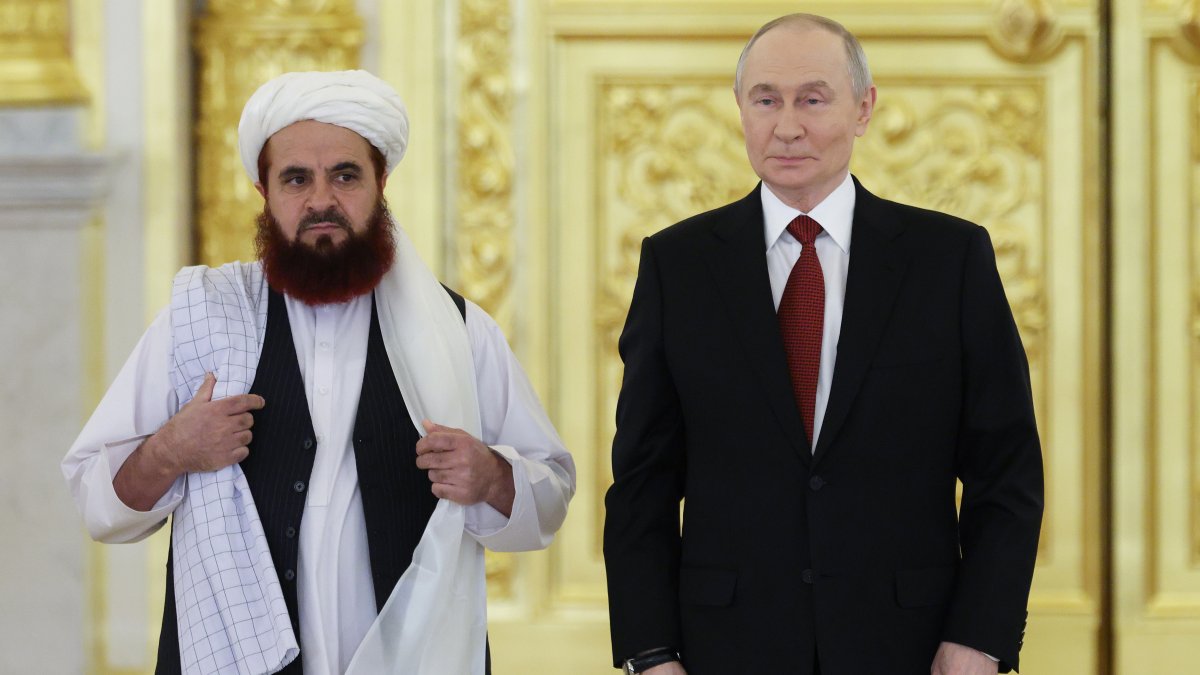
Engagement hasn’t stayed confined to the region, either. The European Union stepped up contact with Taliban officials in 2026, when a Taliban diplomatic delegation took part in talks in Brussels for the first time since Kabul’s fall. The talks focused mainly on migration, the return of migrants, and consular cooperation — but the political significance is that Europe has accepted the Taliban government isn’t a temporary, transitional arrangement. That doesn’t mean full normalization, but it does suggest a policy of non-engagement can’t hold indefinitely.
The Economy: The Real Test for The Future of Afghanistan
The Taliban has achieved political stability and territorial control, but stability isn’t the same as economic development. The key question is whether Afghanistan’s economy can move past limited resilience toward sustained growth, job creation, and rising incomes.
If regional investment, trade, resource extraction, transit revenue, and domestic revenue collection all increase, the economy could help cement the government’s position. But if economic growth fails to keep pace with population growth, unemployment, and social needs, Afghanistan could settle into what might be called stability without development — a state that holds together politically while the gap between political stability and economic wellbeing keeps widening.
The US Role: An Important but Unlikely Factor
A shift in US policy could still have a major impact on The Future of Afghanistan. But over a one-to-three-year horizon, Afghanistan returning to the top of Washington’s foreign policy priorities looks unlikely.
The US is juggling the war in Ukraine, the Middle East, competition with China, and issues in Central America, among other priorities. President Trump remains unpredictable, but based on his administration’s pattern so far and Washington’s other commitments, the baseline assumption here is that Afghanistan will stay on the margins of US foreign policy for the next three years.
That could change if a shock originating from Afghan soil forces Washington’s hand. Barring that, The Future of Afghanistan will be shaped far more by its regional environment than by active US policy.
Three Scenarios for The Future of Afghanistan
Based on the variables above, three main paths for The Future of Afghanistan over the next three years stand out: stabilization with regional integration, stability without development, and erosion under mounting pressure. Other scenarios are possible, but these three are the most plausible given current realities, so this analysis focuses on them.
Scenario 1: Stabilization and Regional Integration
In this scenario, the Taliban maintains political and security control, regional engagement keeps growing, and Afghanistan’s ties with neighbors and regional powers deepen further. Pakistan and the Taliban, despite their differences, eventually find a way to manage tensions, and the economy continues its limited but steady growth.
Under these conditions, the Taliban would gradually shift from an isolated government to one that’s stabilized and integrated into the regional order. Formal recognition by every country may still not happen, but it would matter less in practice, since economic and political engagement would fill much of that gap.
Scenario 2: Stability Without Development
Here, the Taliban stays in power and regional engagement continues, but Afghanistan’s economy fails to see any real breakthrough. Investment stays limited, job creation falls short of what Afghans need, and economic growth isn’t enough to noticeably improve people’s lives.
The result is a relatively stable government presiding over an underdeveloped country — a state where political stability outpaces economic development.
Scenario 3: Erosion Under Pakistani and Economic Pressure
This scenario emerges if Afghanistan-Pakistan tensions move past pressure-for-behavior-change and into a prolonged, costly confrontation. Rising security costs, disrupted trade, and economic strain could then squeeze the Taliban’s governing capacity.
This wouldn’t necessarily mean Taliban collapse. But repeated border clashes, Pakistani airstrikes inside Afghanistan, and — more importantly — financial, military, and logistical support flowing from Pakistan to anti-Taliban fronts would complicate things considerably for the Taliban government. Regional projects would slow or stall, and both state and private investment would suffer from the resulting insecurity and instability. Afghanistan’s situation in this scenario would start to resemble the years of the former republic.
Of the three, based on the trajectory of the past five years, the most likely scenario for The Future of Afghanistan is the first: stabilization and regional integration.
Related Articles
Taliban Performance After Five Years
Why did the republic in Afghanistan fall? 5 decisive crisis
Conclusion: What’s Next for The Future of Afghanistan?
Five years after the republic’s collapse and the Taliban’s return, the Islamic Emirate has consolidated its hold on power, and regional states have shifted from waiting for a change in government to actively managing their relationship with Kabul. That wave of engagement is now extending beyond the region toward Europe, though European engagement is likely to stay limited and issue-specific over the next three years.
Analysis of The Future of Afghanistan has moved past questions of Taliban survival or collapse, and toward what kind of political stability Afghanistan will settle into. After five years of Taliban rule, that’s the reality to accept — and the focus now should be on what the Taliban does with the stability it has secured.
The short answer: if regional engagement with the Taliban government translates into investment, trade, and economic development, and if Kabul manages to keep tensions with Pakistan under control, Afghanistan could enter a new phase of stabilization and integration. But if political stability fails to translate into economic development, The Future of Afghanistan over the next three years may look like a stable government presiding over an underdeveloped country.