
Review of Afghanistan developments
Travel to Afghanistan has quietly become a real option again for a small but growing group of foreign visitors since the Taliban took power. The numbers back this up, and the trend is too consistent to dismiss as a fluke. Afghanistan’s international image is still dominated by war, crisis, and instability — so what’s actually pulling foreign tourists in?
Afghanistan’s Ministry of Information and Culture reported that 10,000 foreign tourists visited the country in 2025. According to the Associated Press, arrivals climbed steadily before that too: 691 in 2021, 2,300 in 2022, 7,000 in 2023, and 9,000 in 2024, drawing visitors from across the region, Europe, and even the United States.
So why is travel to Afghanistan rising even as some Western governments still flag the country as high-risk? This piece looks at what actually draws foreign tourists to Afghanistan — and why the Taliban government is happy to see them come.
History and Civilization: Afghanistan’s Oldest Draw
For one group of travelers, Afghanistan is fundamentally a historical destination — a crossroads of Central Asian, Persian, Indian, and Islamic civilizations, layered with the remains of different historical eras. That alone makes it a compelling stop for history-minded travelers.
Bamiyan is probably the best-known example. The valley isn’t just about the famous Buddha statues; its caves, Buddhist monasteries, wall paintings, and the ruins of the ancient city of Shahr-e Gholghola paint a picture of a region that was once a major Buddhist hub on the Silk Road. UNESCO has listed Bamiyan’s cultural landscape as a World Heritage Site for its historical and artistic significance.
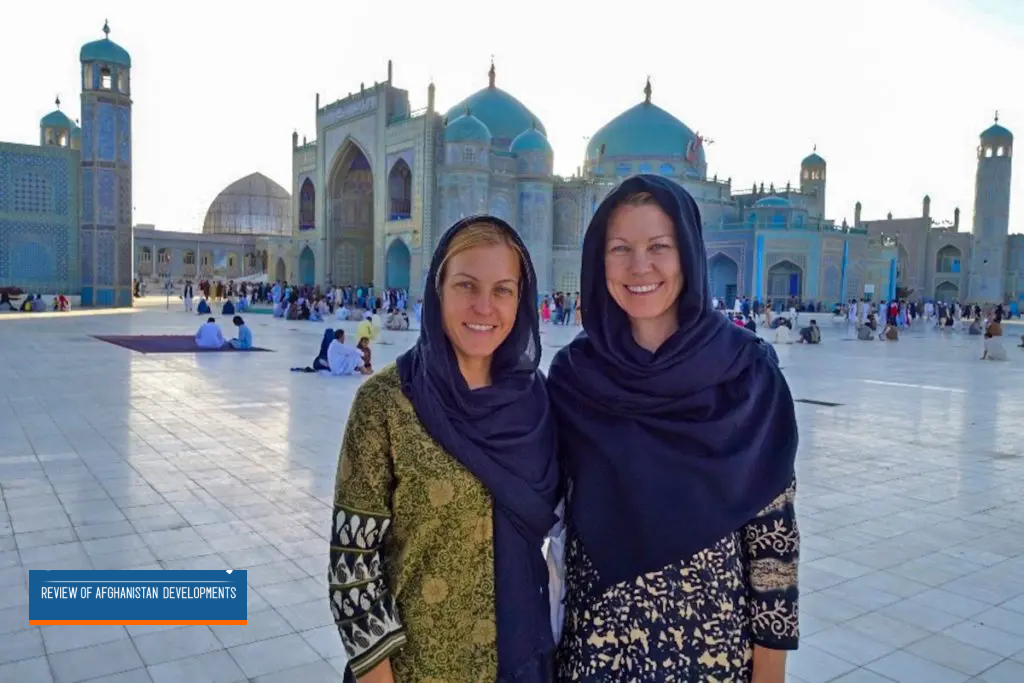
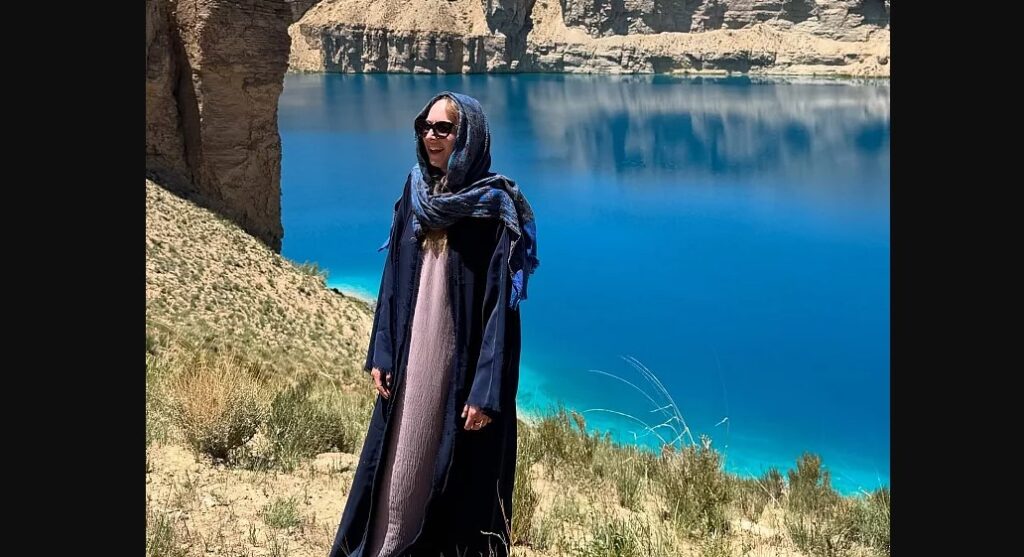
The same trip often extends to Band-e Amir, a chain of deep, brilliant-blue lakes set among the Hindu Kush mountains and one of Afghanistan’s most striking natural landscapes. To the north, Balkh takes travelers to one of the region’s oldest centers of civilization, with a history tied to ancient Bactria, the Silk Road, and successive Islamic periods — its Blue Mosque (Rawze-e Sharif) is one of the finest examples of the era’s architecture.
Herat offers something different: its historic citadel and Friday Mosque showcase Timurid-era architecture that draws travelers with a specific interest in art and architectural history. Ghazni and the Minaret of Jam represent another slice of Afghanistan’s architectural heritage. Every other city has its own draw too — Kabul, the capital, has long held a special place for history-focused travelers, with dozens of historic sites including the Bala Hissar fortress, Babur’s Gardens, and the Shah-Do Shamshira Mosque.
For these travelers, a trip to Afghanistan is less a vacation and more a journey through history.
Nature and Adventure: Discovering Afghanistan’s Unknown Corners
A different group of foreign tourists comes for the landscapes — mountains, photography, and adventure.
Badakhshan, Nuristan, Panjshir, Ghor, and parts of the Hindu Kush offer scenery that appeals to travelers who prefer lesser-known destinations. On this kind of trip, a mountain road, a remote village, a local bazaar, or an hour in a teahouse can matter as much as any historic monument.
Large parts of Afghanistan and Afghan society remain largely untouched by modernization, and traditional ways of life have held on. The traditional life of a Pamiri community set against untouched terrain, the green mountains of Kunar with their rushing rivers, or the customs of Nuristani communities — these are exactly what draws foreign travelers looking for a mix of nature and tradition.
Curiosity About Afghanistan Today
Curiosity is a motive that doesn’t show up in official statistics, but it’s real. Afghanistan has sat at the center of global conflict and political upheaval for more than four decades, and has been under Taliban rule since 2021. For some travelers, that history is itself the reason to go. They want to see today’s Afghanistan with their own eyes — Kabul, its markets, its villages, and everyday life — and understand what a country they’ve mostly seen through war coverage actually looks like.
Afghanistan spent years as a fixture in international headlines, and that’s made a lot of people curious about it. Relative security today has given some travelers the confidence to see up close a country they’d previously only read or heard about for two decades. Seeing Taliban members in person is, for some of these visitors, an experience in itself.
This kind of travel often blurs the line between tourism, research, journalism, photography, and adventure.
Word of Mouth: How Other Travelers’ Stories Spread
Other travelers’ accounts are themselves a driver of new trips. Published stories from foreign visitors to Afghanistan — about the landscapes, traditions, hospitality, and more — feed the curiosity of the next traveler.
On social media and in travel videos, tourists are often visibly enthusiastic describing Kabuli pulao, kebab, fresh bread, green tea, and Afghan street food. These descriptions are sometimes vivid enough to make viewers want to book a trip to Afghanistan just to try the food themselves. A foreign traveler who shares a meal at a local table, or experiences a family’s hospitality, tends to remember it — and that memory usually finds its way into how they describe the country afterward.
This is likely the part of Afghan tourism that never shows up in the statistics, but still shapes other people’s decision to travel.
Why the Taliban Welcomes More Tourists
For the Taliban, rising tourism isn’t just a cultural matter — it carries both revenue and propaganda value.
Economically, foreign tourists spend on hotels, restaurants, transport, local guides, shops, and handicrafts. The Taliban’s economic deputy has described tourism as an opportunity for foreign currency earnings and job creation, and the Ministry of Information and Culture has pointed to expanding tourism and hospitality training along with promotional campaigns showcasing Afghanistan’s natural and historical assets.
But tourism matters to the Taliban beyond economics. Foreign visitors can help reshape how Afghanistan is seen abroad. Travelers’ photos, videos, and stories present an image of the country that differs sharply from war and crisis coverage. The Taliban government has made a deliberate push to move war coverage out of the headlines and replace it with stories about the economy and stability — and foreign tourists can be effective messengers for that narrative.
Seen this way, the Taliban government and parts of the tourism industry share a common interest: tourists want a different kind of experience, and the government benefits from Afghanistan being seen as a destination worth visiting.
Afghanistan’s YouTube Moment: Millions of Views
Travel YouTubers and content creators play an outsized role here. For them, Afghanistan offers a mix of history, a distinct culture, novelty, and adventure — a combination that can pull in millions of viewers.
Among dozens of YouTubers who’ve made the trip, Benjamin Rich — known as Bald and Bankrupt — traveled to Afghanistan in 2022. His videos from that trip have drawn millions of views and been widely reshared.
A more recent example is Mike Okay, who traveled to Afghanistan in 2025. His video documenting entry into Taliban-controlled Afghanistan has racked up more than 3.9 million views. These numbers suggest Afghanistan’s appeal extends well beyond actual tourists, to a global audience simply curious about travel to Afghanistan.
The scale of this travel wave has drawn attention from mainstream outlets too — Euronews published a report on the new wave of travel to Afghanistan. In it, one tour operator said his goal was to see Afghanistan “beyond the headlines.” He named Herat as one of his favorite destinations and described memories like eating street food, drinking tea and honey in a beekeeper’s tent, and fresh mulberries.
It’s necessary to separate a single YouTuber’s personal experience from a full picture of Afghanistan, though. Content creators travel to capture attention, and naturally tend to highlight the unusual and the exciting parts of their trip.
Related Articles
Afghanistan’s potential in the tourism industry
It’s too early to say that. Afghanistan’s foreign tourist numbers remain tiny compared to major regional and global destinations, and tourism infrastructure, services, accessibility, and travel advisories still limit the sector’s capacity.
Still, the current trend shouldn’t be dismissed. Foreign tourists are traveling to Afghanistan for different reasons — one for the Bamiyan Buddhas and Band-e Amir, another for Herat’s architecture and Balkh’s history, another for the mountains of Badakhshan and Nuristan, and another simply to experience a society they’ve only ever seen through the news.
Beyond all this, Afghanistan’s tourism potential is substantial, and with full stability and security, tourism could become one of the country’s major sources of revenue.
So it may still be too early to call this an “Afghan tourism boom.” But there’s clearly a notable rise in foreign travel to Afghanistan — one with real economic potential, one that feeds into the Taliban’s international image-building, and one that shows Afghanistan has shifted, for part of the world, from a subject seen only in the news to a destination for firsthand experience.