
Review of Afghanistan developments
The EU invitation to Taliban delegation represents a significant indication of a gradual shift in Europe’s stance towards Afghanistan following the events of 2021. While the EU continues to withhold recognition of the Taliban government, the rise in communications and the groundwork for dialogue with Taliban representatives suggest that Brussels is reevaluating its strategies regarding Afghanistan. Furthermore, the Taliban delegation’s trip to Europe may mark the beginning of a new era of engagement between the two parties; an era primarily focused on security, migration, and geopolitical factors.
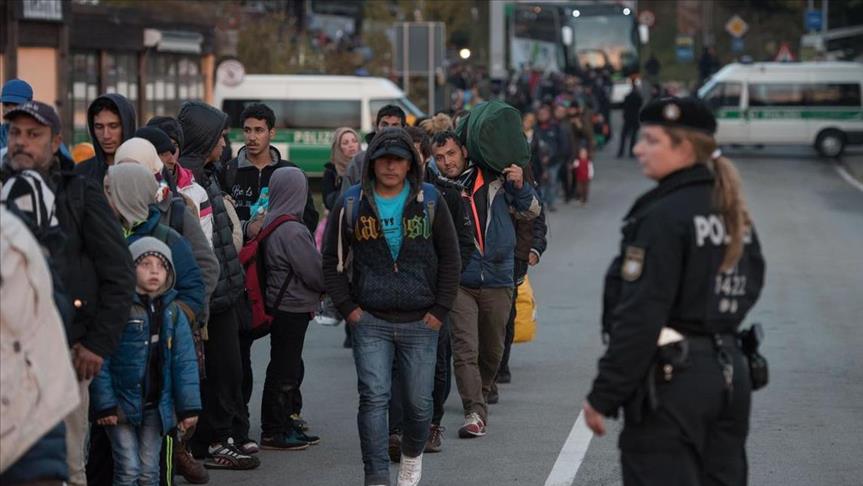
Following the collapse of the republican government in Afghanistan, numerous Afghans sought asylum in various European nations. This surge in migration coincided with Europe’s ongoing refugee crisis stemming from the Middle East and Africa. Consequently, the rise in Afghan asylum applicants exerted considerable strain on the social, economic, and security frameworks of European countries. While a portion of these refugees were granted asylum, many continue to find themselves in a precarious situation.
In recent months, the European Union has heightened its examination of migration policies concerning Afghan nationals. Factors contributing to this shift include the rising economic burdens of migration, security apprehensions, the emergence of right-wing and nationalist movements in certain European nations, and the focus of governments on prioritizing the welfare of their citizens. In light of these circumstances, EU member states are resolute in their efforts to repatriate refugees who have either been denied asylum or have engaged in criminal activities; however, they require the cooperation of the Taliban government to achieve this goal. Consequently, Afghanistan has become a significant topic on the European foreign policy agenda.
The EU invitation to Taliban delegation and Europe’s evolving needs
Over the last five years, the European Union has emerged as a prominent critic of the human rights policies implemented by the Taliban government, with a particular focus on women’s rights. Central to Brussels’ criticism are the prohibitions on girls’ education and employment, as well as the limitations imposed on civil liberties. In contrast to numerous countries in the region, the EU has refrained from extensive political engagement with Kabul and has sought to maintain a degree of separation from the Taliban administration.
This method is primarily a reflection of the characteristics of European democratic systems. In these nations, public sentiment, the media, political parties, and civil society organizations exert a direct impact on foreign policy. Consequently, engaging with the Taliban without any preconditions contradicts Europe’s stated values of human rights, democracy, and gender equality, and is likely to provoke a public backlash.
Nonetheless, recent developments have indicated that the policy of isolation possesses its own constraints. Numerous European think tanks, such as the European Council on Foreign Relations (ECFR) and the Italian Institute of International Affairs (IAI), have consistently highlighted that the absence of engagement with the Taliban government has not only failed to alter Kabul’s conduct but has also diminished Europe’s sway over the events in Afghanistan. Viewed from this angle, the EU invitation to Taliban delegation can be interpreted as an effort to sustain a minimal level of political and diplomatic influence in Afghanistan, a nation that remains central to the security and geopolitical dynamics of Asia.
Taliban in Europe, Under the Shadow of Geopolitical Rivalry
One of the key factors that may account for the gradual evolution of European policy is the geopolitical changes occurring in the region. In recent years, the neighboring countries of Afghanistan and significant Asian powers have adopted varying approaches towards the Taliban government.
China has expanded its working relationship with the Taliban government, focusing on security in the Xinjiang region, developing trade routes, and projects related to the Belt and Road Initiative. Beijing sees Afghanistan as part of the Central Asian strategic equation and is seeking to increase its influence in the country through investment and economic cooperation.
Russia has increasingly sought to engage with the Taliban, aiming to address security threats in Central Asia and to counter the influence of extremist organizations. Moscow’s decision to officially recognize the Taliban government marks a crucial shift in Afghanistan’s diplomatic landscape. This choice may also open avenues for Russia’s involvement in Afghanistan’s infrastructure and economic initiatives.
India, notwithstanding its historical differences and security apprehensions, has sustained its relationship with the Taliban and aims to uphold its standing in regional dynamics. Nearly all nations in the vicinity, including Iran and Central Asian countries, have similarly engaged in pragmatic interactions with the Taliban administration, albeit with certain reservations.
In these circumstances, the European Union perceives a risk of being sidelined in the geopolitical contest in Afghanistan. Numerous European analysts contend that the US withdrawal experience has demonstrated that total reliance on Washington’s policies does not ensure the long-term interests of Europe. Consequently, the visit of the Taliban delegation to Europe warrants examination within the framework of Brussels’ efforts to reclaim a more autonomous position in regional affairs.
EU’s interaction with the Taliban: Evolving from confrontation to a careful pragmatism
A key concept in Western foreign policy discussions regarding Afghanistan is “engagement without recognition.” This idea entails sustaining communication and dialogue with the Taliban while refraining from providing formal and legal legitimacy to their government.
In fact, the EU’s engagement with the Taliban does not necessarily mean changing Europe’s human rights stance. Rather, it is an attempt to manage existing practical challenges. Issues such as the return of illegal immigrants, the distribution of humanitarian aid, the fight against drug trafficking, counterterrorism, and preventing Afghanistan’s economic collapse all require some kind of engagement with the current rulers in Kabul.
In this context, certain think tanks argue that the ongoing isolation of Afghanistan may lead to the emergence of humanitarian and security crises. According to these think tanks, a strategy of limited and regulated engagement with the Taliban presents a more pragmatic solution compared to a policy focused on maximum pressure.
Accordingly, the EU is expected to utilize humanitarian tools as a means to facilitate wider involvement with Afghanistan in the near future. This new strategy may encompass development assistance, infrastructure initiatives, collaboration in health and education, along with migration management.
The role of security threats in EU relations with Afghanistan
An additional significant element influencing a potential change in European policy is the increasing security apprehensions regarding the actions of ISIS-K. In recent years, this group has sought to broaden its influence beyond Afghanistan and has demonstrated a specific focus on Western targets, especially those in European nations.
Numerous security think-tank across Europe have cautioned that the instability in Afghanistan may serve as a fertile ground for extremist organizations. In this context, the European Union’s engagement with Afghanistan transcends mere diplomatic or humanitarian concerns, evolving into a component of the national security strategy for European nations.
Collaboration in intelligence, the exchange of security information, and the establishment of communication channels to combat terrorist threats are some of the factors that may drive Europe to enhance its involvement with Afghanistan. Although the EU may persist in its refusal to recognize the Taliban, the necessity for security could lead to increased practical cooperation between both parties.
Related Articles
Tatarstan and the Taliban
Mutual expectations of Russia and Taliban
Future outlook
The fact remains that Afghanistan has not been excluded from the global landscape since the Taliban assumed control. The rivalry among regional powers, the geopolitical significance of Central Asia, threats from terrorism, the migration crisis, and extensive humanitarian needs persist in rendering the country a critical concern for international stakeholders.
In such an environment, the EU invitation to Taliban delegation transcends mere formality; it signifies a gradual reassessment of Brussels’ strategy. Europe is now confronted with the dilemma of whether to persist with a policy of distancing that may not align with its strategic interests, or to adopt a more cautious pragmatic approach.
The alternative option appears to be gaining traction. Should this trend persist, the Taliban delegation’s trip to Europe may serve as a precursor to establishing a policy of “engagement without recognition” – a strategy that, while upholding Europe’s firm stance on human rights, facilitates collaboration in the fields of security, migration, and humanitarian assistance.
Ultimately, if the EU adopts a more pragmatic approach towards Afghanistan under Taliban governance, the process of Afghanistan’s gradual assimilation into the international community will be expedited. In this light, the Taliban delegation’s trip to Europe should not be viewed as an isolated incident, but rather as the commencement of a new phase in the relationship between Kabul and Brussels, a phase whose repercussions will influence Afghanistan’s future and the regional power dynamics.