
Review of Afghanistan developments
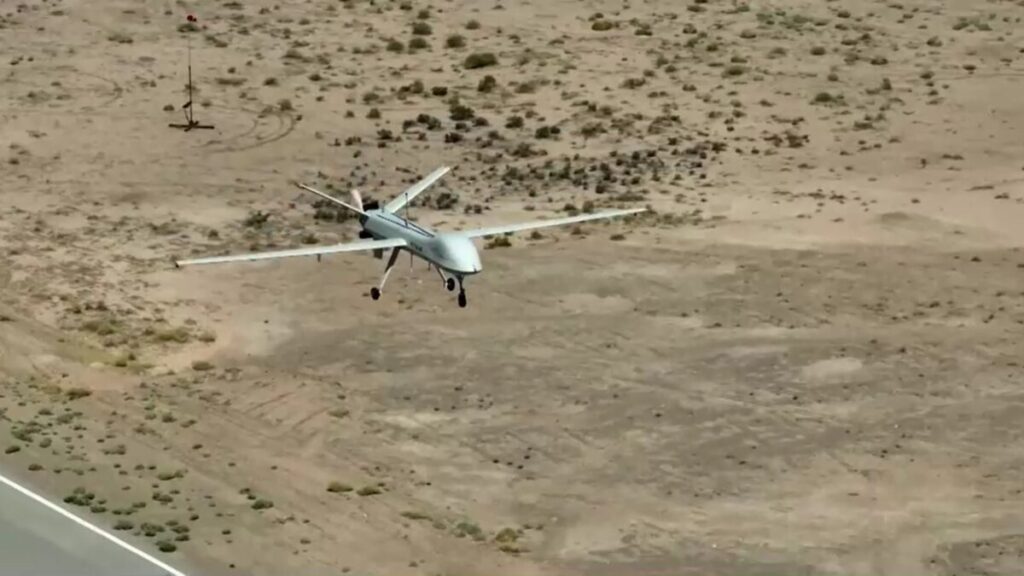
The Taliban drone strikes against ISIS-K positions in Pakistan should be regarded as a crucial security development in the recent dynamics between Kabul and Islamabad. Toward the end of June 2026, the Taliban government’s Ministry of Defense announced the execution of at least three cross-border operations aimed at ISKP headquarters in the provinces of Balochistan and Khyber Pakhtunkhwa. According to the Taliban, the targeted locations included Gulistan Qala Abdullah, Shakarab Jangalgardi in Chagai, and Qambarkhel in Orakzai; areas that sources close to the Taliban have recognized as centers for the recruitment, training, and operational planning of ISIS-K.
Despite the Pakistani government’s denial of these drone operations, evidence from the past year, along with the rising security tensions between the two nations, suggests a significant likelihood of such attacks occurring. The Taliban’s drone strikes are not merely tactical maneuvers against ISIS; they also reflect a transformation in the Taliban’s security strategy, moving from a focus on “defense at home” to one of “preemptive action abroad.” This strategic shift may have implications for regional security dynamics, the relationship between Afghanistan and Pakistan, and the responses of regional players to developments in South Asia.
Taliban drone strikes occurring deep within Pakistan
Prior to the Taliban’s resurgence in 2021, ISIS-K was a significant actor in the landscape of insecurity in Afghanistan. The organization maintained active operational networks spanning from the eastern to the northern and western regions of the country, orchestrating multiple lethal attacks in Kabul. Nevertheless, following the Taliban’s consolidation of power, they identified ISIS-K as the foremost threat to their national security and implemented a stringent “iron fist” approach towards the group.
This strategy led to a notable decrease in ISIS‘s operational capabilities starting in 2023. Evaluations conducted by global research institutions, including reports from think tanks like the International Crisis Group and the Institute for the Study of War, indicate that ISIS-K’s operational frameworks within Afghanistan have been significantly impaired in the last two years, rendering the group incapable of executing large-scale assaults.
Under these conditions, the Taliban drone strikes indicate that Kabul is no longer solely in a defensive stance. The Taliban administration has attained a degree of intelligence and operational proficiency that enables it to strike at threat centers prior to their incursion into Afghan territory. Numerous Taliban drone missions have also been documented targeting ISIS-K positions in Khyber Pakhtunkhwa province over the last year. This evolution signifies a transformation in the Taliban’s security strategy from reactive measures to proactive deterrence, a strategy designed to relocate the battlefield to the sites of potential threats.
Taliban intelligence elite and influence in Pakistan’s security equations
A significant aspect of the recent drone strikes is the Taliban government’s substantial intelligence control over security events along the Durand Line. Al-Mirsad, recognized as a media source affiliated with Taliban security agencies, published an article stating that ISIS-K has restructured its operations in the Kurma, Orakzai, Khyber, Mohmand, and Bajaur areas of Khyber Pakhtunkhwa province. This development suggests Kabul’s intelligence superiority regarding security matters in Pakistan.
The precise targeting of recent operations indicates that the Taliban possess a robust intelligence network in the border regions of Pakistan. The effectiveness of Taliban drone strikes on locations where ISIS has been recruiting and organizing operations is unattainable without substantial field intelligence and human intelligence.
On the other hand, there have been many reports in the last year regarding Pakistan’s attempts to employ former Afghan soldiers to counter the Taliban government. While Islamabad has not verified this information, the recent assault on the headquarters of the organized Afghan forces in Khyber Pakhtunkhwa significantly bolsters this conjecture.
Al-Marsad reported that Pakistan’s military intelligence agency (ISI) engaged with several former Afghan political and military leaders following the Munich Security Conference and is working on a project to restructure former Uzbeks and anti-Taliban forces in Balochistan. In this context, the Taliban drone strikes are not merely a response to ISIS, but rather a clear communication to Pakistani security agencies regarding the depth of Kabul’s intelligence capabilities.
Regional actors warn of security developments in Afghanistan and Pakistan
The latest developments are not solely a matter of concern for Kabul and Islamabad. It appears that neighboring countries have also become aware of the security ramifications stemming from the escalating tensions between these two nations and are issuing cautionary signals.
On May 26, 2026, Alexander Bortnikov, the head of the Russian Federal Security Service, cautioned during a meeting of security agency leaders from the Commonwealth of Independent States (CIS) that ISIS-K has escalated its recruitment efforts in Central Asian nations, as well as among migrant workers in Russia. He disclosed the establishment of covert networks, financial pathways, and preparations for potential attacks. A significant aspect of Bortnikov’s remarks was the purported involvement of foreign entities in orchestrating anti-Taliban threats. He asserted that ISIS-K, allied jihadist factions, and anti-Taliban groups receive substantial backing from British intelligence services; a statement that, if accurate, could suggest a more intricate geopolitical rivalry concerning Afghanistan.
These warnings indicate that the problem extends beyond the bilateral tensions between Afghanistan and Pakistan. Numerous countries in the region are apprehensive that the escalating security competition between Kabul and Islamabad may provide a renewed opportunity for the reestablishment of transnational terrorist networks. Viewed from this angle, the Taliban’s drone strikes targeting ISIS-K deep within Pakistan can be interpreted as an effort by the Taliban to showcase its capability to manage security threats and avert Afghanistan from evolving into a new hub of regional instability.

Possibility of renewed escalation of tensions between Afghanistan and Pakistan
Notwithstanding the declared goals of the recent operation, its political and security ramifications may extend beyond merely combating ISIS. In light of a statement issued by the Taliban Ministry of Defense regarding the targeting of ISIS facilities and networks associated with Pakistani intelligence agencies, Zalmay Khalilzad cautioned against a potential resurgence of tensions between Kabul and Islamabad, urging for proactive mediation from regional countries.
This warning comes at a time when relations between the two countries have been fraught with tension in recent months. Cross-border attacks, mutual accusations of supporting armed groups, and an increase in cross-border operations have markedly heightened mutual distrust. Numerous reports further indicate an escalation of border clashes and cross-border hostilities between the two sides during this period.
In this context, the Taliban drone strikes extending into Pakistani territory can be viewed as part of a broader pattern where Kabul and Islamabad increasingly attribute their security challenges to one another. Conversely, Al-Mursad’s recent communication suggesting that Afghanistan possesses superior capabilities compared to Pakistan in utilizing proxy instruments conveys a distinct deterrent message.
Related Articles
Taliban Drone Capabilities: A New Threat to Pakistan’s Airspace
Taliban’s Drone Capabilities: From Quadcopters to Kamikazes
Conclusion
Recent developments suggest that the Taliban drone strikes are not merely limited to counterterrorism objectives, but instead reflect a fundamental reorientation in the Taliban government’s security posture. Having now largely neutralized the ISIS-K threat inside Afghanistan, the Taliban are increasingly shifting the theater of conflict into external territories.
At the same time, Recent operations indicate a notable level of Taliban intelligence superiority regarding Pakistani security developments, and they show that Kabul is acutely aware of the activities of ISIS and anti-Taliban factions across the Durand. Nevertheless, if this trend persists, it may result in heightened bilateral tensions and greater regional instability.
As a result, the Taliban drone strikes targeting ISIS and armed opposition strongholds should be examined within a broader context; a context that encompasses the struggle against ISIS, the intelligence rivalry between Kabul and Islamabad, the equilibrium of deterrence, and the security apprehensions of neighboring nations, all of which are concurrently reshaping the security landscape surrounding Afghanistan.