
Review of Afghanistan developments
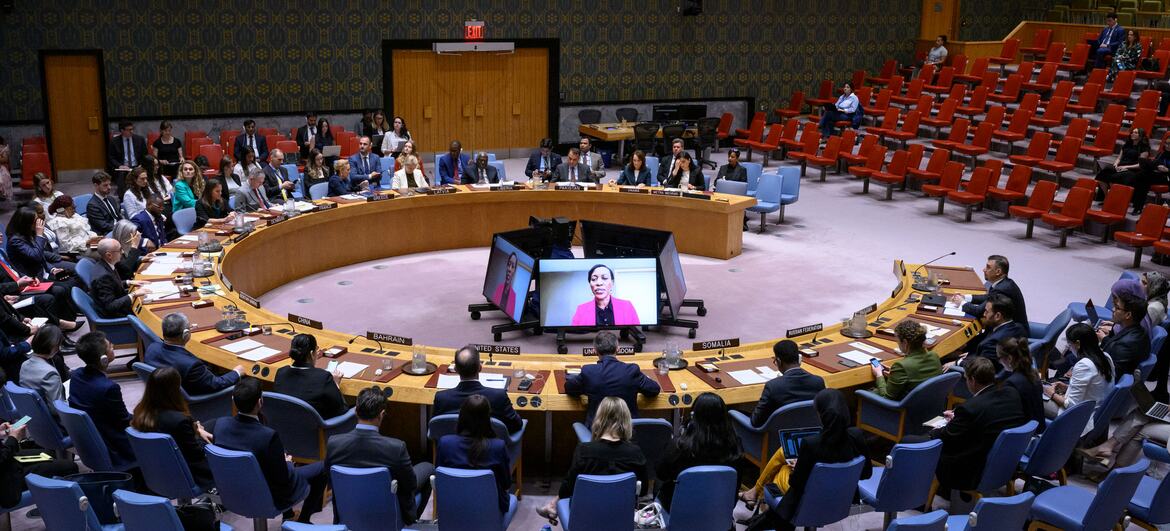
The recent UNSC meeting concerning Afghanistan has once again highlighted that the Afghan situation continues to be one of the most significant security and political challenges on the global stage. The attendance and addresses of representatives from major powers, including the United States, Russia, and China, as well as key regional nations such as Iran, India, and Pakistan, alongside the presentation of a report by the United Nations Assistance Mission in Afghanistan (UNAMA), underscore that developments in Afghanistan are crucial not only for its citizens but also for regional and international security. Despite nearly five years having elapsed since the Taliban regained power, there remains no consensus on a framework for the international community’s engagement with Afghanistan’s caretaker government, leading to UNSC meeting becoming a platform for showcasing the differing perspectives of global and regional powers. The following article is based on an analysis of the speeches delivered by representatives of various countries during the UNSC meeting that took place on June 8.
Points of commonality and disagreement between countries regarding Afghanistan
During the UNSC meeting, several points of consensus emerged among the participating nations. The primary area of agreement centered on women’s rights and the education of Afghan girls. Nearly all representatives in attendance, including those from China, Russia, the United States, Britain, France, and Iran, voiced their concerns regarding the exclusion of women and girls from employment and educational opportunities. This remarkable consensus indicates that the international community, despite its political and geopolitical differences, views the restrictions placed on women and girls as a significant barrier to the normalization of Afghanistan’s relations with the global community. Indeed, the topic of girls’ education has become one of the rare domains where Eastern and Western nations find common ground.
However, the list of differences is considerably more extensive. Engaging with the Taliban, the future of the Doha process, the matter of sanctions, the release of frozen Afghan assets, the evaluation of terrorist threats, and even the function of UNAMA are among the topics where significant disagreements exist among various stakeholders. Some nations argue that pressure on the Taliban must persist to ensure the group meets its international obligations, while another faction contends that isolating the Taliban will not produce positive outcomes and that the only effective way to further the international community’s objectives is through direct and pragmatic engagement with Afghanistan’s current leaders.
Afghanistan’s stability and how to interact with the Taliban in the UNSC meeting
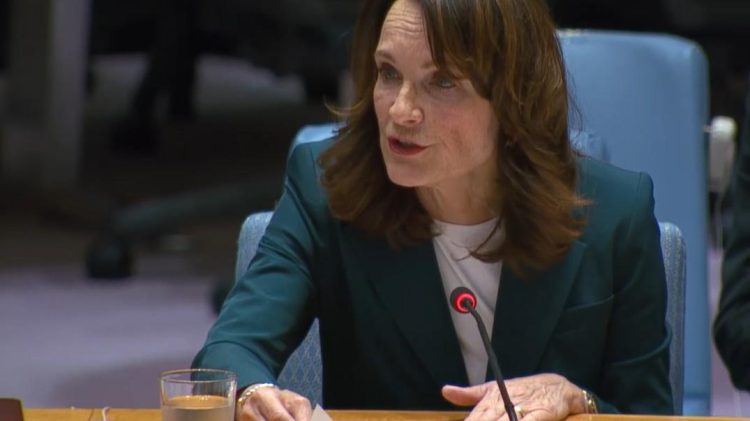
A key issue discussed during the meeting was the evaluation of Afghanistan’s political stability. Georgette Gagnon, the Acting Head of UNAMA, remarked that the Taliban government has solidified its territorial and administrative authority across the nation, with no significant political or military opposition currently present. The representative from China echoed this sentiment, noting that while the situation in Afghanistan is stable, challenges related to security, humanitarian needs, and the economy remain. These evaluations indicate that, in contrast to the initial years following the Taliban’s resurgence, the primary focus of the international community has shifted from concerns about the potential collapse of the Taliban government to strategies for engaging with a government that is firmly in control of the country.
In this context, a coalition of nations advocated for increased interaction with the Taliban. China, Russia, and Iran explicitly endorsed the strategy of constructive engagement. Russia deemed engagement with the Taliban a “fundamental necessity” for Afghanistan’s future. China highlighted the importance of pragmatic engagement and mutual trust, while Iran stressed that ongoing dialogue with the Afghan governing authority is crucial for promoting stability and addressing current challenges. Furthermore, UNAMA underscored that engaging with the Taliban does not equate to endorsing the group; rather, it serves as a means for crisis management and assisting the Afghan populace.
Disagreements regarding the Doha process were a significant topic of discussion during the meeting. UNAMA continues to advocate for the process as the primary framework for dialogue between the Taliban and the international community, while Iran has also characterized it as a vital platform for practical collaboration. Conversely, France contends that the Doha process has not achieved substantial progress and that the Taliban has yet to fulfill its international obligations. Russia, although in favor of engaging with the Taliban, criticized what it perceives as the influence of Western perspectives on UN processes. This divergence in opinions illustrates the lack of consensus on the most crucial diplomatic mechanism established for Afghanistan.
The distribution of power within the UNSC; Analysis of countries’ Stances on the Taliban
A review of the stances of Western powers reveals that the United States and European nations are positioned on one side of the spectrum. Washington places significant emphasis on human rights, the release of detained American citizens, and the battle against terrorism. The United States also insists on holding the Taliban accountable and enhancing the monitoring mechanisms of the UN. Britain and France have similarly adopted positions that align with Washington, stressing the importance of women’s rights, minority rights, and the Taliban’s international responsibilities. France has gone so far as to declare that the Taliban’s policies are based on a discriminatory ideology, asserting that without a shift in the group’s behavior, there will be no advancement in relations between Afghanistan and the international community.
On the opposing side are China, Russia, and, to a significant extent, Iran. While they critique the limitations placed on women, these nations stress the importance of engaging with the Taliban, alleviating pressure, unfreezing assets, and enhancing economic collaboration. Russia and China contend that a policy of pressure and isolation will be ineffective, asserting that the international community must acknowledge the new realities in Afghanistan. Iran shares a similar perspective with these two countries and, despite its criticism of women’s rights conditions, views constructive engagement as the most effective means to effect change. The alignment of positions among these three nations primarily arises from their pragmatic assessment of the situation in Afghanistan and their mutual security and regional interests.
India has adopted a distinct and relatively autonomous position. While endorsing UNAMA and multilateral efforts, New Delhi has urged for a reassessment of sanctions on Afghanistan considering the new circumstances. Nevertheless, the most significant aspect of the Indian envoy’s address was the robust condemnation of Pakistan. The Indian representative denounced Pakistan’s airstrikes on Afghanistan, labeling them as a breach of Afghan sovereignty. Additionally, he criticized Pakistan’s large-scale deportation of Afghan refugees and the trade limitations placed on Afghanistan.
In contrast, Pakistan has concentrated on the issue of terrorism, alleging that the Taliban supports organizations like the Tehreek-e-Taliban Pakistan (TTP). Islamabad asserts that numerous security threats to Pakistan originate from Afghan territory and contends that the Taliban have failed to take adequate measures against these factions. Furthermore, Pakistan has cautioned against what it describes as the Taliban’s provision of refuge to terrorist groups and has stated that it will exercise its right to self-defense if deemed necessary.
The ongoing competition between India and Pakistan in Afghanistan
The verbal confrontation between India and Pakistan during this meeting serves as a reminder of one of Afghanistan’s historical realities; this nation has consistently been a battleground for the geopolitical rivalry between New Delhi and Islamabad. The strong reaction from the Indian representative to Pakistan’s statements, accusing Islamabad of hypocrisy, highlighted that the competition between these two South Asian powers continues to persist in relation to Afghanistan. From India’s perspective, Pakistan is seen as a contributor to the instability in Afghanistan, while Pakistan attributes its security threats to the actions of the Taliban and the internal situation within Afghanistan. This profound divide indicates that even at the regional level, there is no consensus on how to address the situation in Afghanistan.
Related Articles
Challenges of the United Nations in Afghanistan
Lack of international consensus: The main obstacle to resolving the Afghan crisis
The UNSC meeting once again underscored that while there is a degree of consensus on specific topics, such as the rights of girls to receive an education and women’s rights, substantial divisions still exist among global actors on more pivotal matters. These contentious issues encompass the approach to the Taliban, the Doha process, sanctions, security threats, and the political trajectory of Afghanistan. Western countries persist in prioritizing political pressure and human rights, in contrast to Eastern nations like China, Russia, and, to some extent, Iran, which view practical engagement with the Taliban as a more effective approach.
Consequently, it can be asserted that influential nations have yet to reach a consensus regarding Afghanistan. This absence of agreement has significantly hindered efforts to address the Afghan situation through a unified global strategy. The divergence in perspectives between Eastern and Western countries concerning the Taliban and the methods of engagement, coupled with the disparities among regional players such as India and Pakistan, illustrates that Afghanistan continues to be a battleground for competing powers. As long as these strategic divides remain, establishing a shared vision for Afghanistan’s future will remain unattainable.