
Review of Afghanistan developments
The opium output decline in Afghanistan has emerged as a significant element in transforming the global drug market. The most recent report from the United Nations Office on Drugs and Crime (UNODC) indicates that Afghan opium production has decreased by approximately 95 percent over the last three years, a remarkable achievement not witnessed in recent decades. Initially, this trend might be perceived as a major victory in the battle against drug production; however, a detailed examination of the UN report reveals a more intricate scenario.
The significant decrease in heroin availability, attributed to an opium output decline, is generating a ripple effect throughout the global drug market, as stated in a recent UN report. This void may not be addressed by a resurgence in opium cultivation, but rather by the proliferation of extremely hazardous industrial drugs that pose an even greater death risk than heroin, the report cautions.
The report indicates that, although there has been a significant opium output decline in Afghanistan, the methamphetamine market continues to thrive, with certain indicators pointing to a potential rise in its availability. Thus, while the production of traditional drugs has diminished, the danger posed by industrial drugs persists, a topic that has been a subject of discussion among Taliban representatives and various foreign officials.
Opium output decline in Afghanistan; what do UN statistics say?
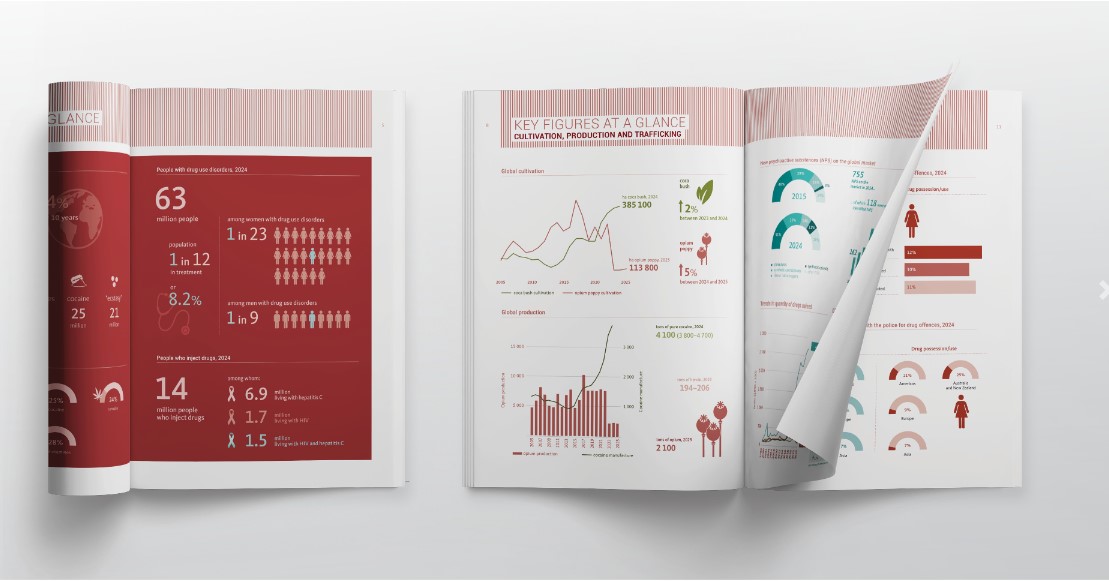
As reported in the UN World Drug Report 2026, the land used for poppy cultivation in Afghanistan has significantly reduced from approximately 232,000 hectares in 2022 to 10,200 hectares in 2025. Concurrently, opium production has fallen from 6,200 tons to around 296 tons. This reduction, estimated at about 95 percent, primarily took place following the enforcement of a ban on poppy cultivation mandated by Taliban leader Mullah Hibatullah Akhundzada.
The UNODC reports that this decrease represents the most significant supply disruption to the global heroin market in many years. Nevertheless, the UN highlights that opium reserves from prior years remain intact and are expected to sustain a considerable portion of the global heroin market until the conclusion of 2026. Additionally, indications of a shortage of Afghan heroin are emerging in certain consumer markets.
UN report on Afghan drugs and the risk of industrial drug substitution
As highlighted, alongside the 95 percent decrease in opium production in Afghanistan, the UN report cautions about the evolving characteristics of the drug market. The report indicates that should the supply of Afghan heroin diminish further, trafficking networks may pivot towards synthetic drugs such as fentanyl, nitazoxanide, and morphine derivatives.
These substances possess a potency that is significantly greater than that of heroin and have contributed to numerous overdose fatalities across Europe and North America in recent years. A report from the United Nations Office on Drugs and Crime indicates that a opium output decline in Afghanistan does not equate to a decline in drug consumption; rather, it may redirect the global market towards far more hazardous industrial substances.
Although opium production in Afghanistan has decreased, the UN report evaluates the situation regarding methamphetamine in a different light. The UNODC report indicates that the frequency of methamphetamine seizures in the area is on the rise. Conversely, the restrictions placed by the Taliban government on poppy cultivation have yet to influence the industrial drug market. Consequently, the UN report cautions that evaluating the effectiveness of the counter-narcotics policy solely based on the opium output decline is insufficient, and that the production and trafficking of industrial drugs must also be closely observed.
Contradiction between UN report and Russian official’s opinion about Afghan drugs
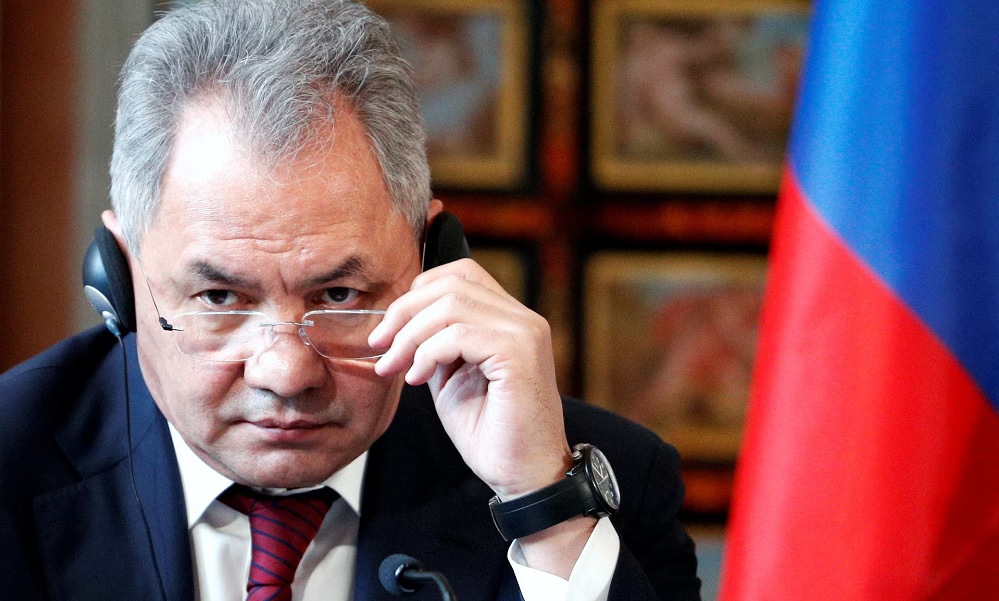
Sergei Shoigu, the Secretary of the Russian Security Council, has recently declared that the Taliban administration has met its obligations in combating drug-related issues and has implemented significant actions to curb drug trafficking. As per the Russian official, Afghanistan has successfully halted a substantial portion of the production and exportation of synthetic drugs. He highlighted that the manufacturing and distribution of synthetic drugs from Afghanistan has diminished by almost 90 percent in comparison to previous years, attributing this success to practical effective measures taken in the battle against drug trafficking.
Shoigu’s remarks regarding the decrease in conventional drug production align with the findings of the United Nations, as the UNODC corroborates a 95 percent opium output decline and poppy cultivation. However, the UN report does not validate the latter part of Shoigu’s assertion, which claims a 90 percent reduction in industrial drugs. In fact, the UNODC indicates that methamphetamine supply metrics are still elevated, with an increase in seizures and a drop in the wholesale price of this drug in Afghanistan.
This discrepancy indicates a notable divergence between the evaluation provided by the Secretary of the Russian Security Council and the technical data from the UN regarding the industrial drug market. The primary analysis that can be drawn from this contradiction is that the UNODC report lacks current information and, as suggested by the dates noted in the data collection, is considerably outdated, whereas Shoigu’s remarks were informed by the most recent assessments.
In recent years, Russia has emerged as a significant destination for both traditional and industrial drugs originating from Afghanistan, making it particularly vulnerable to Afghan narcotics. Sergei Shoigu’s remarks should not be interpreted as political, as he has consistently voiced concerns regarding the dangers emanating from Afghanistan, particularly in relation to terrorism and drug trafficking. Consequently, his statements regarding Afghanistan’s dedication to decreasing production and fighting against the trafficking of traditional and industrial drugs caught many analysts off guard.
What do the Taliban say about industrial drugs?
The officials responsible for counter-narcotics within the Taliban government have recently declared that the majority of industrial drugs are imported into Afghanistan from adjacent nations, asserting that the primary origin of these substances is not Afghanistan itself. AbdulHaq Moti, who leads the counter-narcotics coordination at the Ministry, highlighted the ongoing efforts to combat drug trafficking, identifying industrial drugs as a significant security threat facing Afghanistan.
The stance of this Taliban official aligns with certain aspects of the UN report, as the UNODC similarly cautions about the rising danger posed by industrial drugs. However, the UN report refrains from making a conclusive assessment regarding the source of these drugs, focusing instead on the rising indicators of supply and the number of discoveries. Consequently, the assertion made by this Taliban official that the majority of industrial drugs are imported is significant.
Related Articles
Badakhshan protests and the poppy cultivation crisis
The Economy of Afghanistan under Taliban governance
Conclusion
The 2026 report from the UN Office on Drugs and Crime offers a twofold perspective on the circumstances in Afghanistan. On one side, the remarkable 95 percent opium output decline and poppy production stands out as one of the most significant changes in the history of the global drug market, indicating a profound transformation in the conventional heroin production framework in Afghanistan.
On the other hand, the UN cautions that this progress does not automatically imply a decrease in the drug threat. The ongoing operations of the methamphetamine market, the potential substitution of heroin with extremely hazardous synthetic opioids, and the evolving trafficking routes suggest that the global drug market is transitioning into a new phase.
The statements made by Sergei Shoigu regarding the Taliban’s effectiveness in curbing drug production in the opium sector are in agreement with the conclusions drawn by the UN. Nevertheless, in relation to the reduction of industrial drugs, it is important to also take into account the evaluations from other regional countries. For example, Iran, which lies on a significant drug trafficking corridor to Europe, should provide insights based on new discoveries.
The Taliban attributes the source of industrial drugs to neighboring nations; however, the UN report refrains from taking a definitive stance on the origin of these substances, instead highlighting the persistent threat and escalating risk associated with the proliferation of industrial drugs in both regional and global markets.
According to UN data, while traditional opium production in Afghanistan has hit historic lows, the issue of industrial drugs continues to be a significant security concern both in Afghanistan and globally.